


Magnetic sensor configuration optimization for gravitational-wave detection spacecraft
-
摘要:目的
针对空间引力波探测航天器中检验质量附近磁场无法原位测量、磁场重建精度受磁传感器布置显著影响的问题,研究有限安装约束下的磁传感器构型优化方法,以提升检验质量处磁场重建精度。
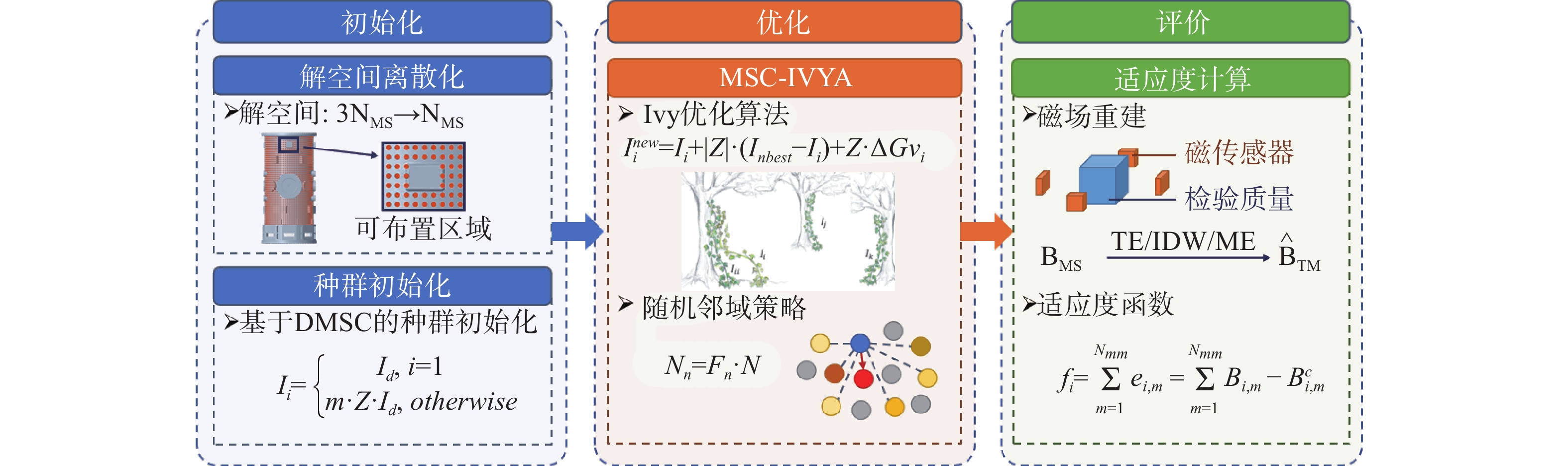
方法将磁传感器布置建模为离散组合优化问题,提出基于改进IVY算法的磁传感器构型优化方法(MSC-IVYA)。该方法通过可安装区域离散化、基于默认构型的种群初始化、动态邻域更新以及面向多随机磁模型的累积适应度设计,实现受约束条件下的高效搜索;并以LISA Pathfinder和Taiji-2两种典型空间引力波探测器为对象,结合距离加权法(IDW)、泰勒展开法(TE)和多级展开法(ME)三种重建方法开展仿真评估。
结果在LISA Pathfinder中,默认构型下TM1在IDW、ME和TE下的平均相对误差分别为593.74%、508.04%和516.50%,经MSC-IVYA优化后分别降至390.39%、357.55%和363.89%。在Taiji-2中,MSC-IVYA同样表现出稳定改进,TM1在IDW和ME下的误差由72.14%和77.27%降至32.55%和47.25%,TM2在ME和TE下的误差由97.17%和112.14%降至74.27%和80.76%。
结论磁传感器构型是影响检验质量磁场重建性能的重要设计变量。MSC-IVYA能够在不同任务条件下稳定改善磁场重建精度,尤其适用于磁传感器数量有限、安装区域受限的工程场景,可为空间引力波探测航天器磁诊断系统设计提供方法支撑。
Abstract:Objective: The magnetic field near the test masses in space-based gravitational-wave detection spacecraft cannot be measured in situ, and the accuracy of magnetic field reconstruction is strongly affected by the arrangement of magnetic sensors. To address this issue, this study investigates a magnetic sensor configuration optimization method under constrained installation conditions, aiming to improve the magnetic field reconstruction accuracy at the test mass locations. Methods: The magnetic sensor placement problem was formulated as a discrete combinatorial optimization problem. An improved Ivy algorithm-based magnetic sensor configuration optimization method, termed MSC-IVYA, was proposed. The method integrates feasible installation region discretization, default-configuration-based population initialization, dynamic neighborhood updating, and a cumulative fitness function designed for multiple random magnetic source models, thereby enabling efficient search under installation constraints. Simulation evaluations were conducted on two representative space-based gravitational-wave detectors, LISA Pathfinder and Taiji-2, using three magnetic field reconstruction methods: inverse distance weighting (IDW), Taylor expansion (TE), and multipole expansion (ME). Results: For LISA Pathfinder, under the default configuration, the average relative errors of TM1 were 593.74%, 508.04%, and 516.50% using IDW, ME, and TE, respectively. After optimization with MSC-IVYA, these errors were reduced to 390.39%, 357.55%, and 363.89%, respectively. In the Taiji-2 case, MSC-IVYA also achieved consistent improvement. For TM1, the reconstruction errors using IDW and ME decreased from 72.14% and 77.27% to 32.55% and 47.25%, respectively. For TM2, the errors using ME and TE decreased from 97.17% and 112.14% to 74.27% and 80.76%, respectively. Conclusion: Magnetic sensor configuration is an important design variable affecting the magnetic field reconstruction performance at the test mass locations. The proposed MSC-IVYA method can consistently improve magnetic field reconstruction accuracy under different mission conditions. It is particularly suitable for engineering scenarios with a limited number of magnetic sensors and constrained installation regions, and provides methodological support for the design of magnetic diagnostic systems in space-based gravitational-wave detection spacecraft.
-
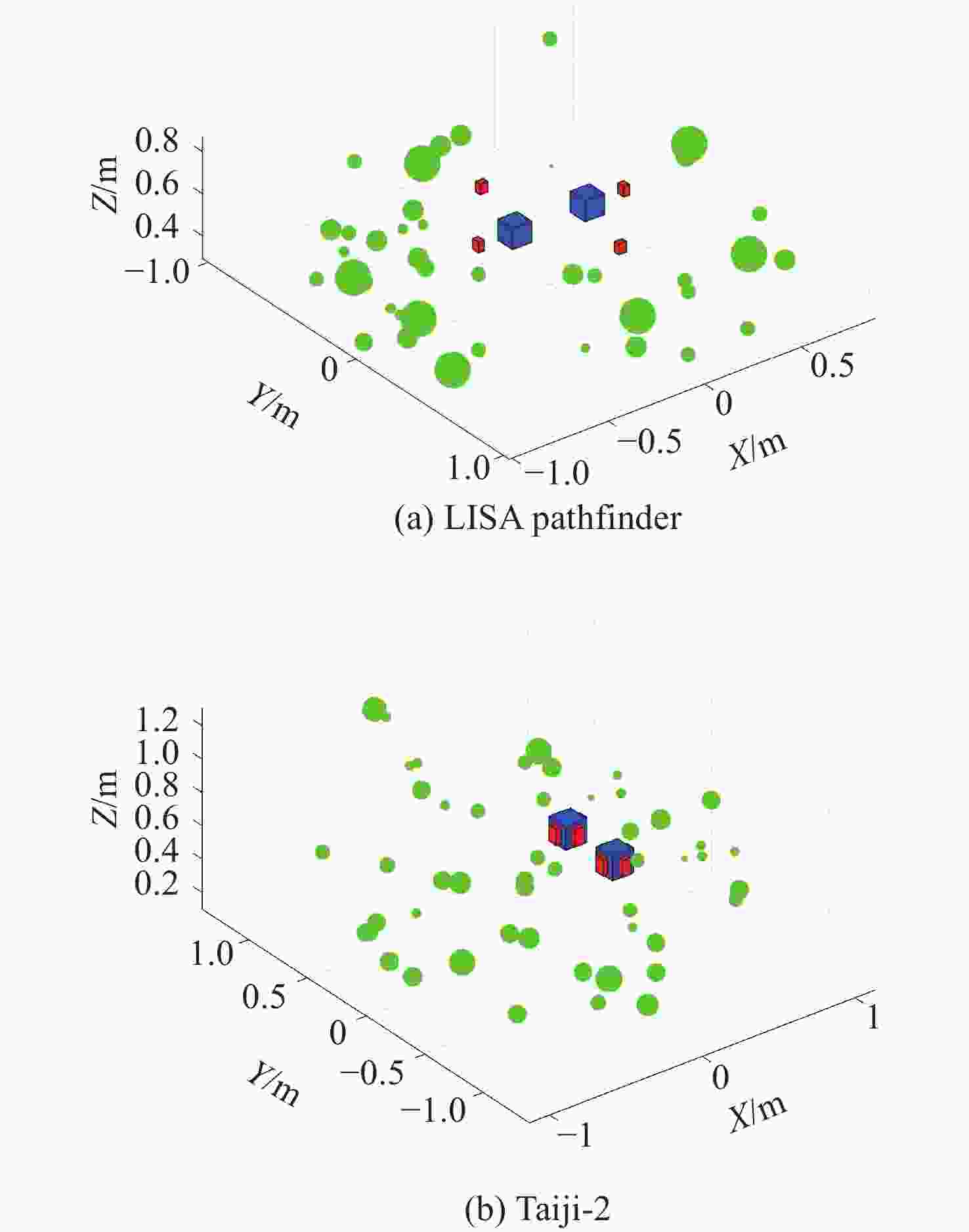
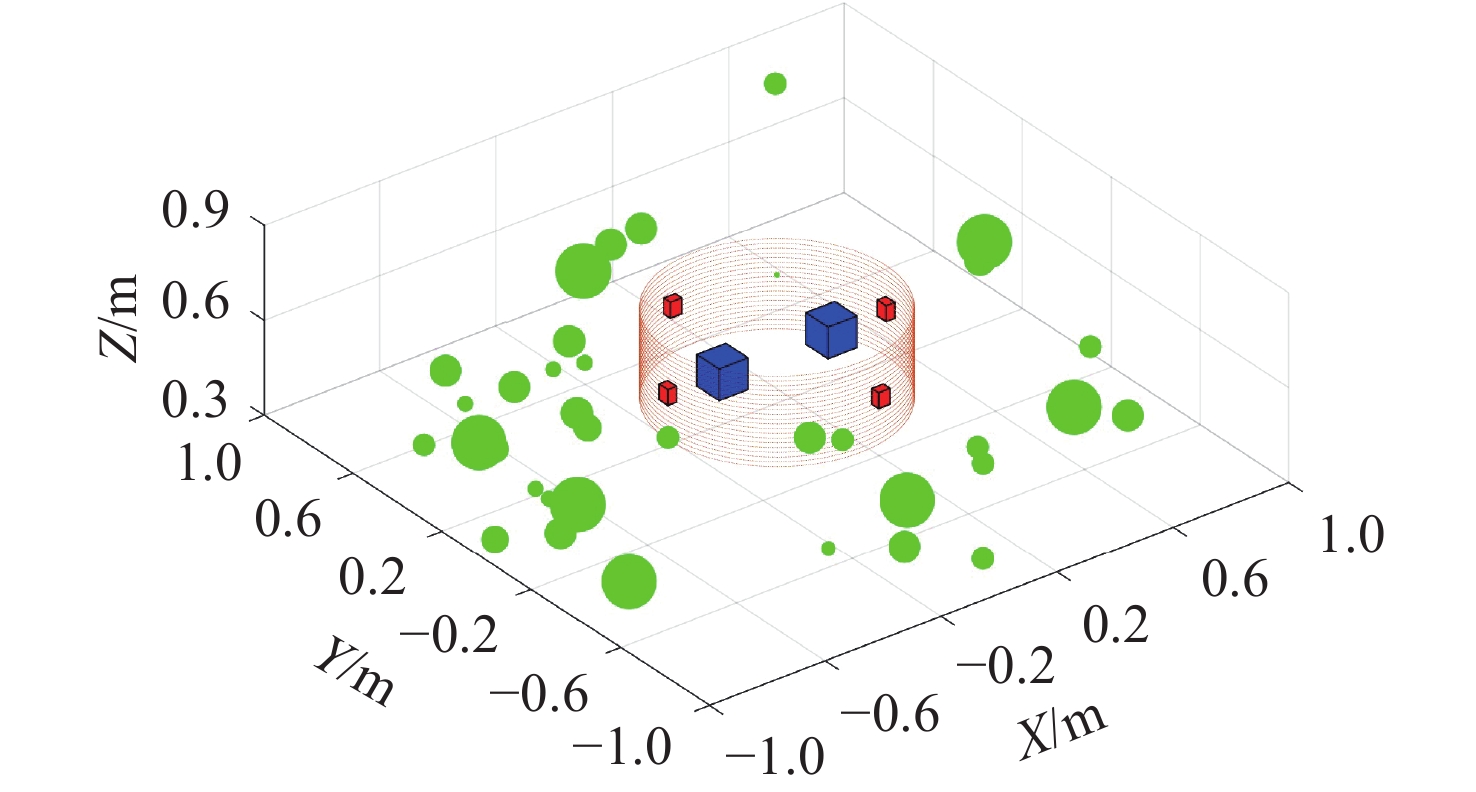
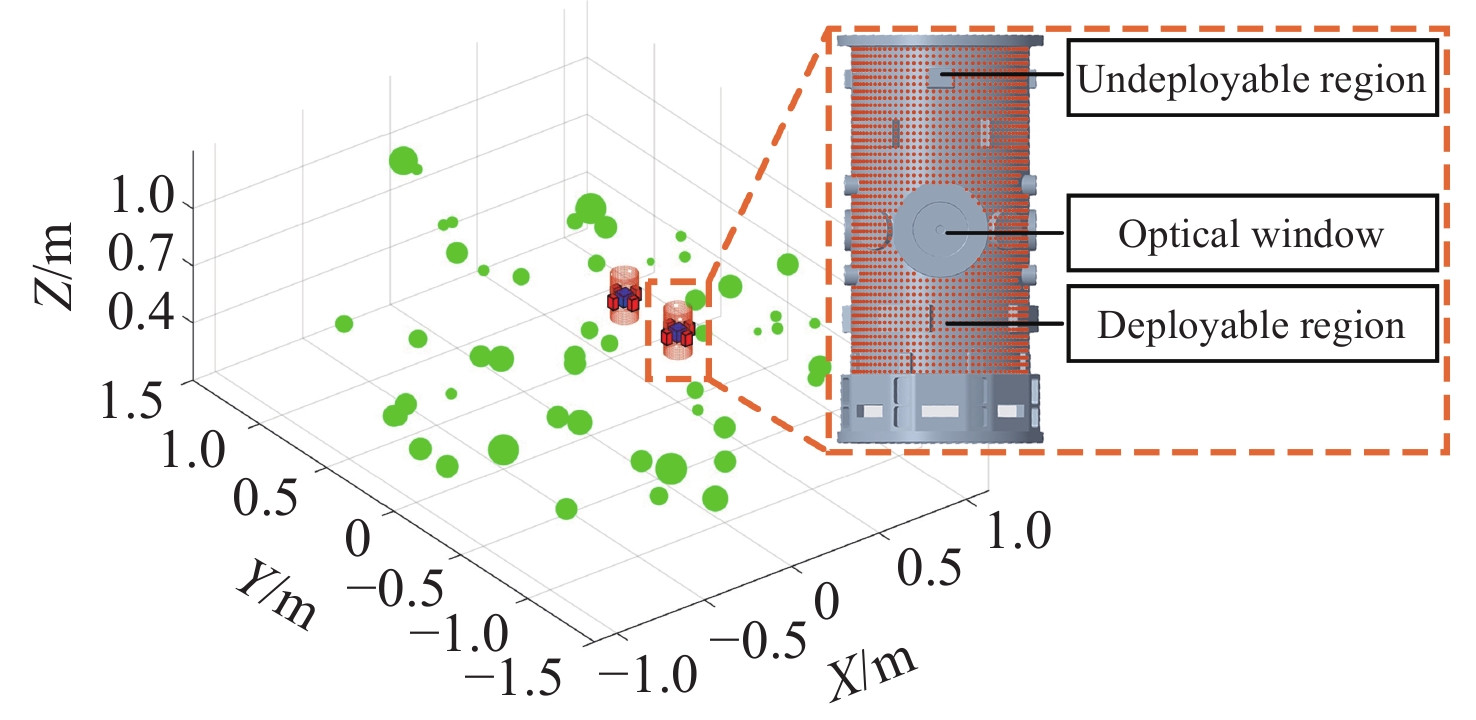
图 1 引力波探测器磁源、磁传感器和检验质量的分布
Figure 1. Distribution of magnetic sources, magnetic sensors, and test masses in the space-based gravitational-wave detector
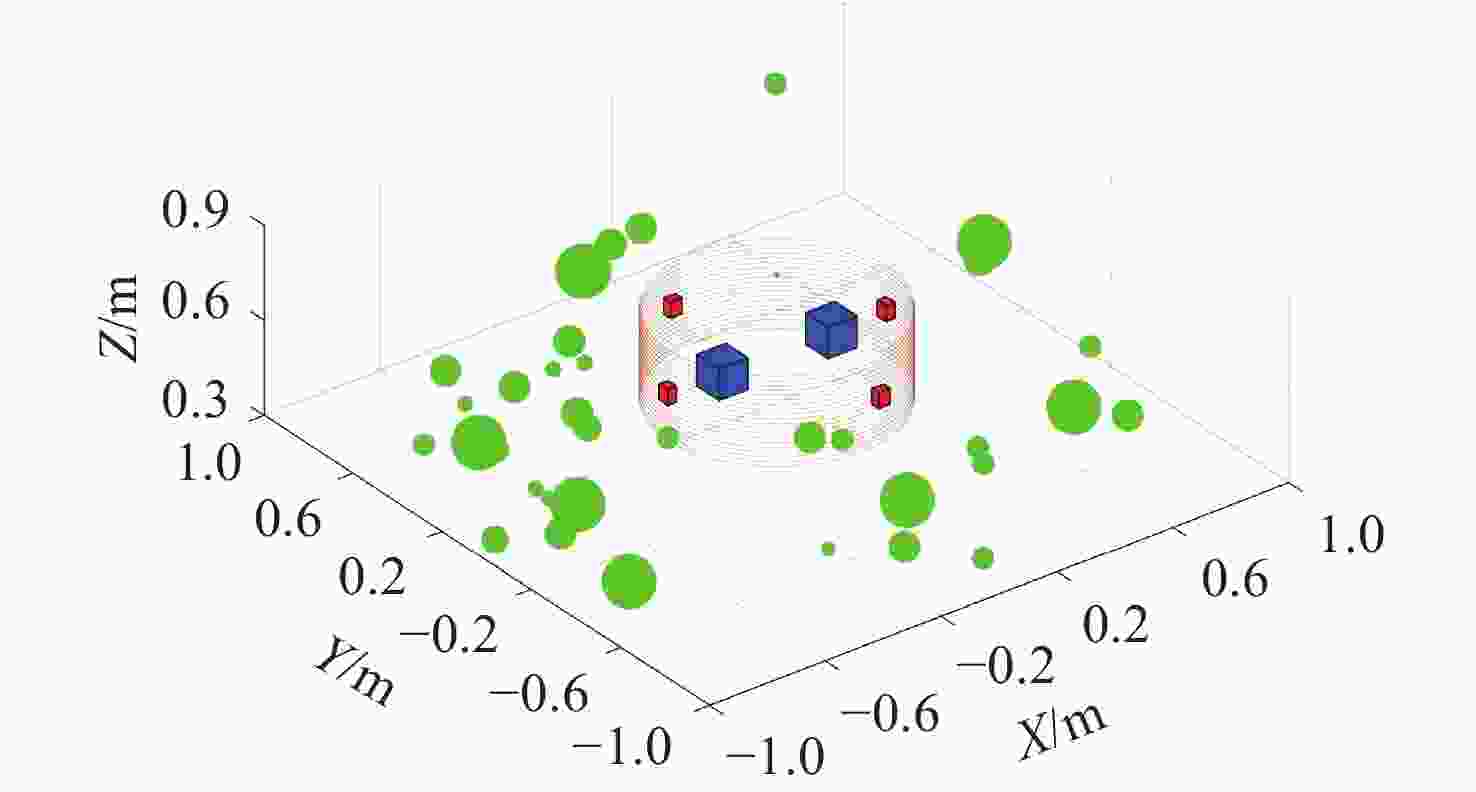
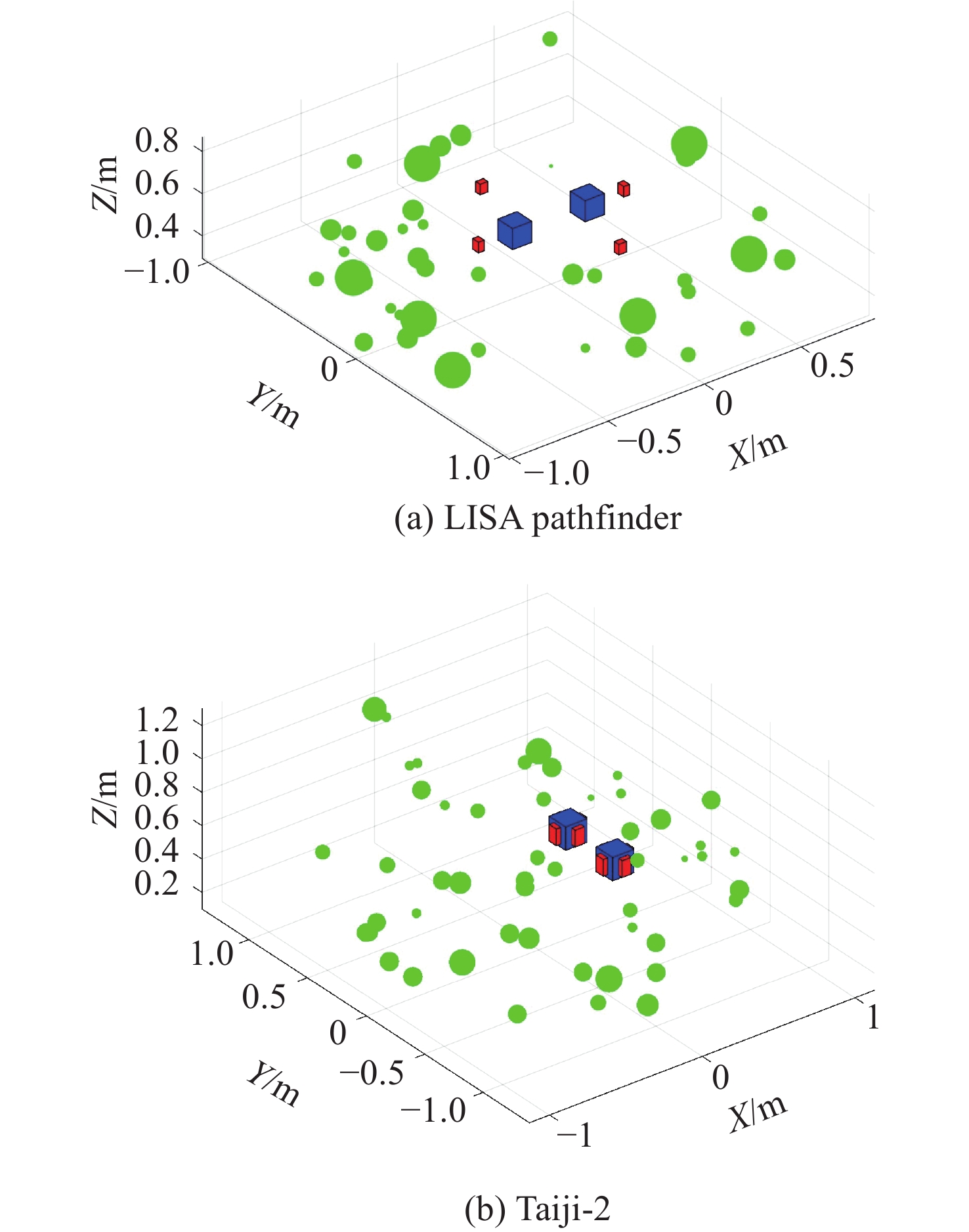
图 3 LISA Pathfinder航天器磁模型与离散化后的磁传感器可布置区域
Figure 3. Magnetic model of the LISA Pathfinder spacecraft and the discretized feasible installation region for magnetic sensors
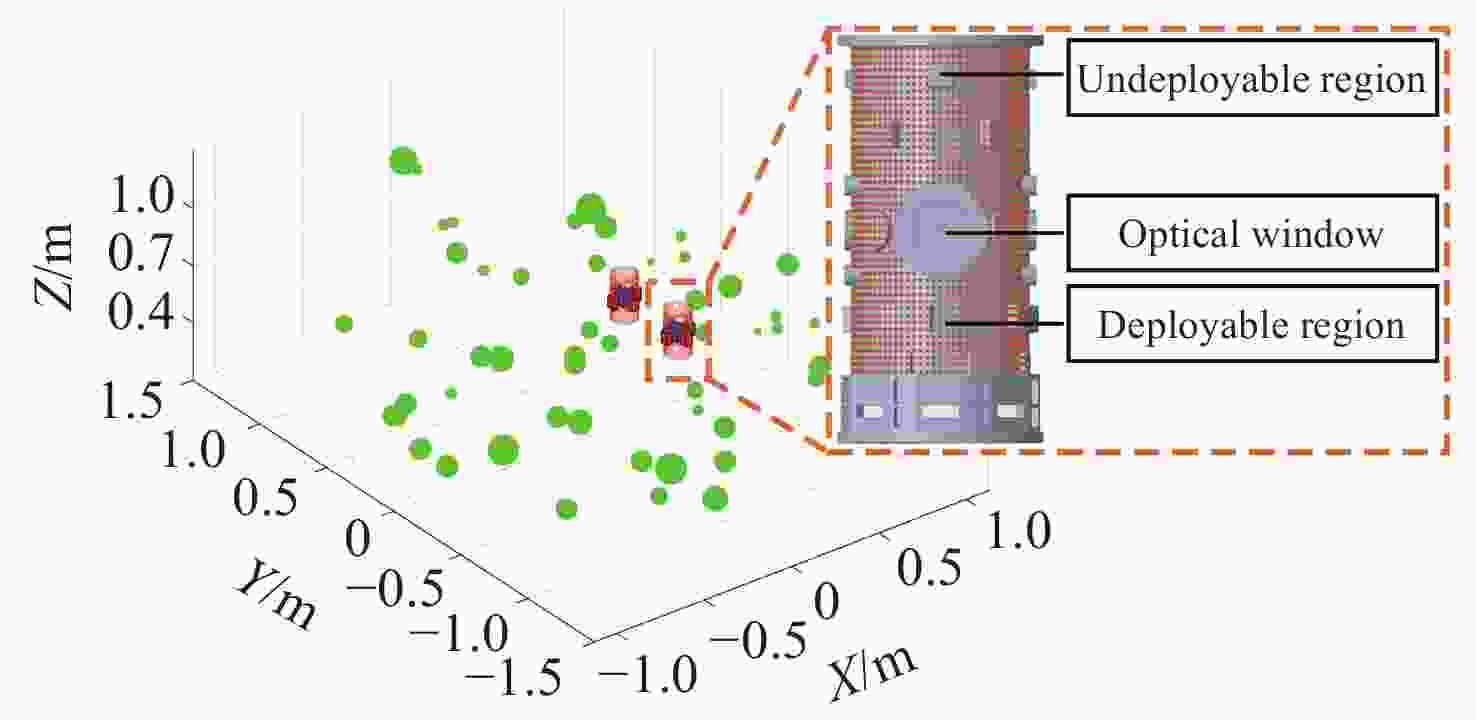
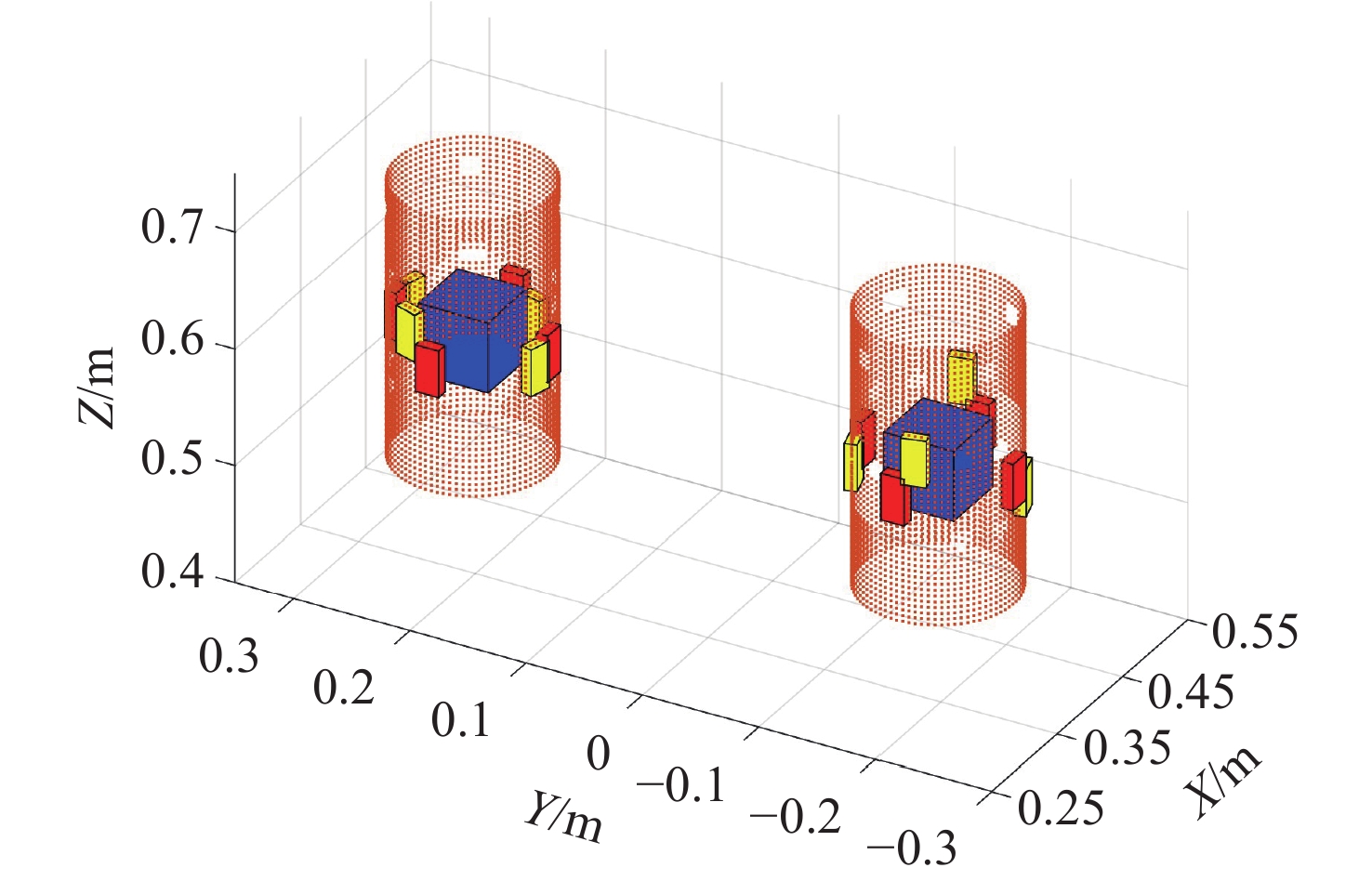
图 4 Taiji-2航天器磁模型与离散化后的磁传感器可布置区域
Figure 4. Magnetic model of the Taiji-2 spacecraft and the discretized feasible installation region for magnetic sensors
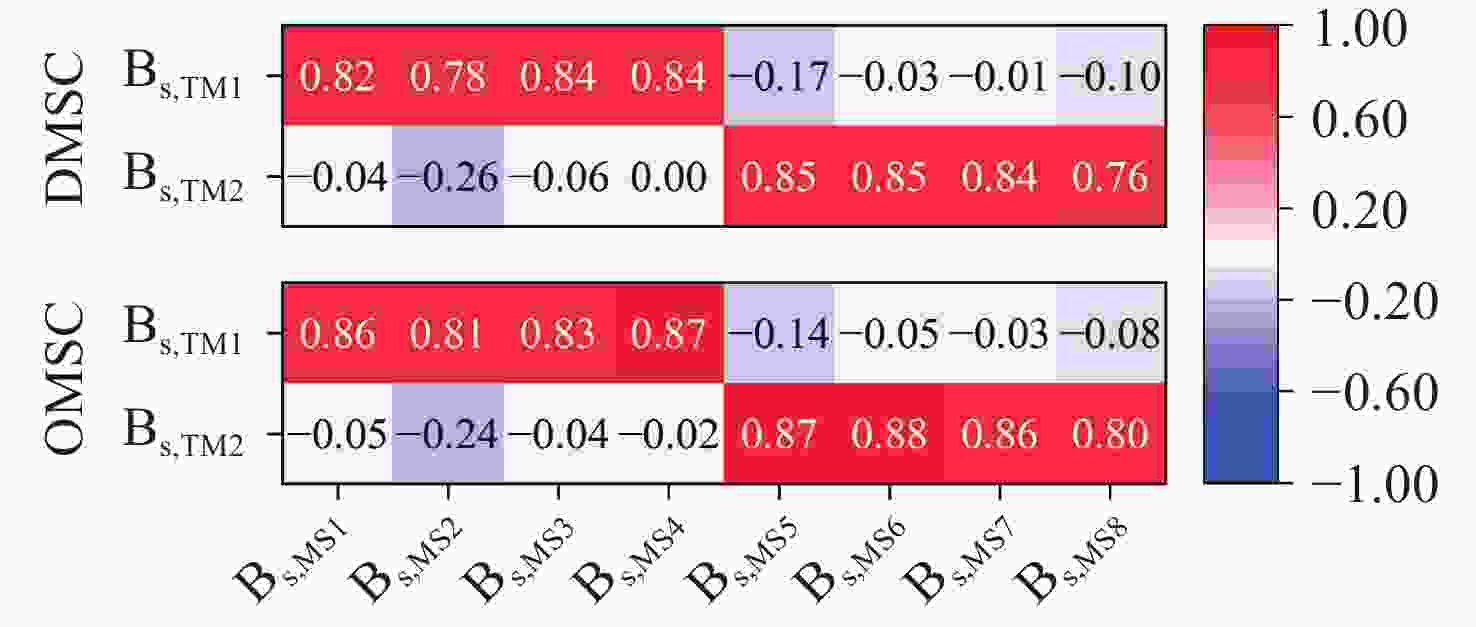
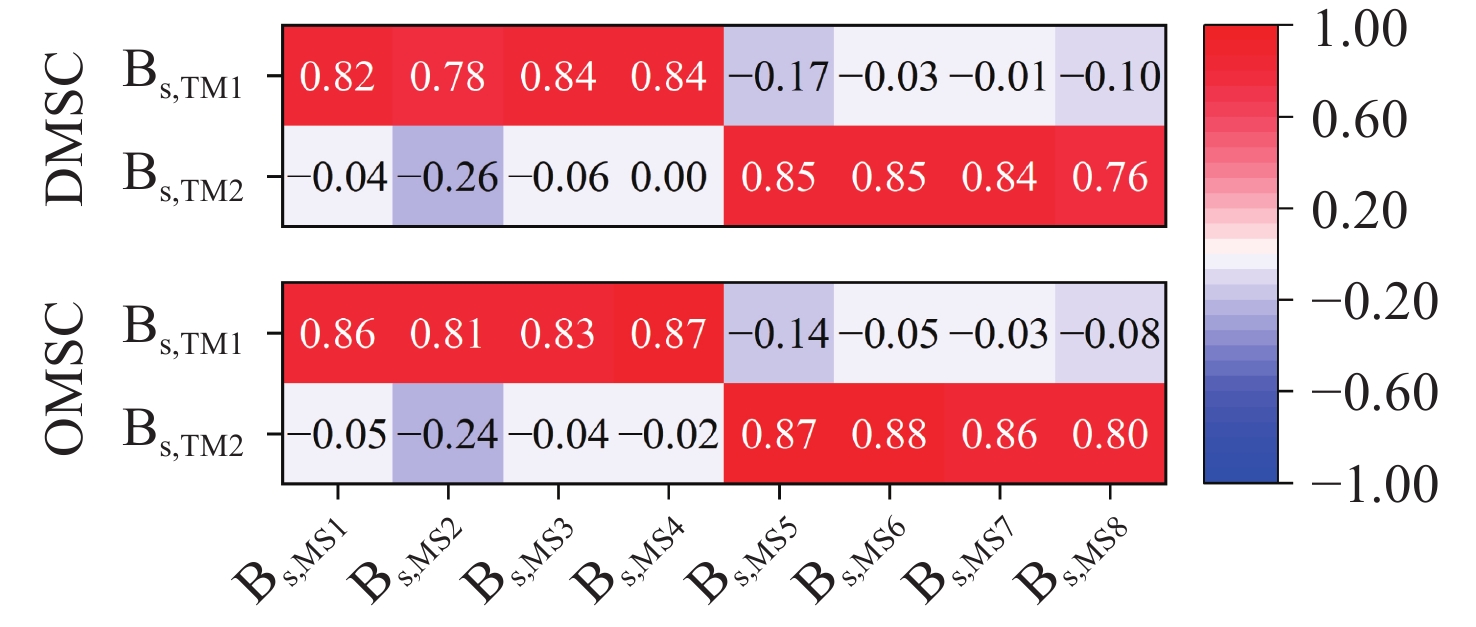
图 6 优化前后磁传感器测量值与检验质量位置磁场的相关性矩阵(敏感轴方向)
Figure 6. Correlation matrices between magnetic sensor measurements and the magnetic field at the test mass locations before and after optimization in the sensitive-axis direction
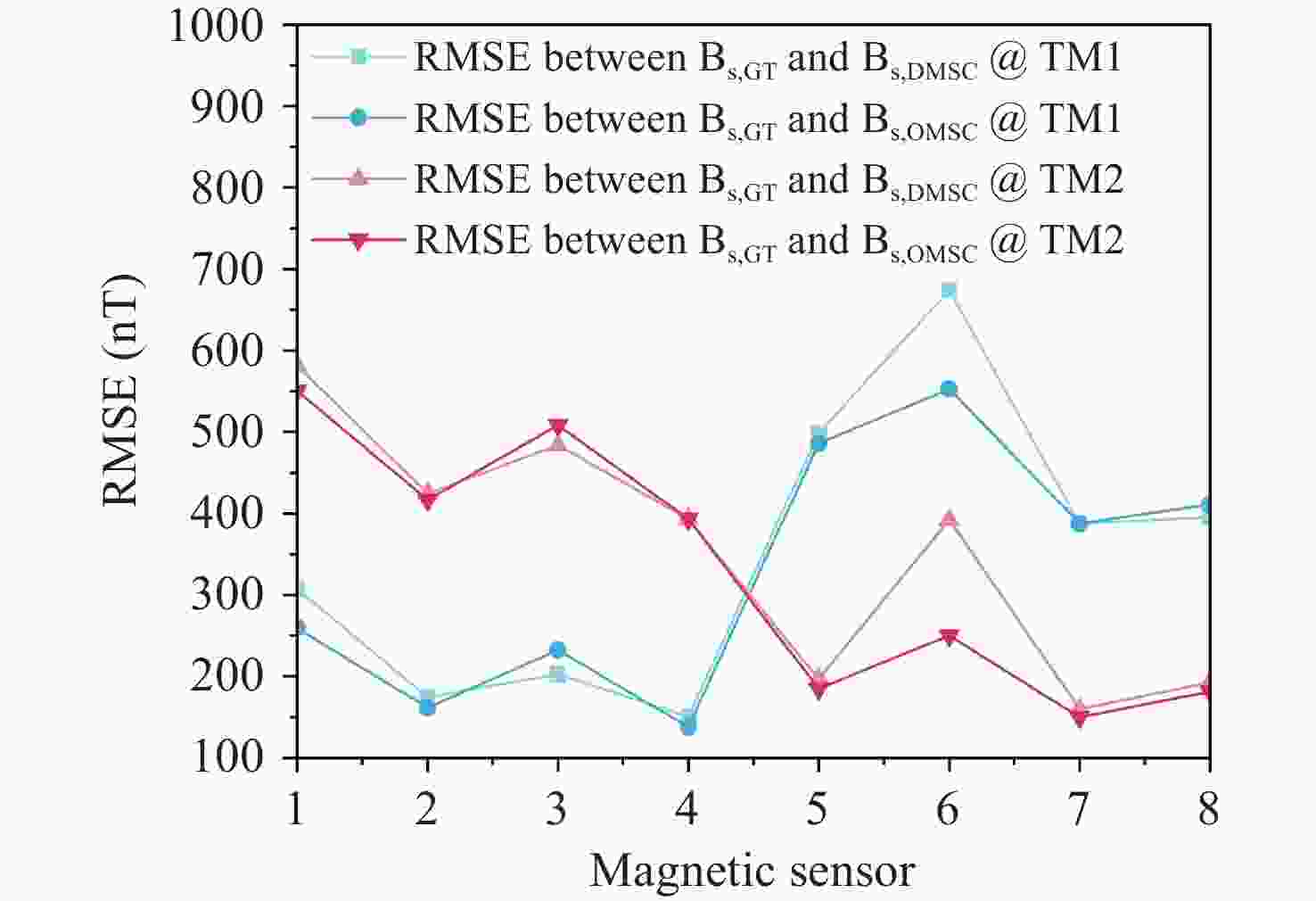
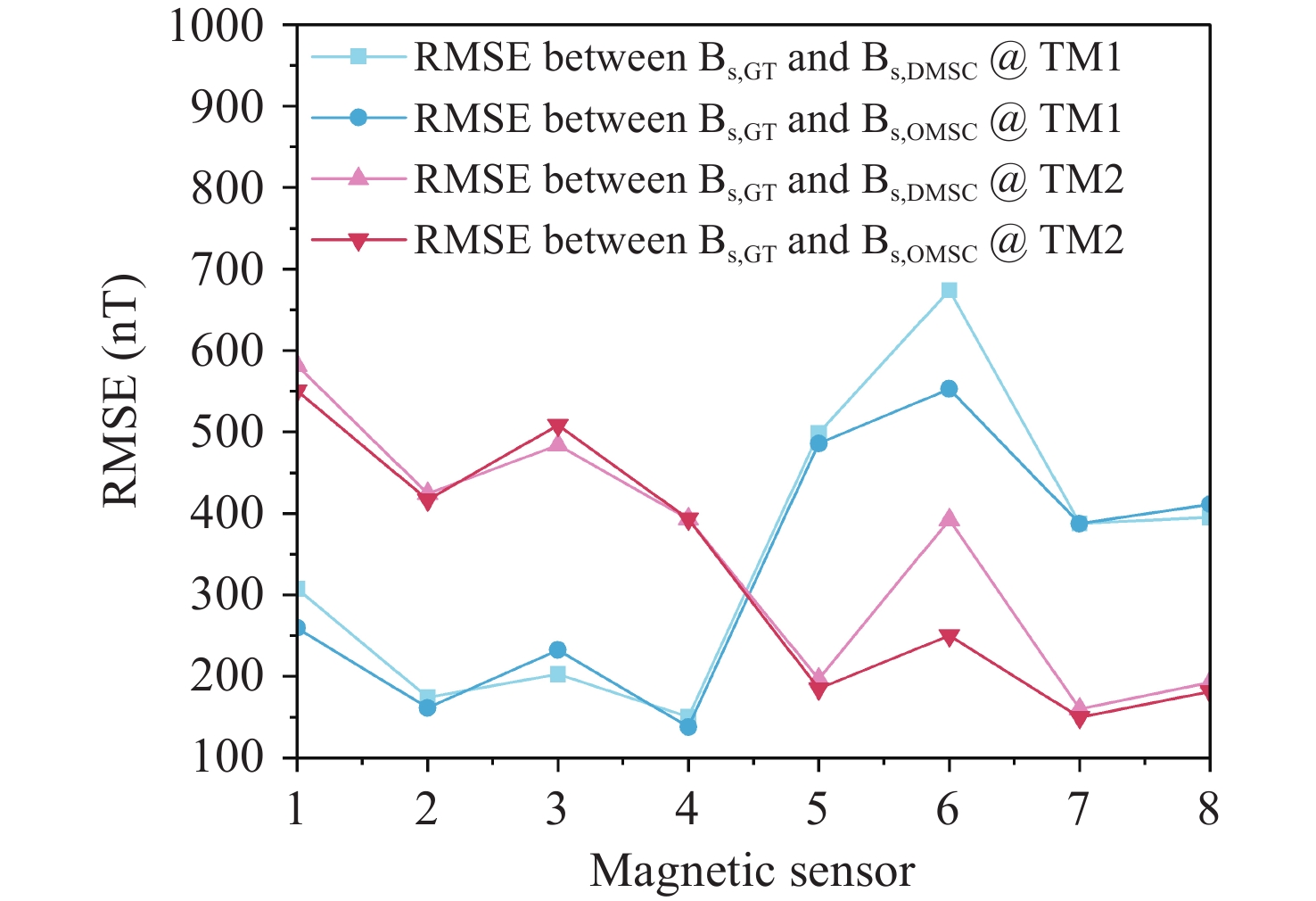
图 7 磁传感器测量值与检验质量位置磁场之间在敏感轴方向的均方根误差
Figure 7. RMSE between magnetic sensor measurements and the magnetic field at the test mass location in the sensitive-axis direction
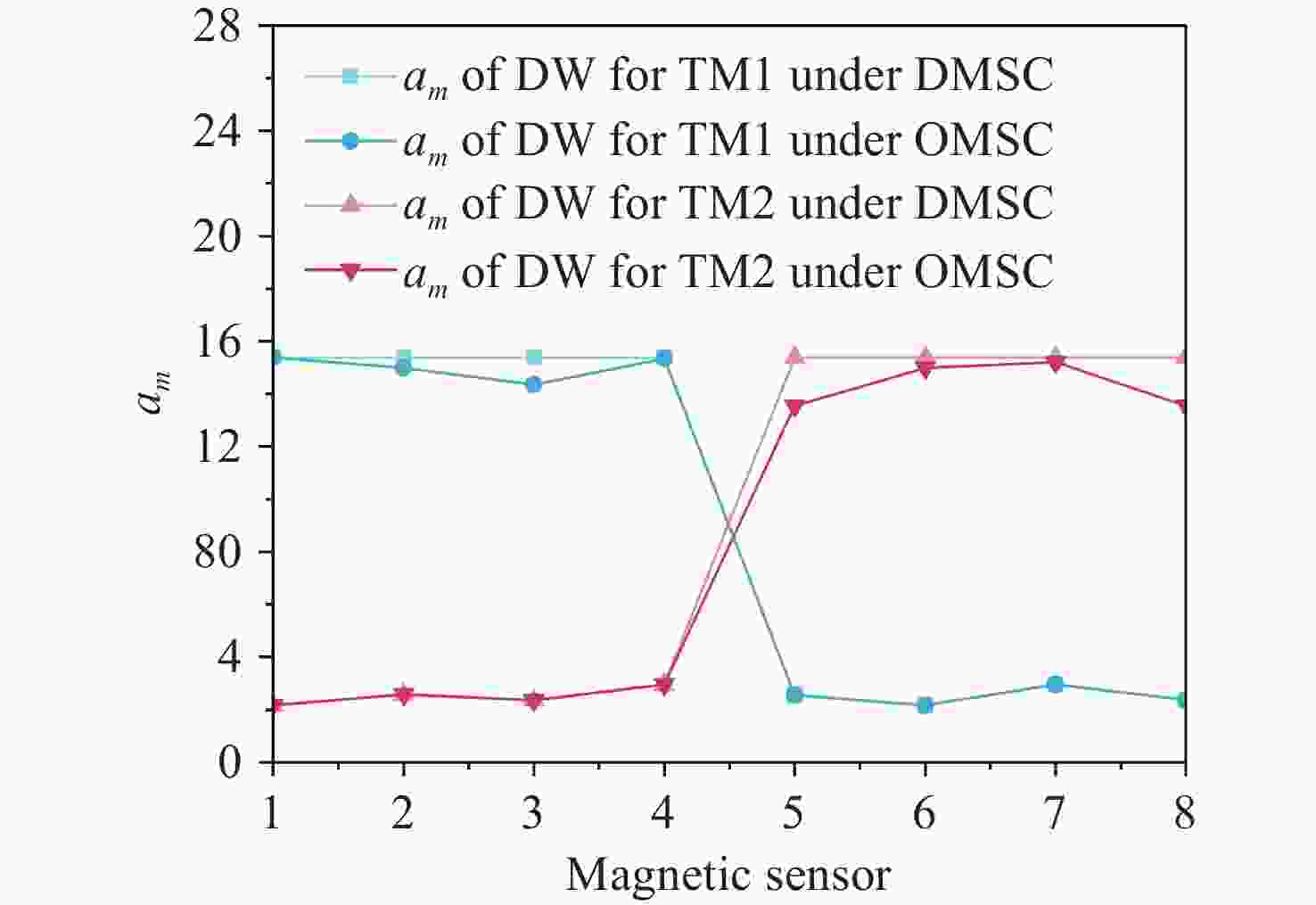
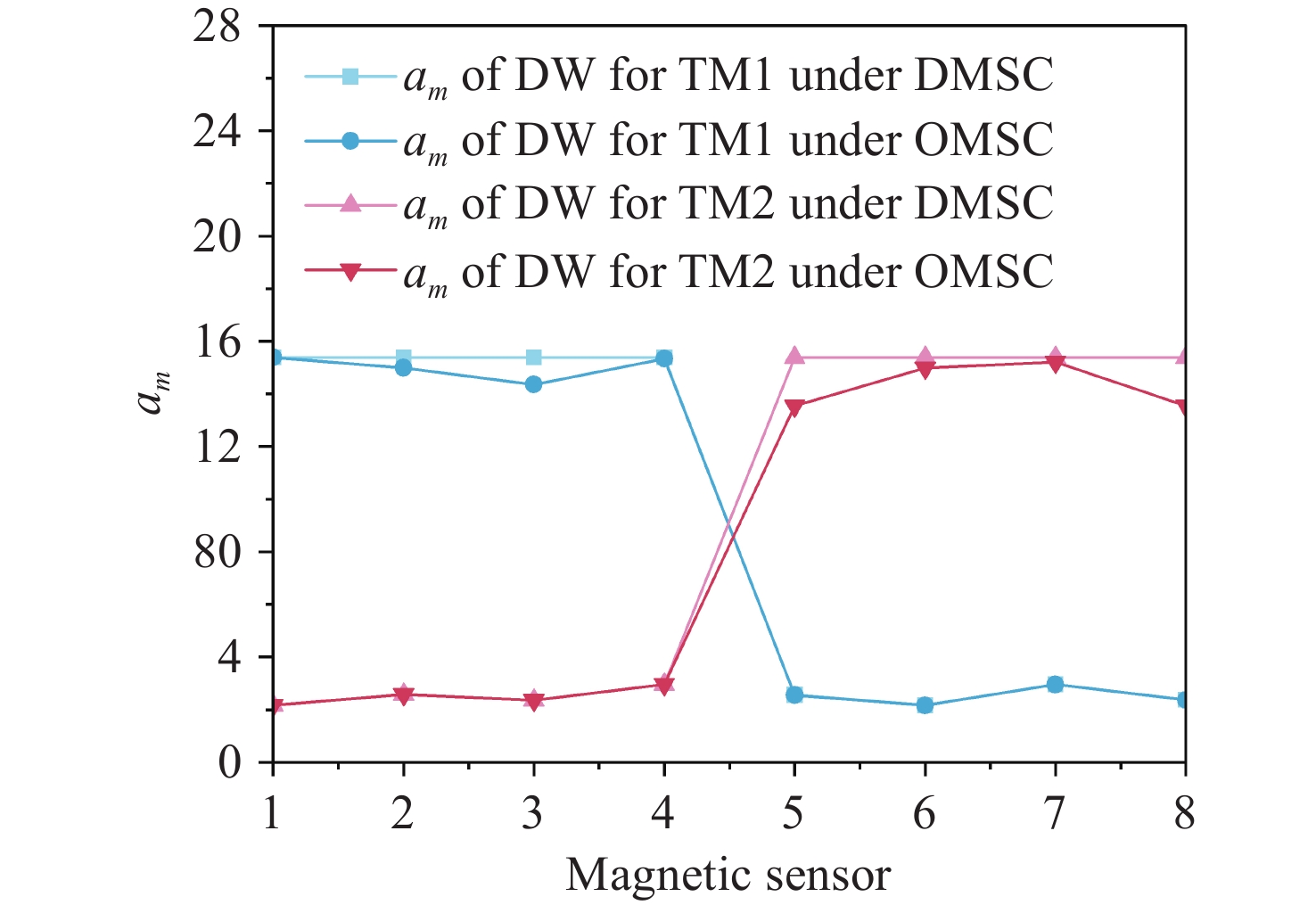
图 8 优化前后各个磁传感器测量值的平均权重
Figure 8. Average weights of magnetic sensor measurements before and after optimization
表 1 不同构型优化方法下,LISA Pathfinder两个检验质量在敏感轴方向上的磁场重建平均相对误差
Table 1. Average relative errors of magnetic field reconstruction along the sensitive axis for the two test masses of LISA Pathfinder under different sensor configuration optimization methods
指标 构型优化方法 IDW ME TE $ {\overline{\varepsilon }}_{{{B}_{s,TM1}}} $% DMSC 593.74 508.04 516.50 PSO 482.48 400.88 455.59 IVY 494.69 430.98 445.64 MSC-IVYA 390.39 357.55 363.89 $ {\overline{\varepsilon }}_{{{B}_{s,TM2}}} $% DMSC 327.37 390.20 435.83 PSO 157.53 137.08 216.99 IVY 182.56 185.28 231.88 MSC-IVYA 162.57 181.16 180.75  下载: 导出CSV
表 2 不同构型优化方法下,Taiji-2两个检验质量在敏感轴方向上的磁场重建平均相对误差
Table 2. Average relative errors of magnetic field reconstruction along the sensitive axis for the two test masses of Taiji-2 under different sensor configuration optimization methods
指标 构型优化方法 IDW ME TE $ {\overline{\varepsilon }}_{{{B}_{s,TM1}}} $/% DMSC 72.14 77.27 122.03 PSO 34.56 70.67 59.46 IVY 101.13 84.98 81.07 MSC-IVYA 32.55 47.25 81.08 $ {\overline{\varepsilon }}_{{{B}_{s,TM2}}} $/% DMSC 87.76 97.17 112.14 PSO 92.73 155.57 117.20 IVY 44.42 119.43 121.36 MSC-IVYA 59.14 74.27 80.76
下载: 导出CSV
-
[1] ABBOTT B P, ABBOTT R, ABBOTT T D, et al. Observation of gravitational waves from a binary black hole merger[J]. Physical Review Letters, 2016, 116(6): 061102. doi: 10.1103/PhysRevLett.116.061102 [2] XIAO G Z, KUANG T F, HE Y T, et al. Giant enhancement of nonlinear harmonics of an optical-tweezer phonon laser[J]. eLight, 2024, 4(1): 17. doi: 10.1186/s43593-024-00064-8 [3] GAO L, ZHENG L A, LU B, et al. Generation of squeezed vacuum state in the millihertz frequency band[J]. Light: Science & Applications, 2024, 13(1): 294. [4] WANNER G. Space-based gravitational wave detection and how LISA Pathfinder successfully paved the way[J]. Nature Physics, 2019, 15(3): 200-202. doi: 10.1038/s41567-019-0462-3 [5] LISA Pathfinder Collaboration. LISA Pathfinder: first steps to observing gravitational waves from space[J]. Journal of Physics: Conference Series, 2017, 840(1): 012001. doi: 10.1088/1742-6596/840/1/012001 [6] DANZMANN K, RÜDIGER A. LISA technology—concept, status, prospects[J]. Classical and Quantum Gravity, 2003, 20(10): S1-S9. doi: 10.1088/0264-9381/20/10/301 [7] LUO J, CHEN L SH, DUAN H Z, et al. TianQin: a space-borne gravitational wave detector[J]. Classical and Quantum Gravity, 2016, 33(3): 035010. doi: 10.1088/0264-9381/33/3/035010 [8] MILYUKOV V K. TianQin space-based gravitational wave detector: key technologies and current state of implementation[J]. Astronomy Reports, 2020, 64(12): 1067-1077. doi: 10.1134/S1063772920120070 [9] HU W R, WU Y L. The Taiji program in Space for gravitational wave physics and the nature of gravity[J]. National Science Review, 2017, 4(5): 685-686. doi: 10.1093/nsr/nwx116 [10] MANCE D. Development of electronic system for sensing and actuation of test mass of the inertial sensor LISA[D]. Zurich: Fakultet Elektrotehnike, Strojarstva I Brodogradnje u Splitu, 2012. [11] ZHANG H Y, XU P, YE Z Q, et al. A systematic approach for inertial sensor calibration of gravity recovery satellites and its application to Taiji-1 mission[J]. Remote Sensing, 2023, 15(15): 3817. doi: 10.3390/rs15153817 [12] ZHOU A N, CAI L, XIAO CH Y, et al. Non-gravitational force measurement and correction by a precision inertial sensor of TianQin-1 satellite[J]. Classical and Quantum Gravity, 2022, 39(11): 115005. doi: 10.1088/1361-6382/ac68c9 [13] SUN ZH Y, LI P X, LI Z Q, et al. Analysis of the calculation method and evaluation of the magnetic acceleration noise of space inertial sensor[J]. Results in Physics, 2023, 53: 106955. doi: 10.1016/j.rinp.2023.106955 [14] CAÑIZARES P, CONCHILLO A, GARCÍA-BERRO E, et al. The diagnostics subsystem on board LISA Pathfinder and LISA[J]. Classical and Quantum Gravity, 2009, 26(9): 094005. doi: 10.1088/0264-9381/26/9/094005 [15] DIAZ-AGUILÓ M, GARCÍA-BERRO E, LOBO A. Theory and modelling of the magnetic field measurement in LISA PathFinder[J]. Classical and Quantum Gravity, 2010, 27(3): 035005. doi: 10.1088/0264-9381/27/3/035005 [16] MATEOS I, RAMOS-CASTRO J, LOBO A. Low-frequency noise characterization of a magnetic field monitoring system using an anisotropic magnetoresistance[J]. Sensors and Actuators A: Physical, 2015, 235: 57-63. doi: 10.1016/j.sna.2015.09.021 [17] MATEOS I, DÍAZ-AGUILÓ M, RAMOS-CASTRO J, et al. Interpolation of the magnetic field at the test masses in eLISA[J]. Classical and Quantum Gravity, 2015, 32(16): 165003. doi: 10.1088/0264-9381/32/16/165003 [18] LIU B B, YANG ZH, QIANG L E, et al. Magnetic field recovery technique based on distance weighting multipole expansion method[J]. Europhysics Letters, 2023, 143(5): 59003. doi: 10.1209/0295-5075/acf51f [19] TROUGNOU L. ECSS space systems electromagnetic compatibility handbook[C]. 2012 ESA Workshop on Aerospace EMC, IEEE, 2012: 1-6. [20] TSATALAS S, VERGOS D, SPANTIDEAS S T, et al. A novel multi-magnetometer facility for on-ground characterization of spacecraft equipment[J]. Measurement, 2019, 146: 948-960. doi: 10.1016/j.measurement.2019.07.016 [21] SPANTIDEAS S T, CAPSALIS C N. Validation of a source identification method for prediction of low-frequency magnetic fields in space missions[J]. IEEE Magnetics Letters, 2018, 9: 1300805. [22] XU L. A proportional differential control method for a time-delay system using the Taylor expansion approximation[J]. Applied Mathematics and Computation, 2014, 236: 391-399. doi: 10.1016/j.amc.2014.02.087 [23] LU G Y, WONG D W. An adaptive inverse-distance weighting spatial interpolation technique[J]. Computers & Geosciences, 2008, 34(9): 1044-1055. doi: 10.1016/j.cageo.2007.07.010 [24] ALAEE R, ROCKSTUHL C, FERNANDEZ-CORBATON I. An electromagnetic multipole expansion beyond the long-wavelength approximation[J]. Optics Communications, 2018, 407: 17-21. doi: 10.1016/j.optcom.2017.08.064 [25] GHASEMI M, ZARE M, TROJOVSKÝ P, et al. Optimization based on the smart behavior of plants with its engineering applications: Ivy algorithm[J]. Knowledge-Based Systems, 2024, 295: 111850. doi: 10.1016/j.knosys.2024.111850 [26] KENNEDY J, EBERHART R. Particle swarm optimization[C]. Proceedings of ICNN'95 - International Conference on Neural Networks, IEEE, 1995: 1942-1948. [27] 刘野, 侍行剑, 蔡志鸣, 等. 多阶段偏差修正模型的检验质量磁场重建[J]. 中国光学(中英文), 2025, 18(3): 596-611.LIU Y, SHI X J, CAI ZH M, et al. Magnetic field reconstruction at test mass using the multi-stage bias correction model[J]. Chinese Optics, 2025, 18(3): 596-611. (in Chinese). [28] MATEOS I, DIAZ-AGUILÓ M, GIBERT F, et al. Magnetic back action effect of magnetic sensors for eLISA/NGO[C]. Proceedings of the 9th LISA Symposium, ASP, 2013: 341. -

 下载:
下载:

计量
- 文章访问数: 106
- HTML全文浏览量: 36
- PDF下载量: 4
- 被引次数: 0
