


Numerical investigation of a cavity-enhanced dual-κ DFB laser with an identical active layer for single-ended and push-pull modulation
doi: 10.3724/CO.EN-2026-0007
-
摘要:
随着大模型和云计算的快速发展,数据中心短距光互连对传输速率提出了更高要求。尽管光子-光子谐振(PPR)效应和失谐加载(DL)效应为提升直接调制激光器(DML)带宽提供了有效途径,但其实现通常面临结构的复杂性与调制响应的平坦性之间的权衡:获得高带宽和较平坦的小信号响应,往往需要对接生长等复杂工艺,而结构较简单的相同有源层(IAL)设计则容易产生起伏较大的小信号调制响应。本文针对这一问题,仿真研究了一种基于IAL结构的双卡帕光栅分布反馈(DFB)激光器。该设计无需对接生长工艺,同时改善小信号调制响应的平坦性,比较了其在单端调制和推挽调制两种方式下的性能。仿真表明,优化后的器件在单端调制下可通过多个PPR峰实现185 GHz的小信号仿真带宽;在推挽调制下可抑制低频滚降并获得94 GHz的小信号仿真带宽。两种调制方式在200 Gbit/s NRZ条件下均可得到清晰的仿真眼图,显示出其在高速调制中的应用潜力。此外,容差分析表明,该结构对典型工艺偏差具有较好的鲁棒性。研究结果表明,所提出的IAL结构的双卡帕光栅DFB激光器有望为未来短距光互连提供一种有前景的设计方案,但其功耗及实际电带宽限制仍有待进一步研究。
Abstract:The exponential growth of large models and cloud computing is driving demand for unprecedented modulation speeds in short-reach data center links. While cavity-enhanced effects such as photon-photon resonance (PPR) and detuned loading (DL) offer a promising pathway, their practical implementation in directly modulated lasers (DMLs) often faces a critical trade-off: achieving a flat, high-bandwidth response typically requires complex fabrication techniques like butt-joint regrowth, whereas simpler identical active layer (IAL) designs suffer from uneven small-signal modulation response. In this work, we numerically investigate a dual-
κ grating distributed feedback (DFB) laser based on an IAL structure that overcomes this trade-off. The design eliminates the need for butt-joint regrowth while effectively flattening the small-signal response. We compare its performance under single-ended and push-pull modulation schemes. The optimized laser exhibits a simulated small-signal modulation bandwidth of 185 GHz with multiple PPR peaks under single-ended modulation, and a simulated small-signal modulation bandwidth of 94 GHz with suppressed low-frequency roll-off under push-pull modulation. Notably, both schemes generate clear eye diagrams at 200 Gbit/s NRZ in simulation, demonstrating their potential for ultra-high-speed operation. Furthermore, tolerance analysis confirms robustness against typical fabrication variations. The proposed IAL-based dual-κ DFB laser therefore appears to be a promising cavity-design approach for future high-speed short-reach optical interconnects. Further work is still needed to address power efficiency and practical electrical bandwidth limitations. -
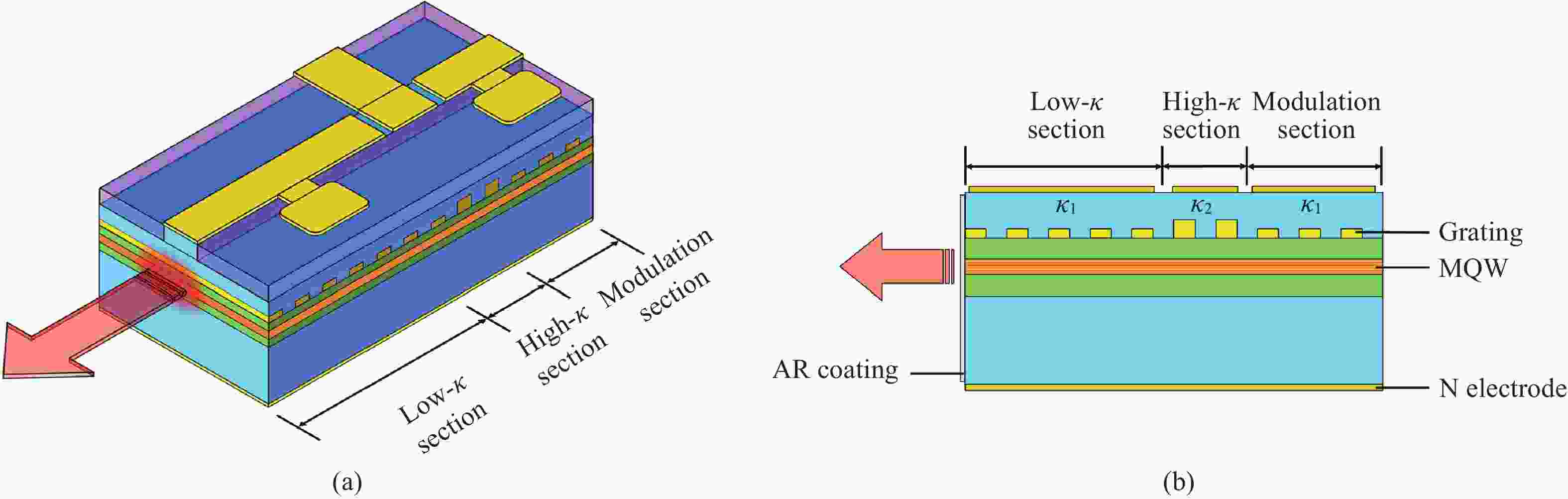
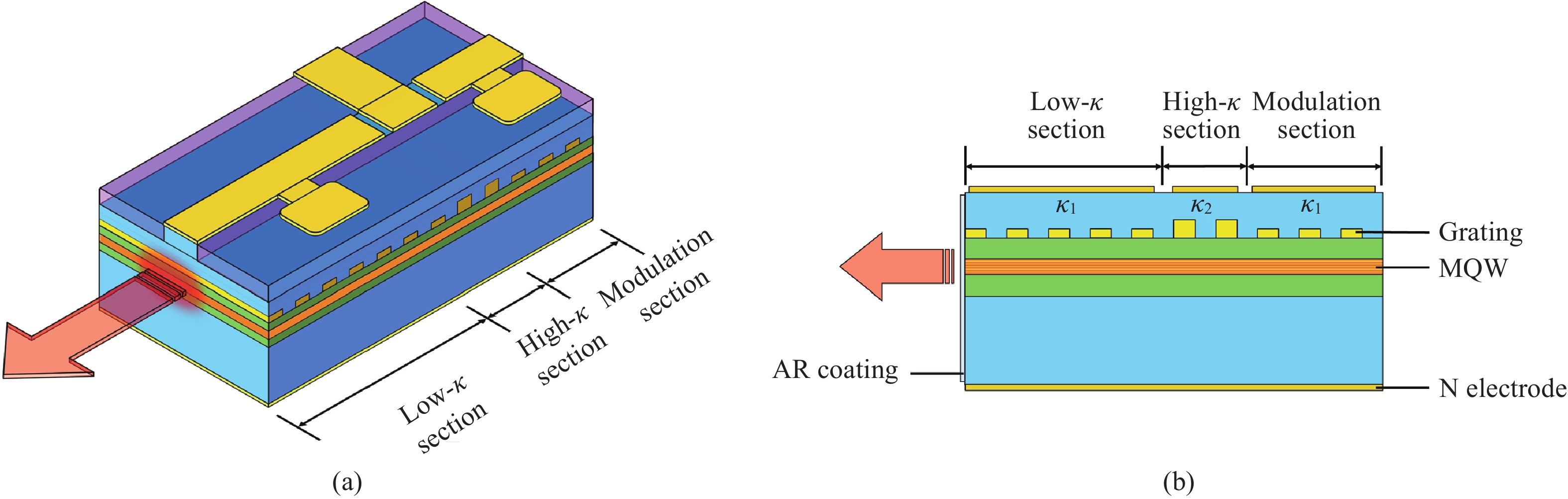
Figure 1. (a) Schematic of dual-κ DFB laser (b) cross sectional view of the proposed laser.
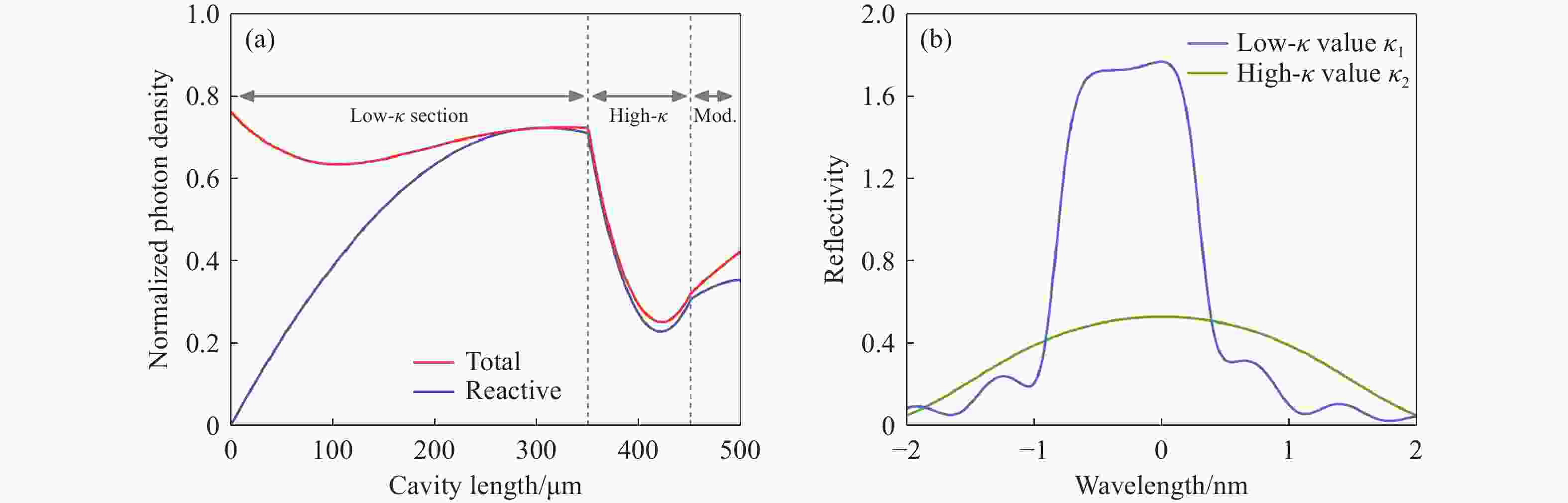
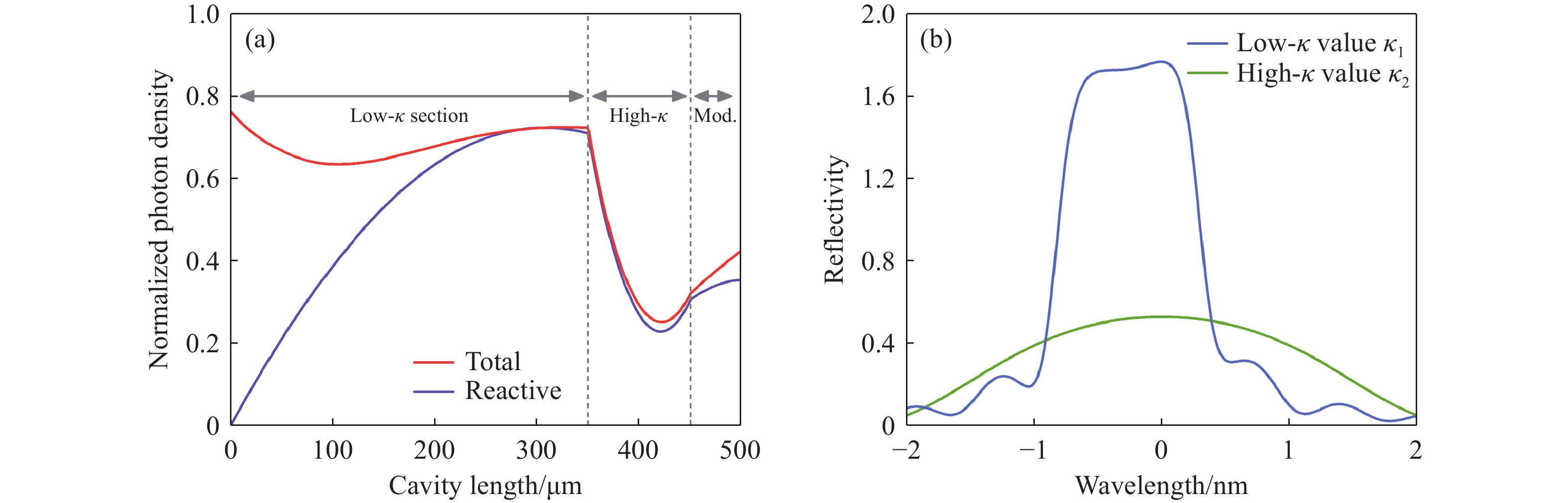
Figure 2. (a) Distribution profile of main mode total and reactive photon densities in laser cavity (b) the reflection profile for low κ-value κ1 and high κ-value κ2.
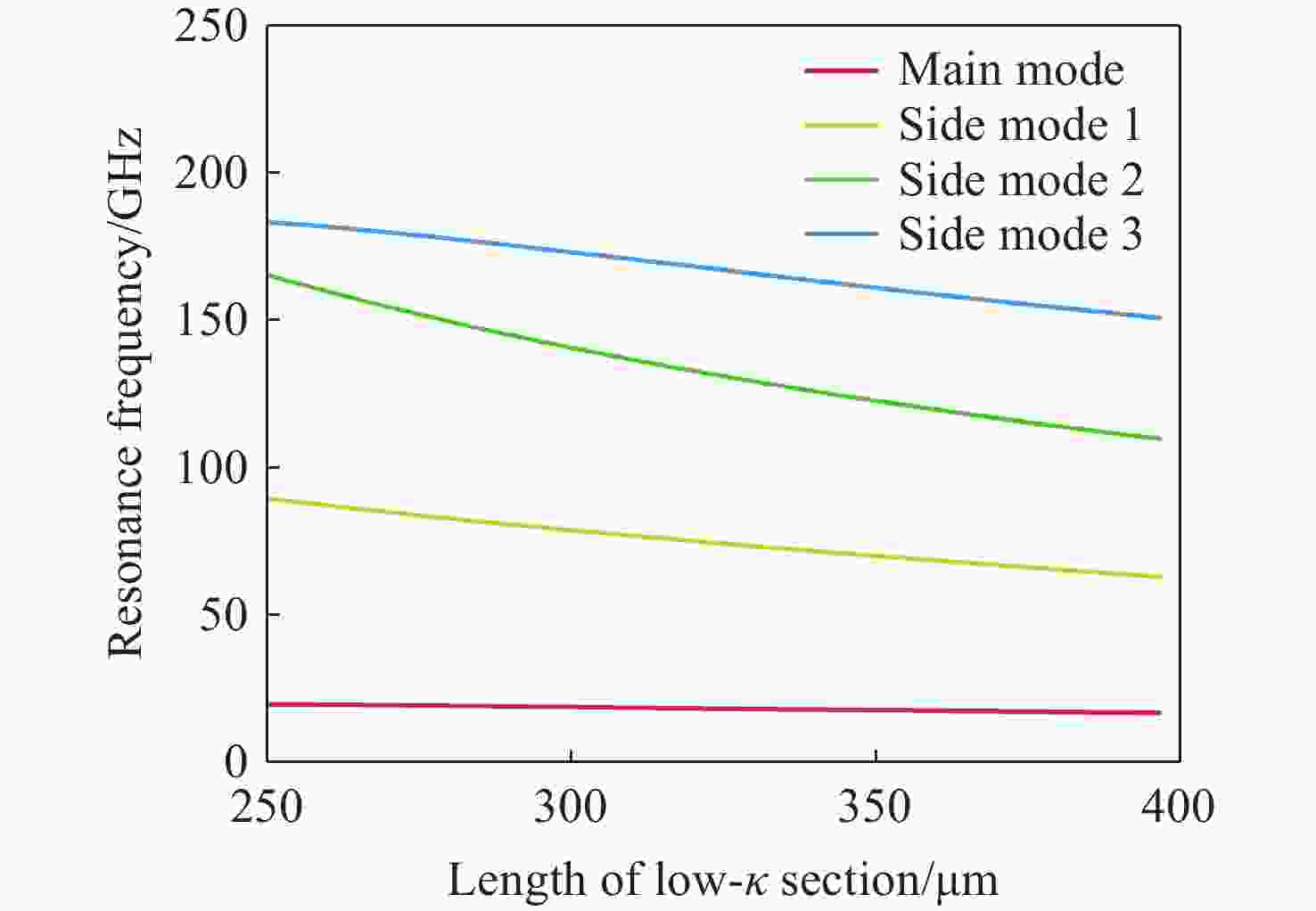
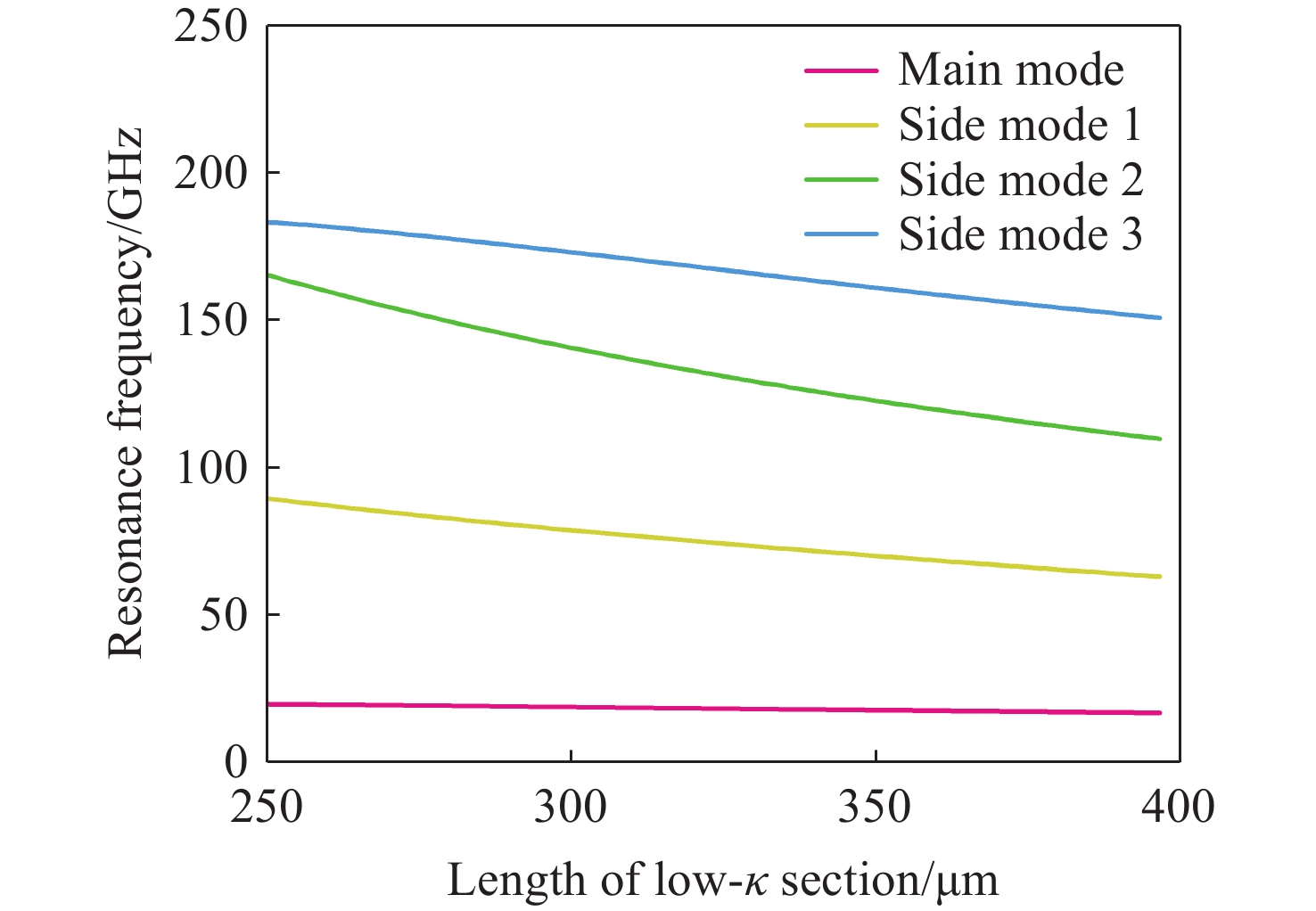
Figure 3. Resonance frequencies of different laser modes at low-κ section lengths from 250 to 400 μm.
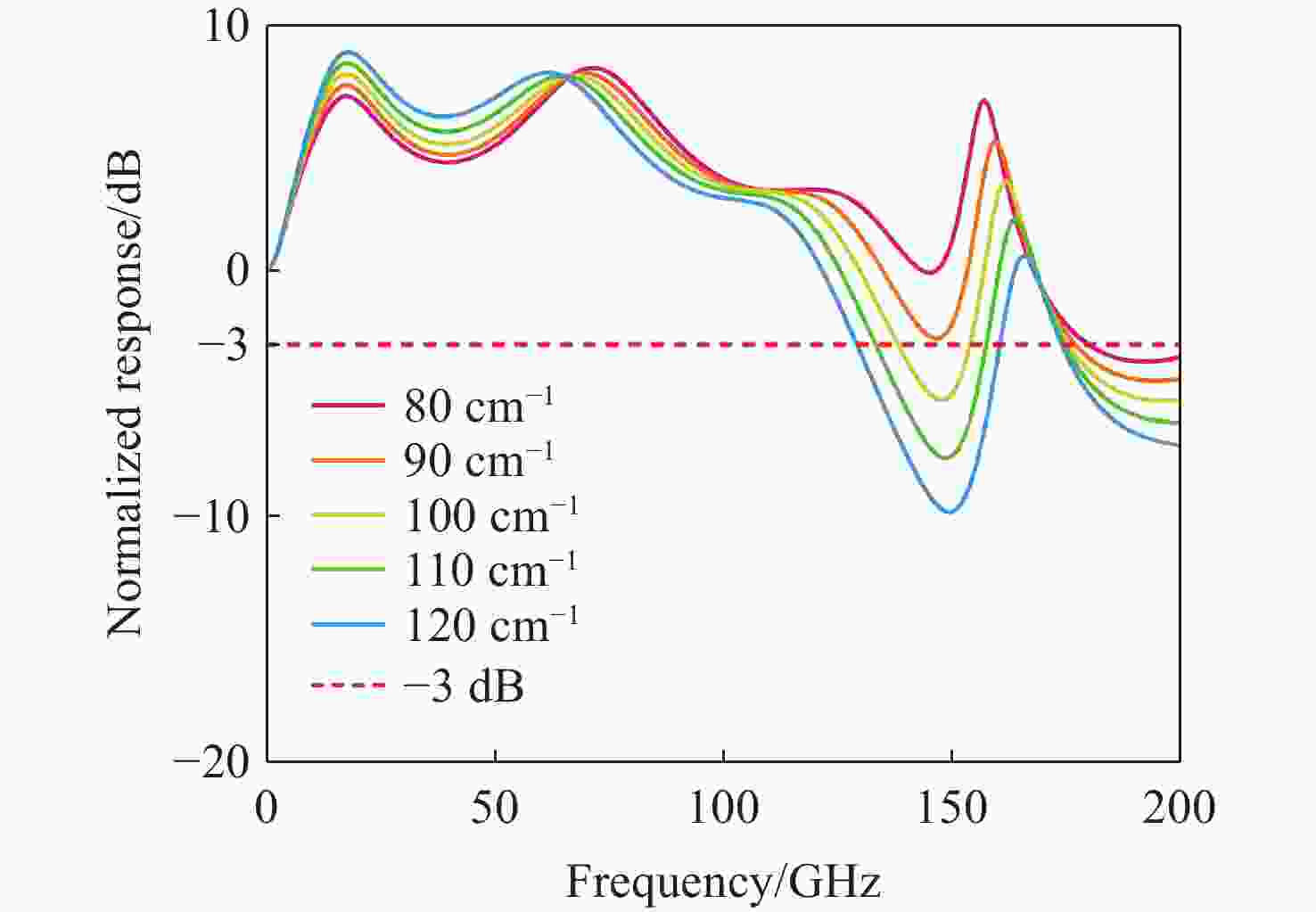
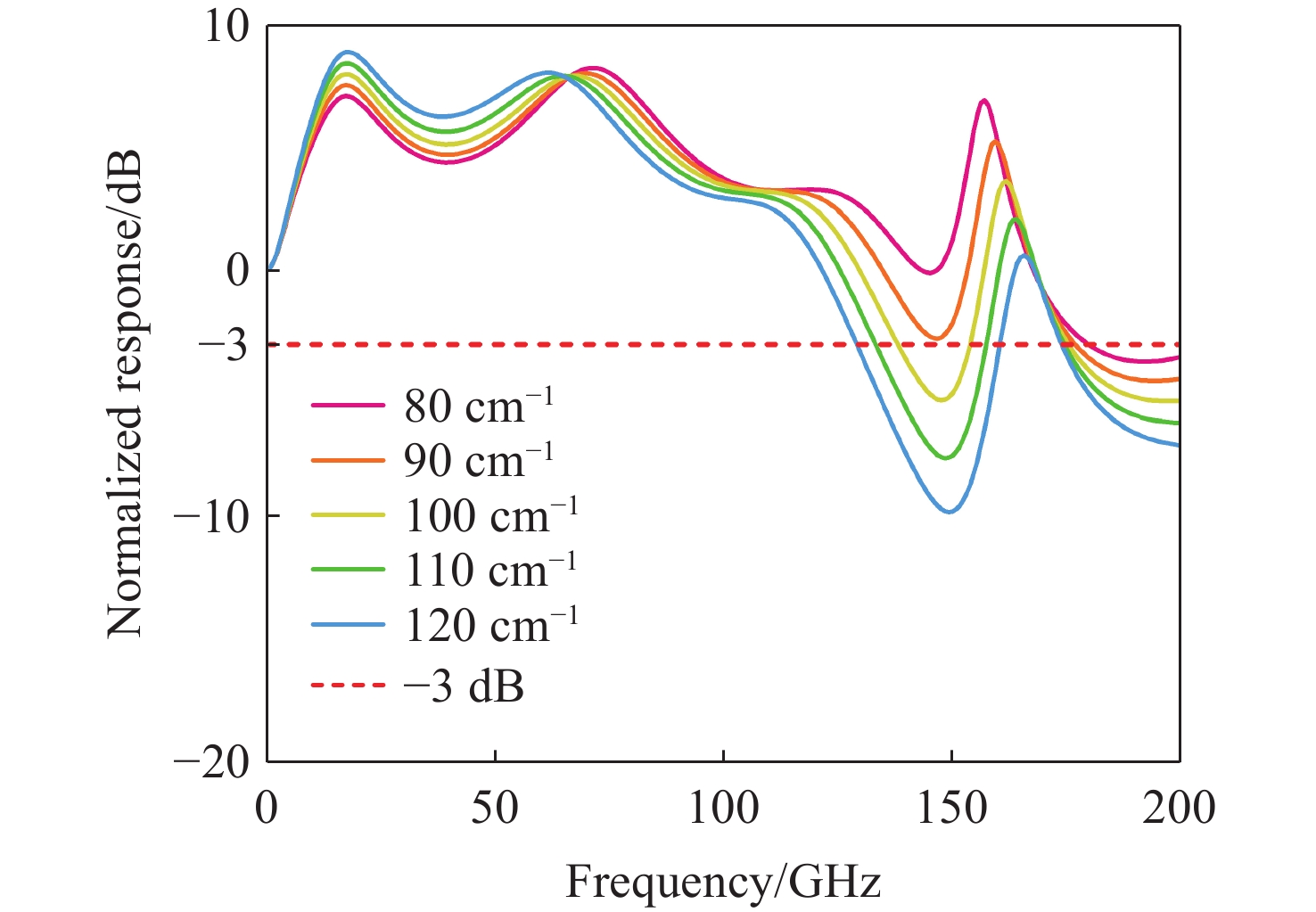
Figure 4. Normalized single-ended modulation response at κ2-values of high-κ section from 80 to 120 cm−1.
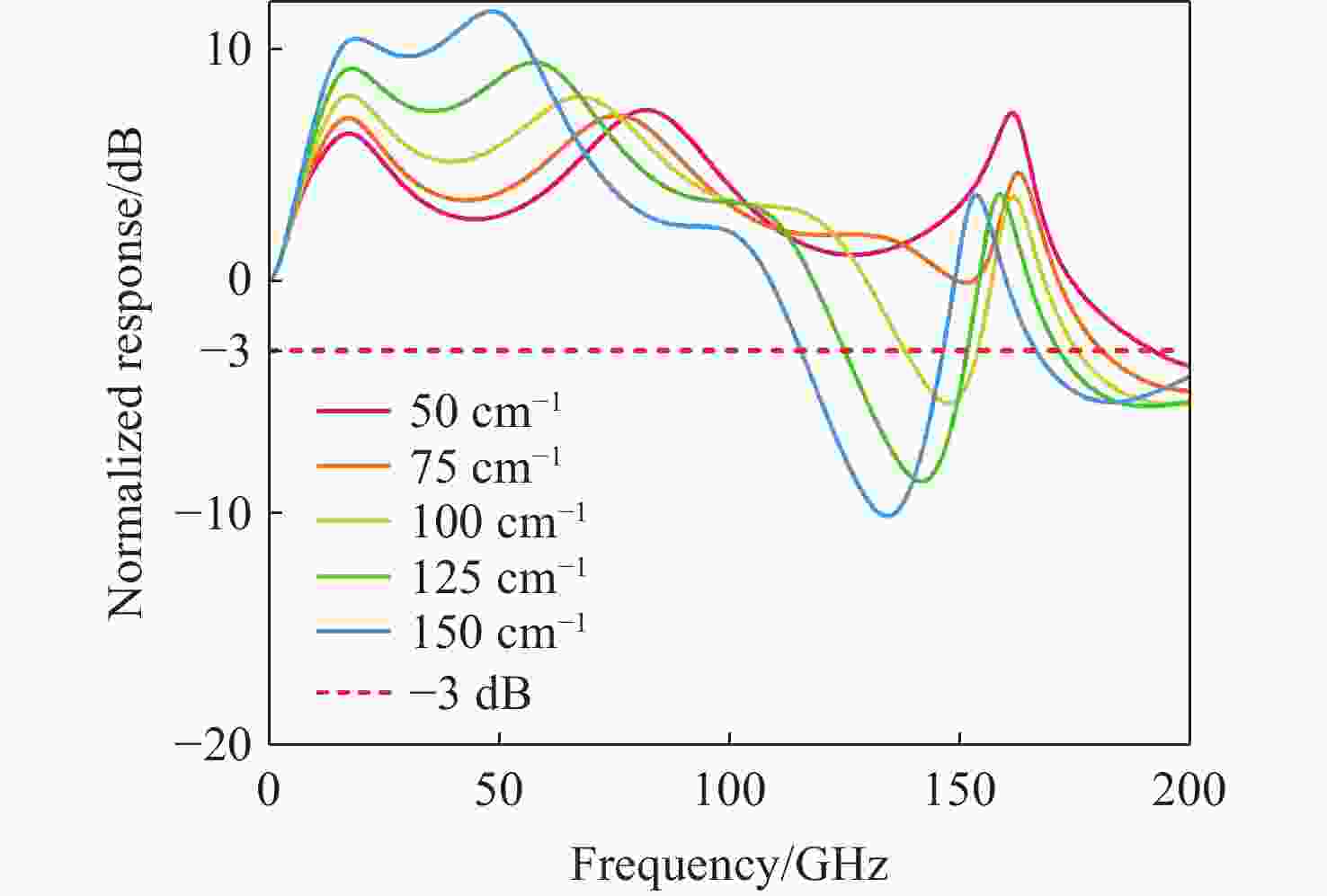
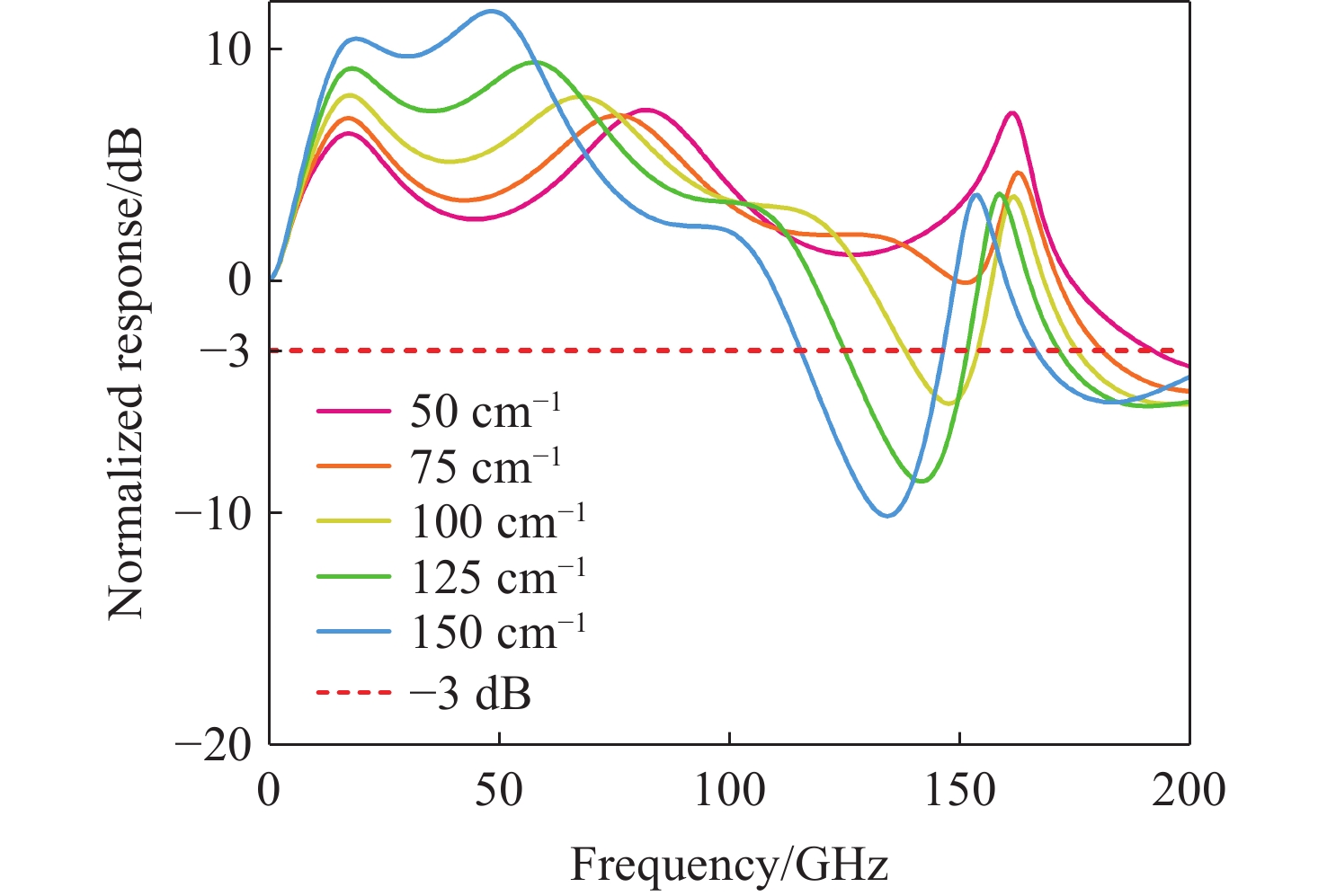
Figure 5. Normalized single-ended modulation response at high-κ section lengths from 50 to 150 μm.
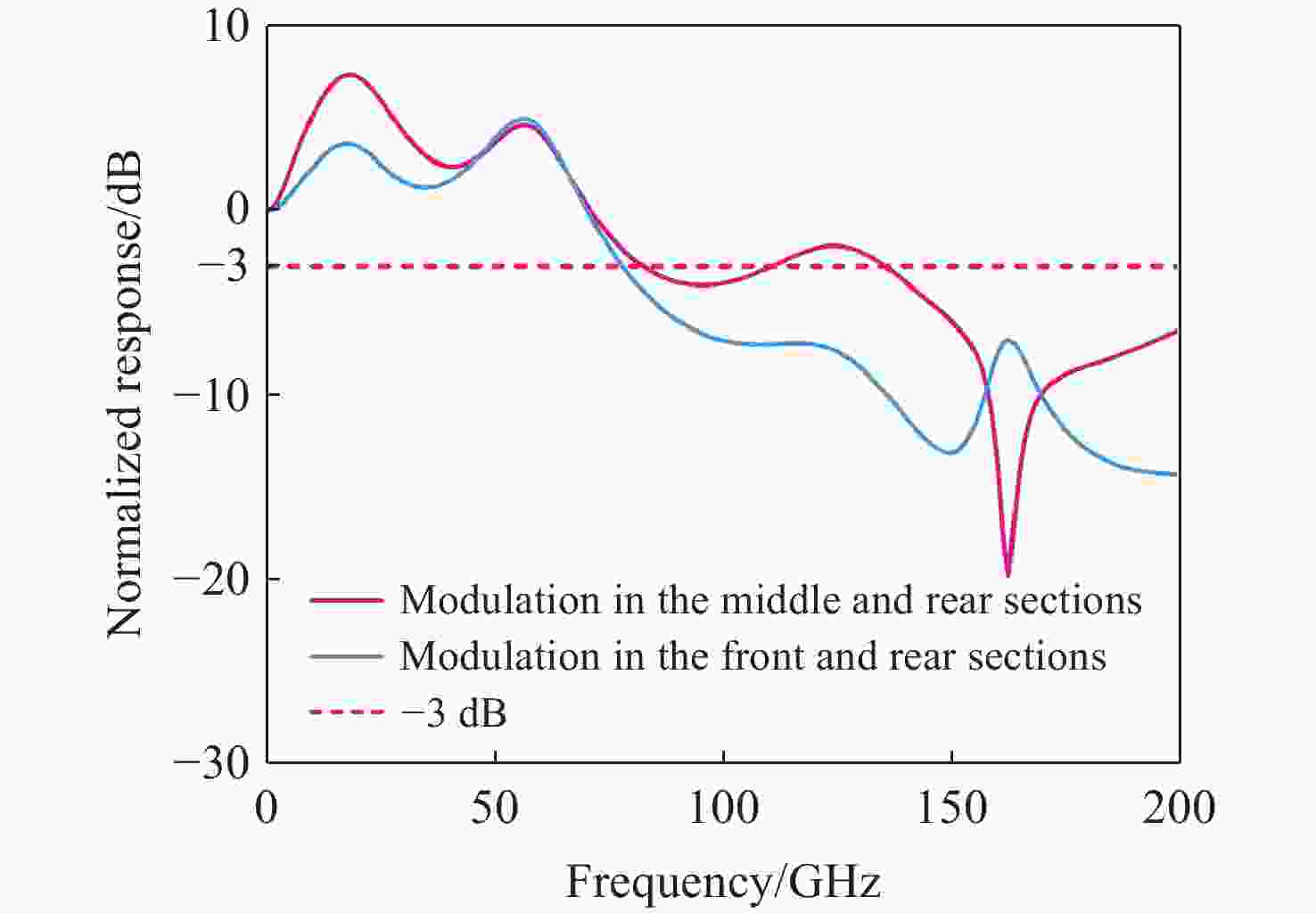
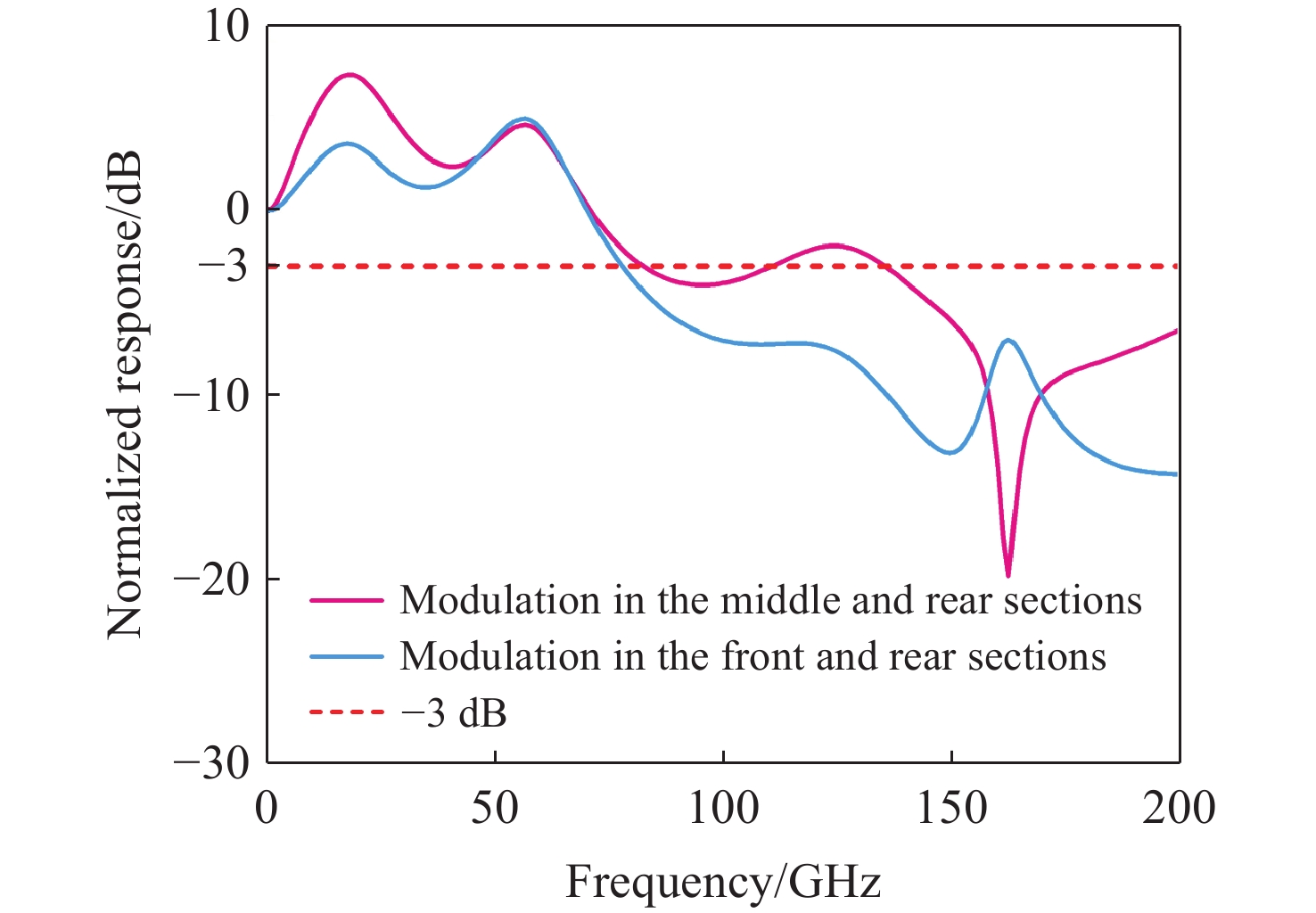
Figure 6. Normalized push-pull modulation response in the modulation (rear) section combined with high-κ (middle) and low-κ (front) sections, respectively.
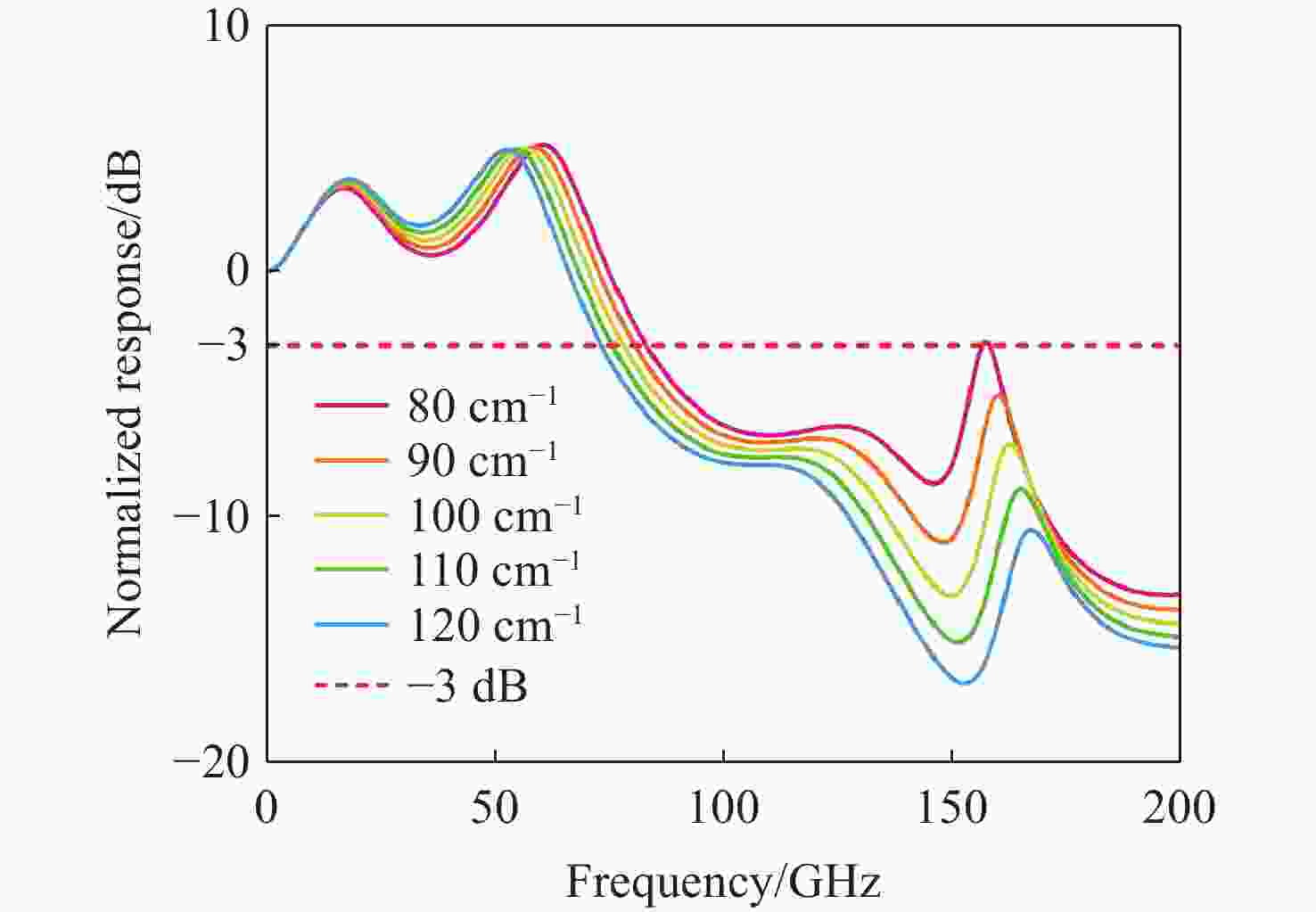
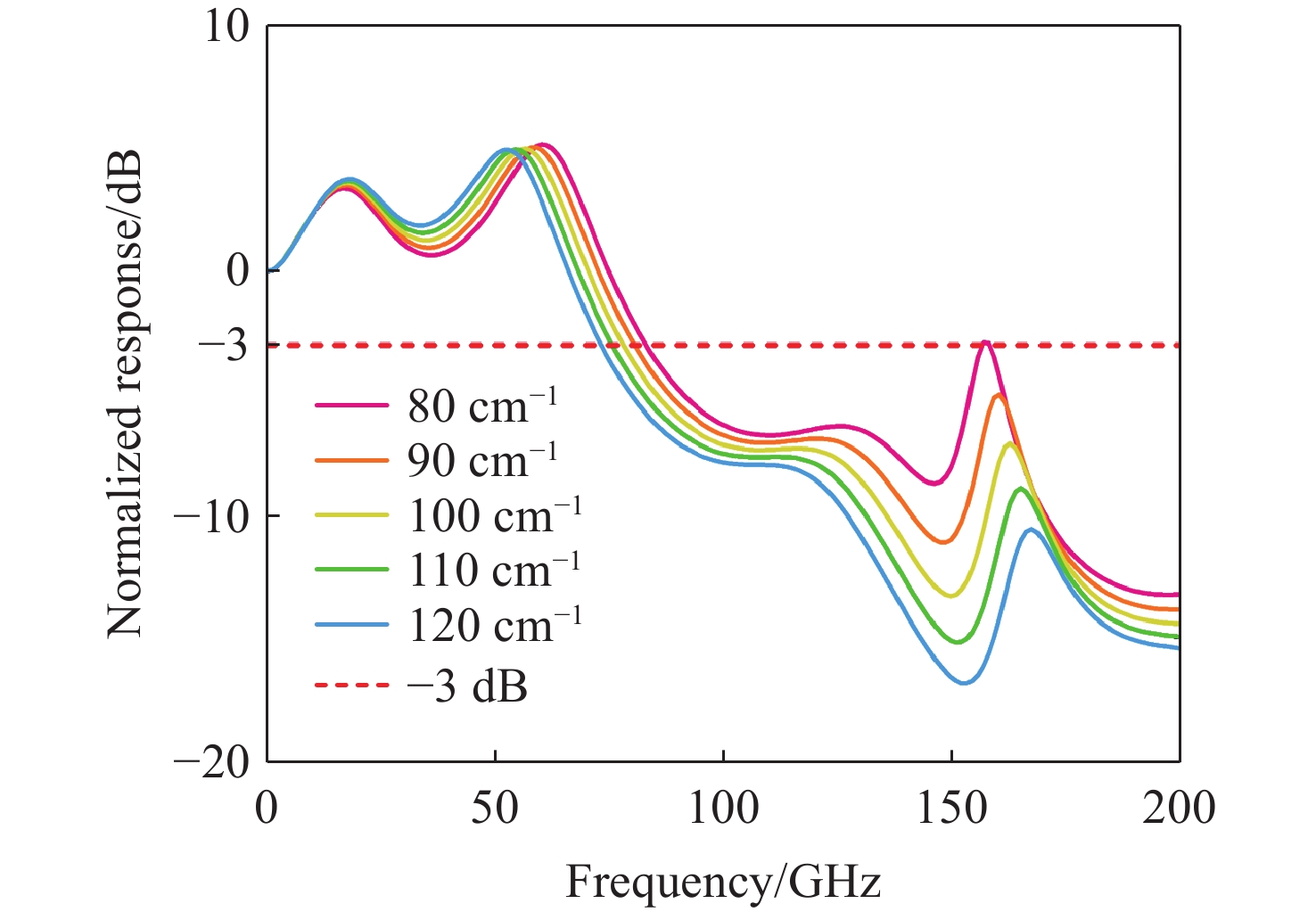
Figure 7. Normalized push-pull modulation response at κ2-values of high-κ section from 80 to 120 cm−1.
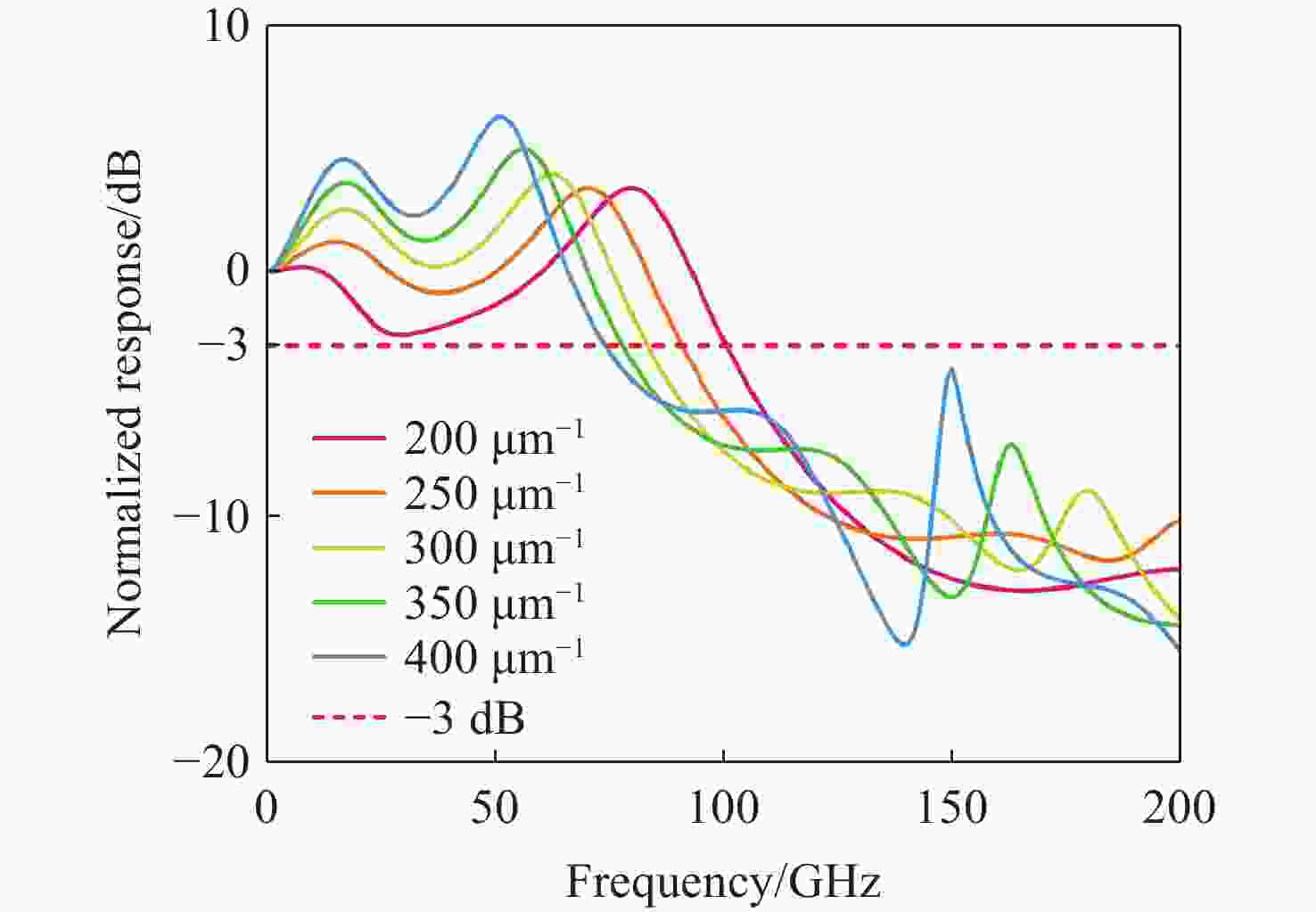
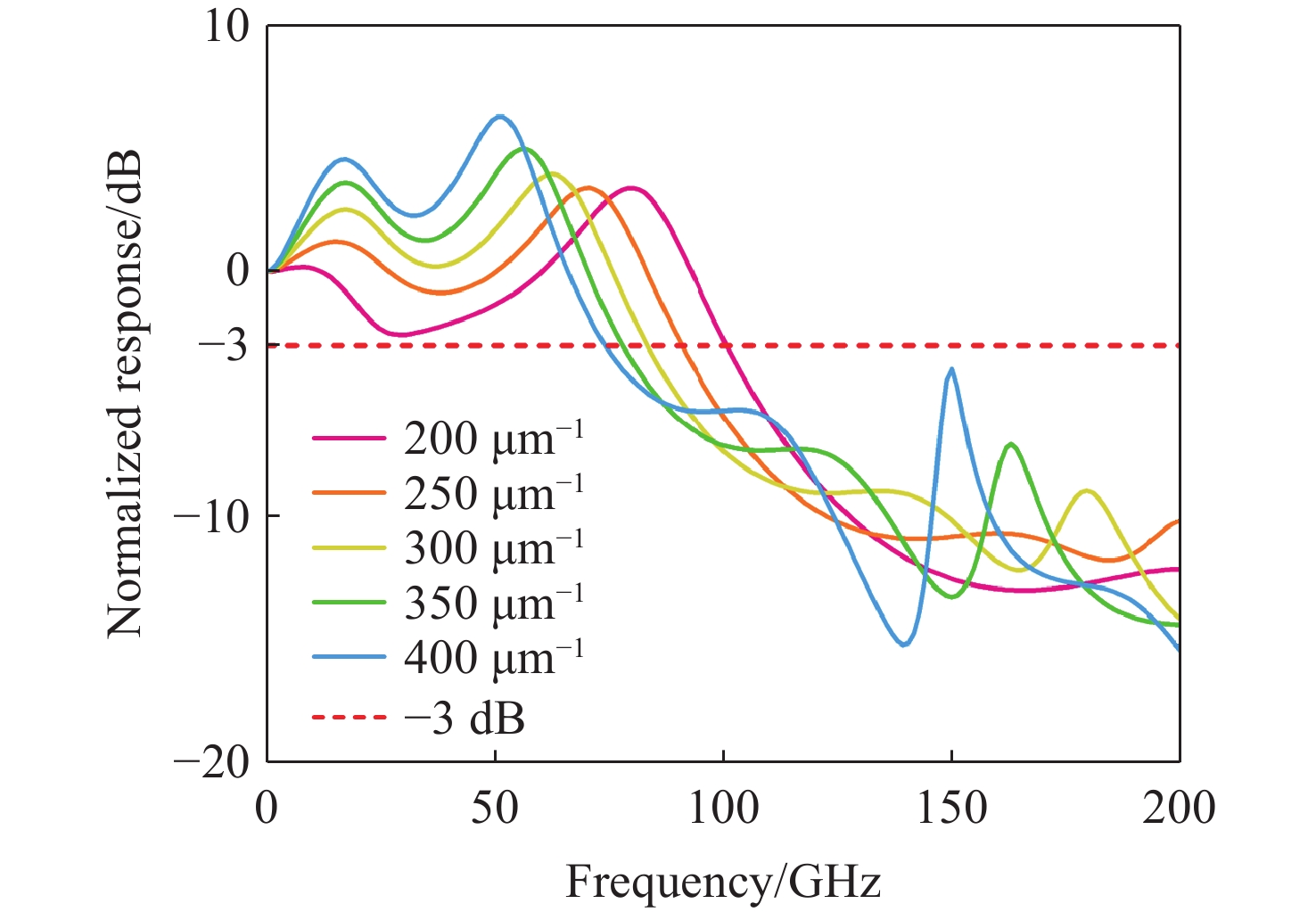
Figure 8. Normalized push-pull modulation response at low-κ section lengths from 200 to 400 μm.
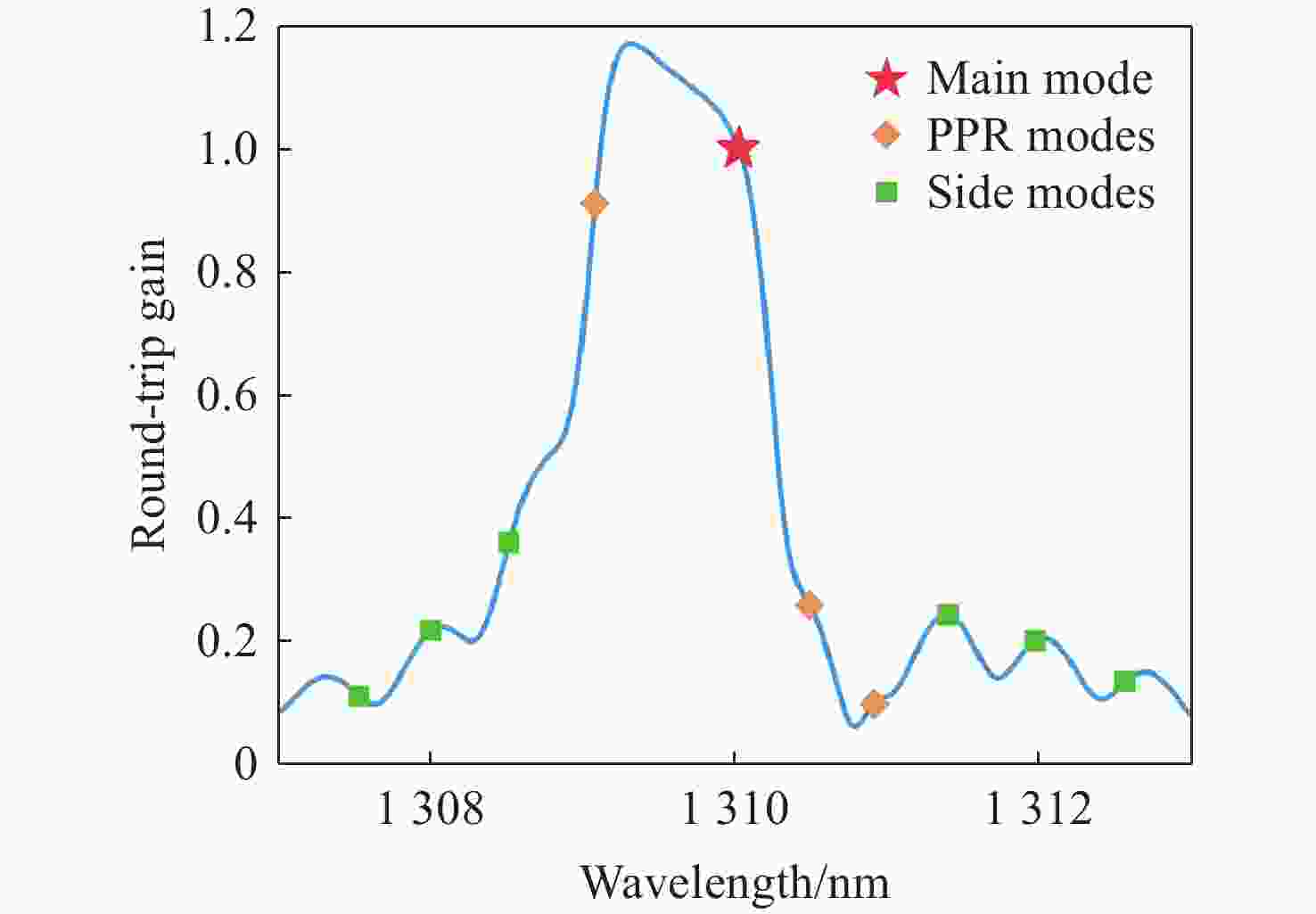
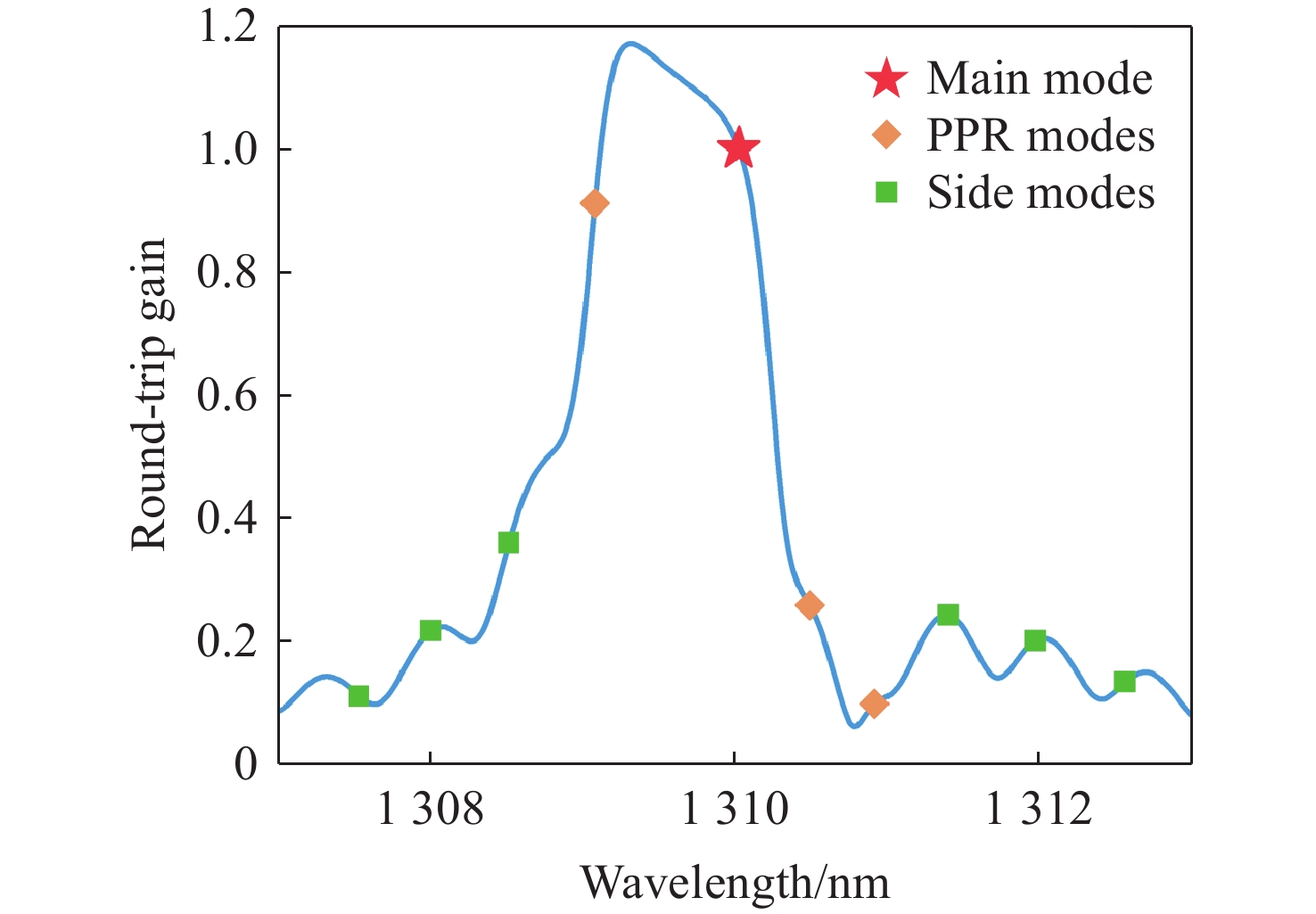
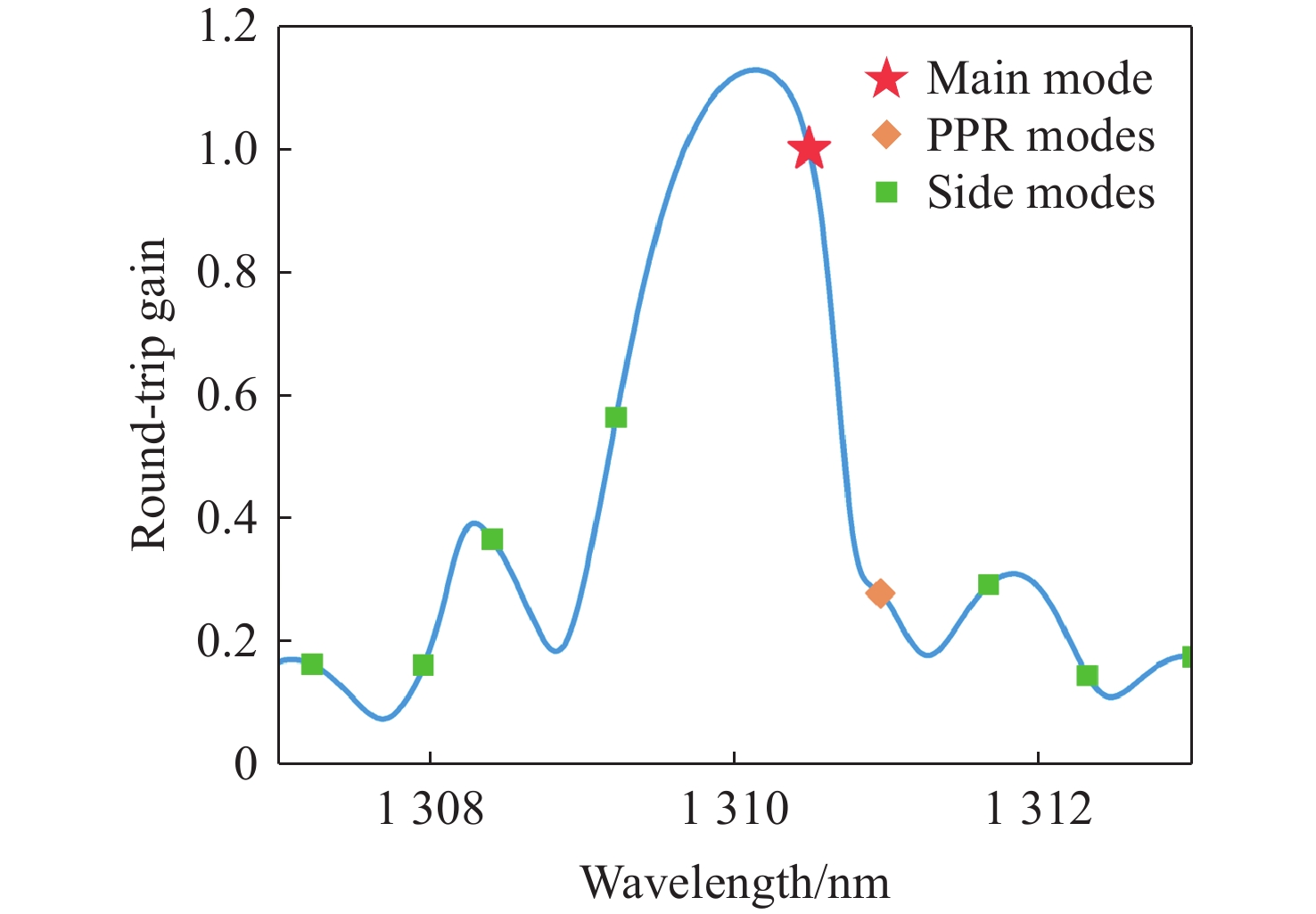
Figure 9. Round-trip gain and lasing mode of the optimized laser for single-ended modulation.
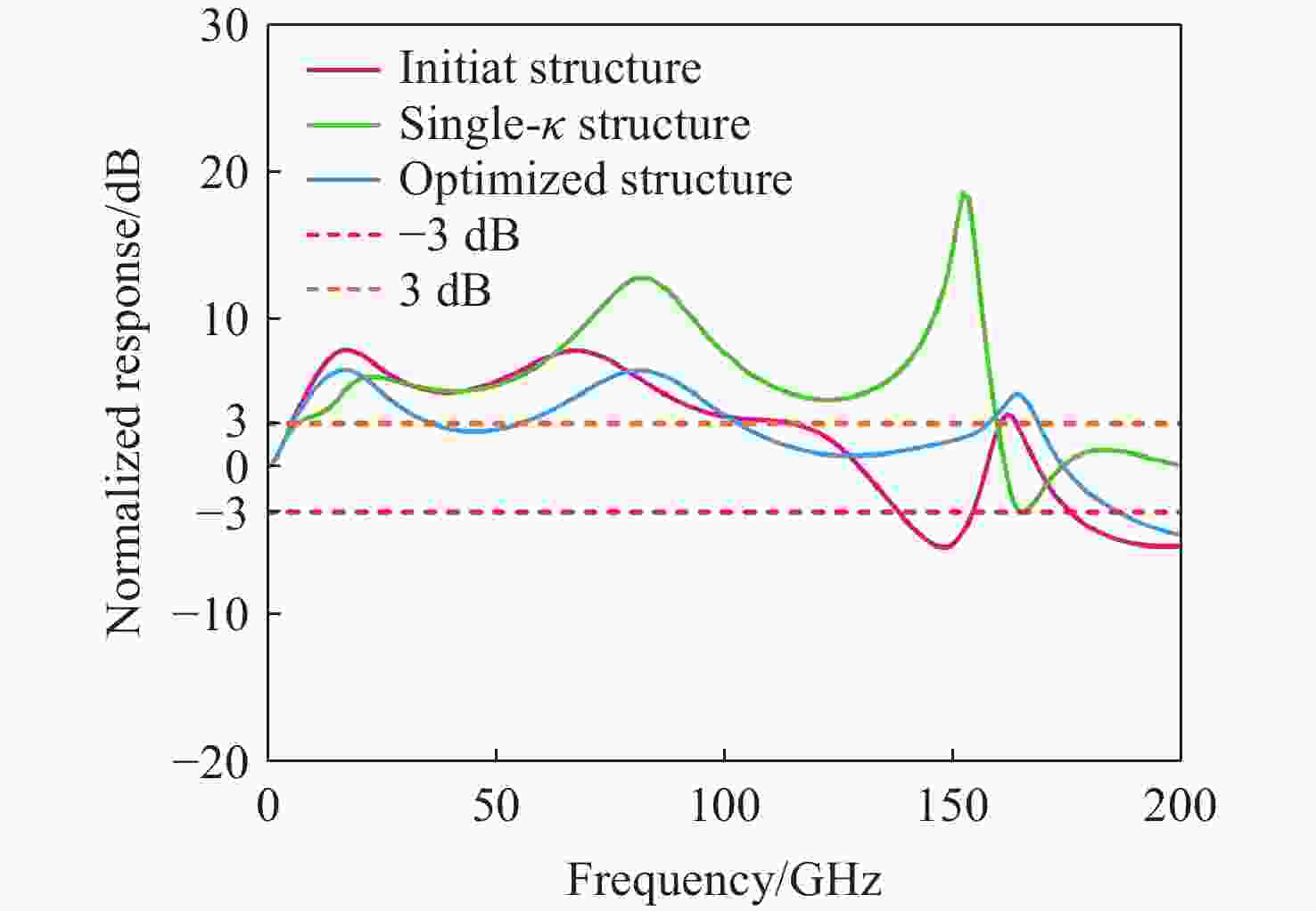
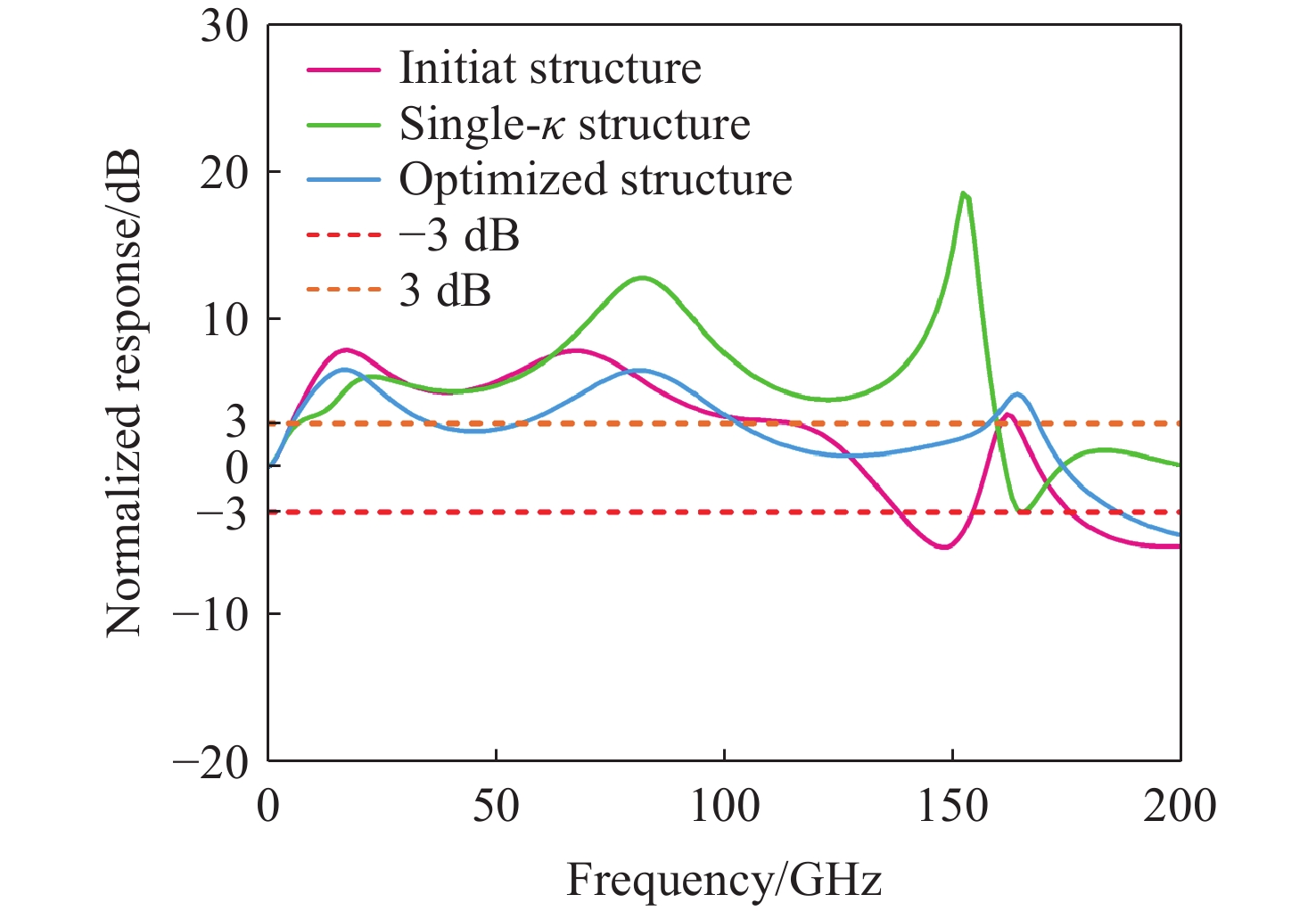
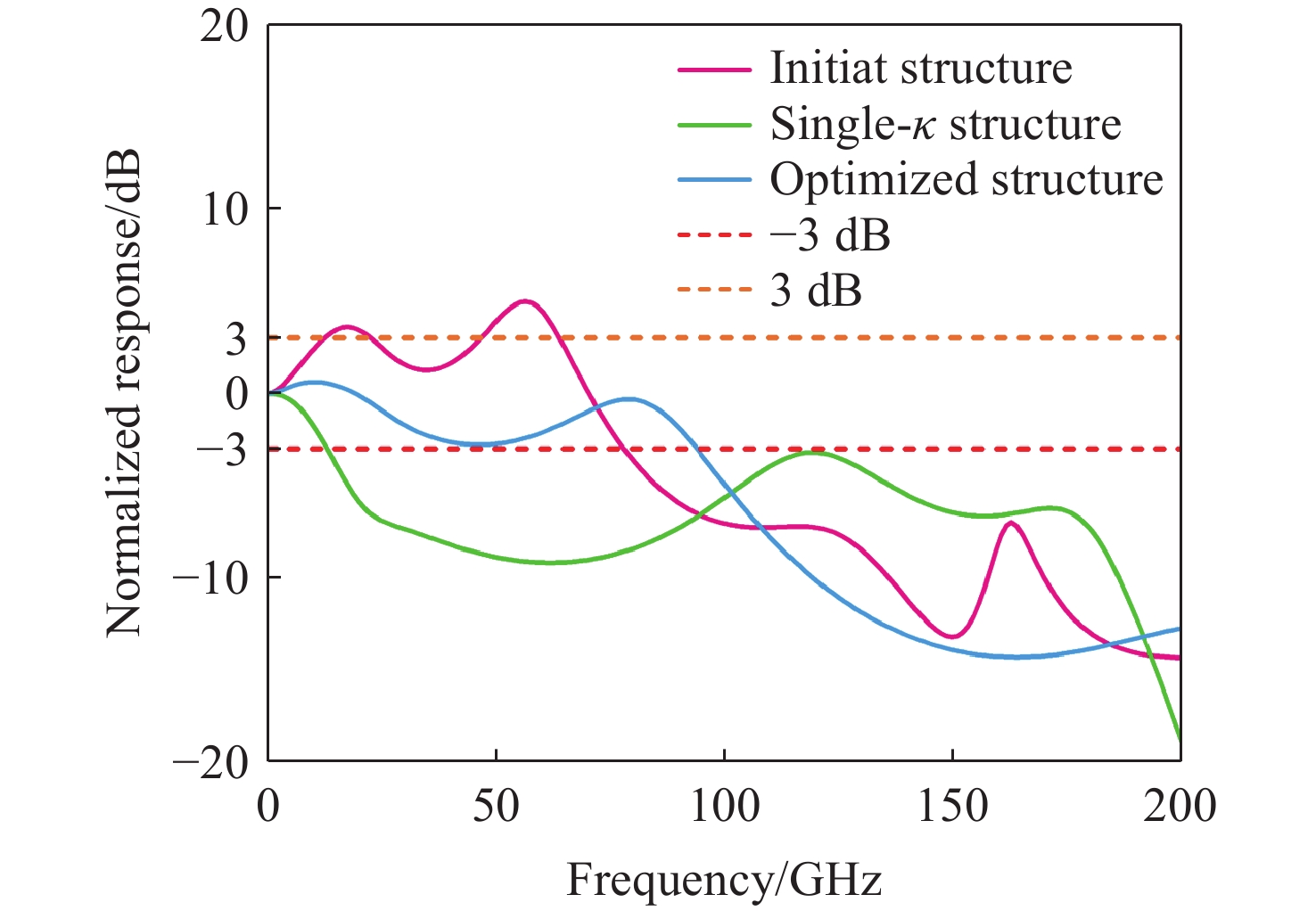
Figure 11. Normalized modulation response of three structures for single-ended modulation.
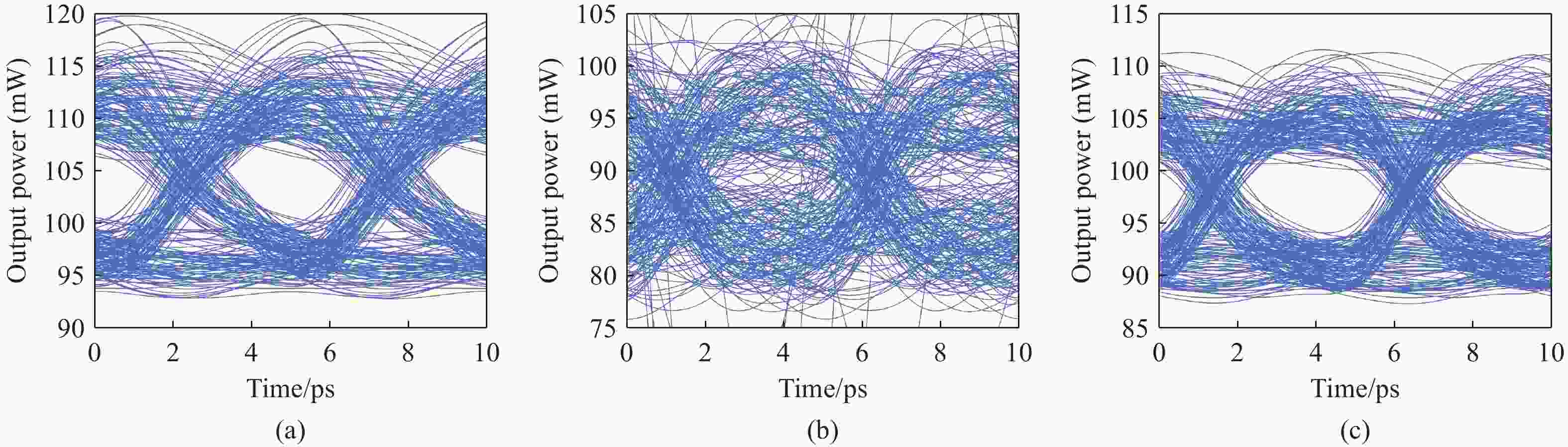
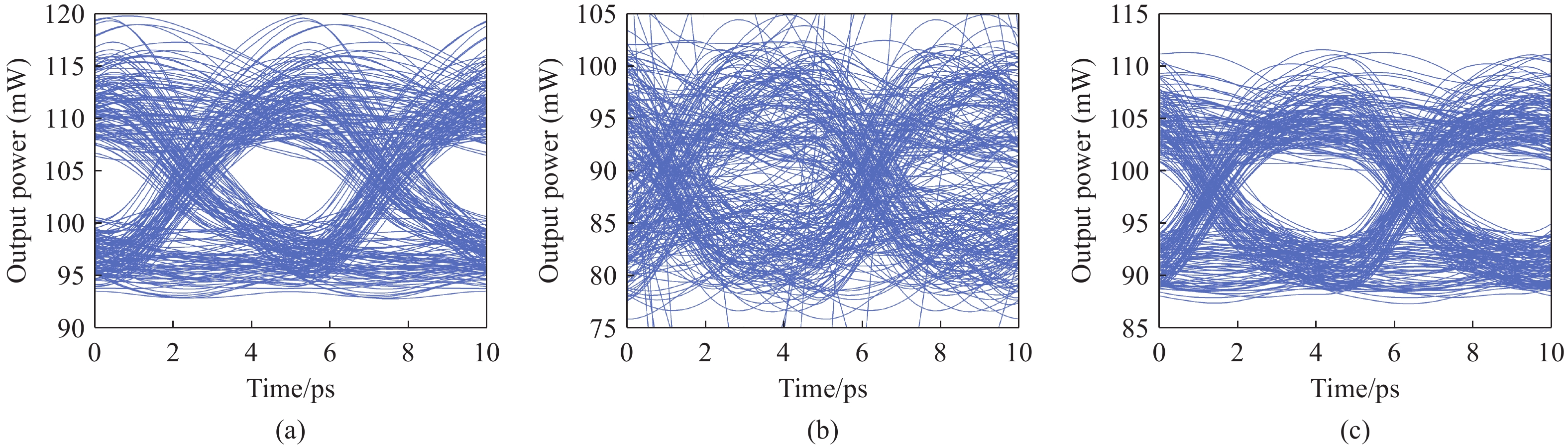
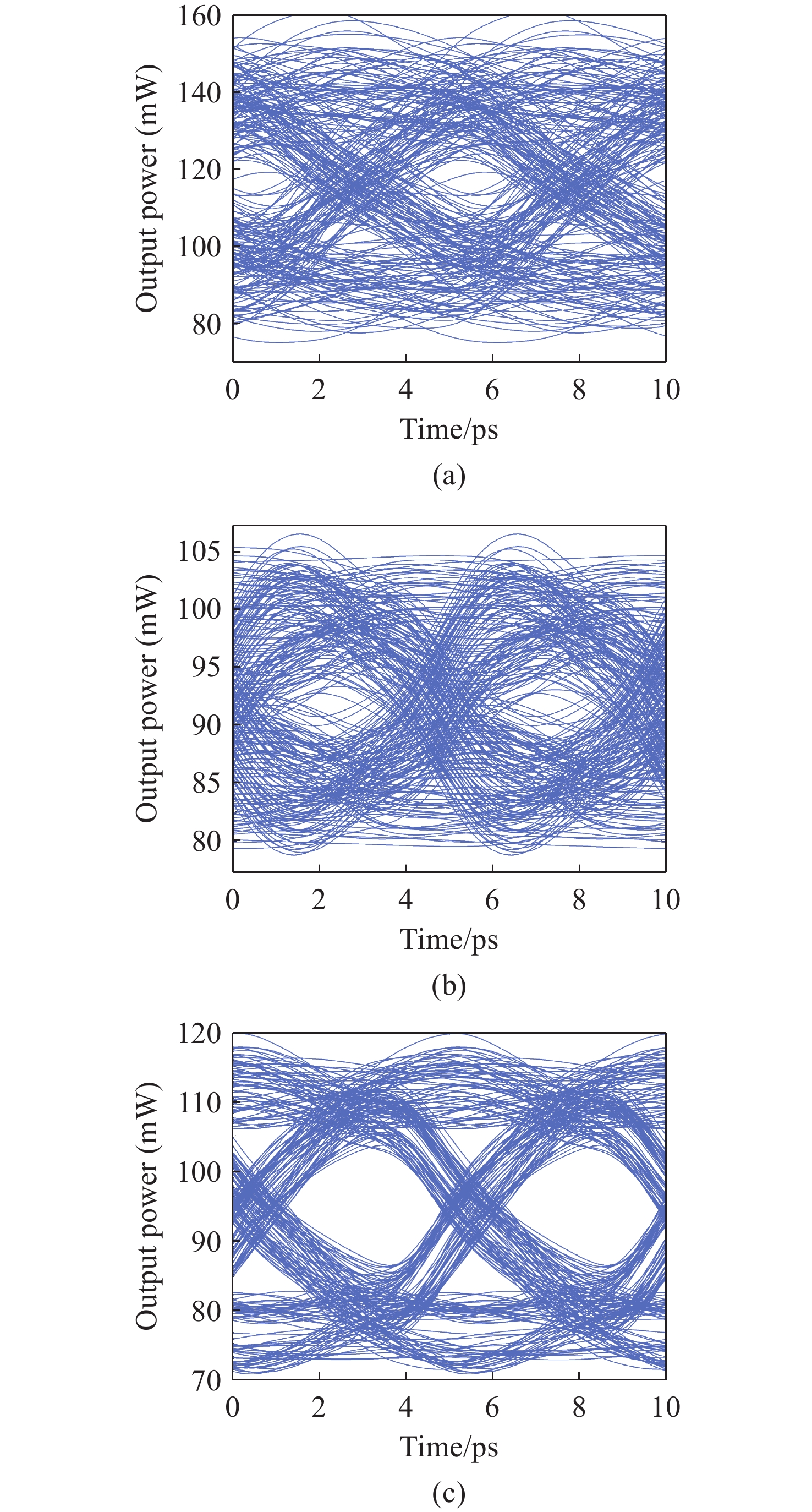
Figure 12. Eye diagrams for single-ended modulation in (a) initial laser (b) single-κ grating laser and (c) optimized laser structures.
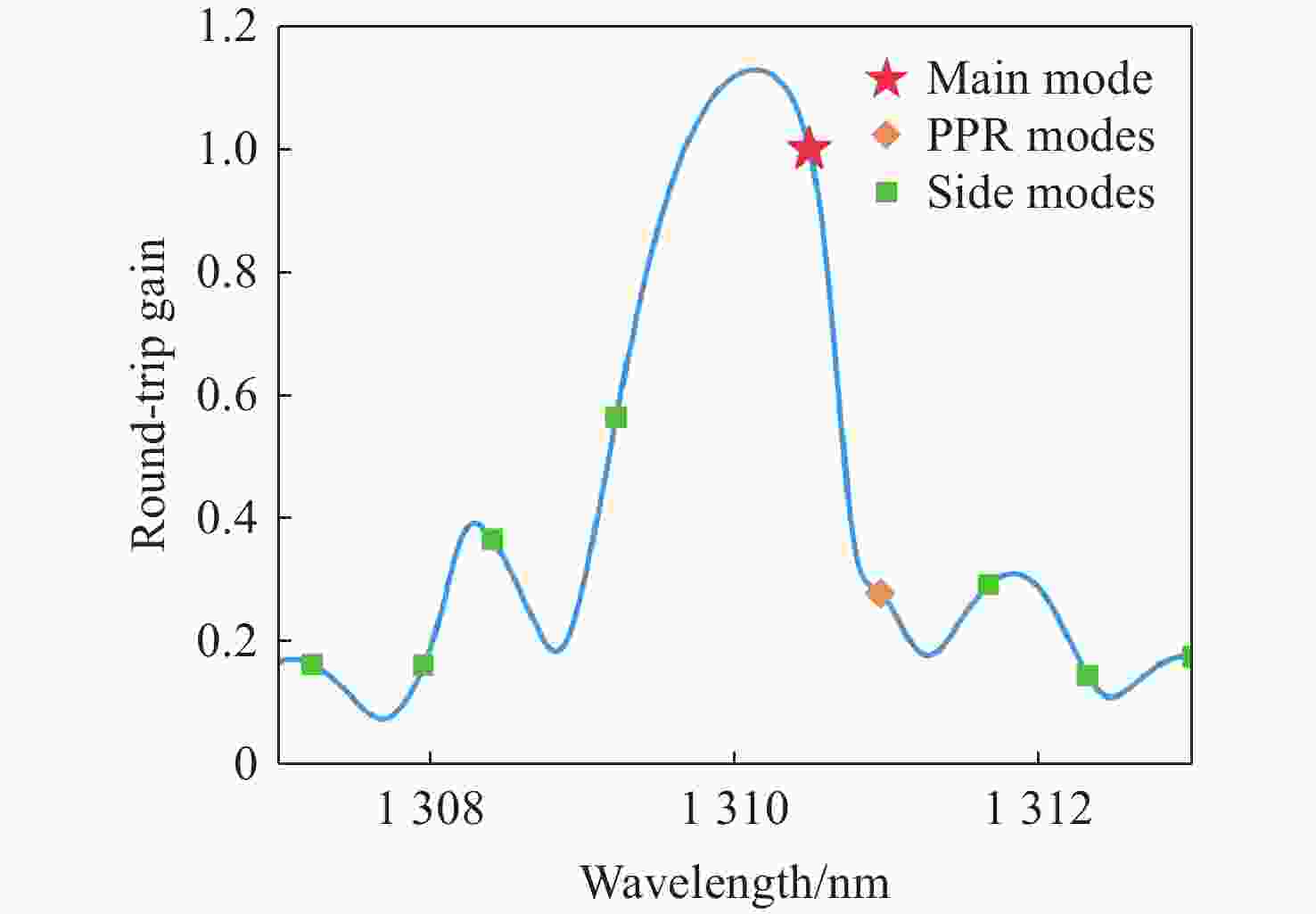
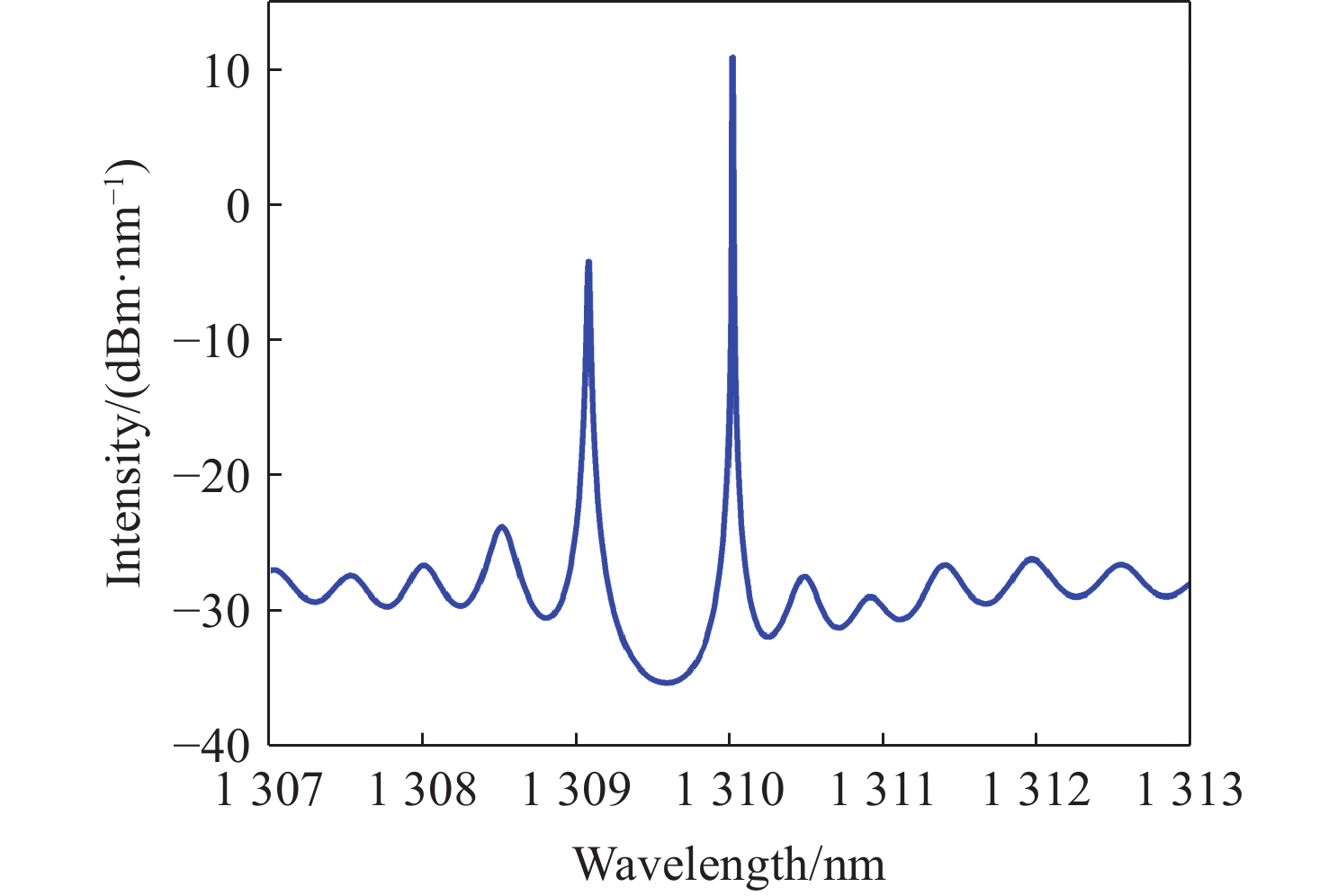
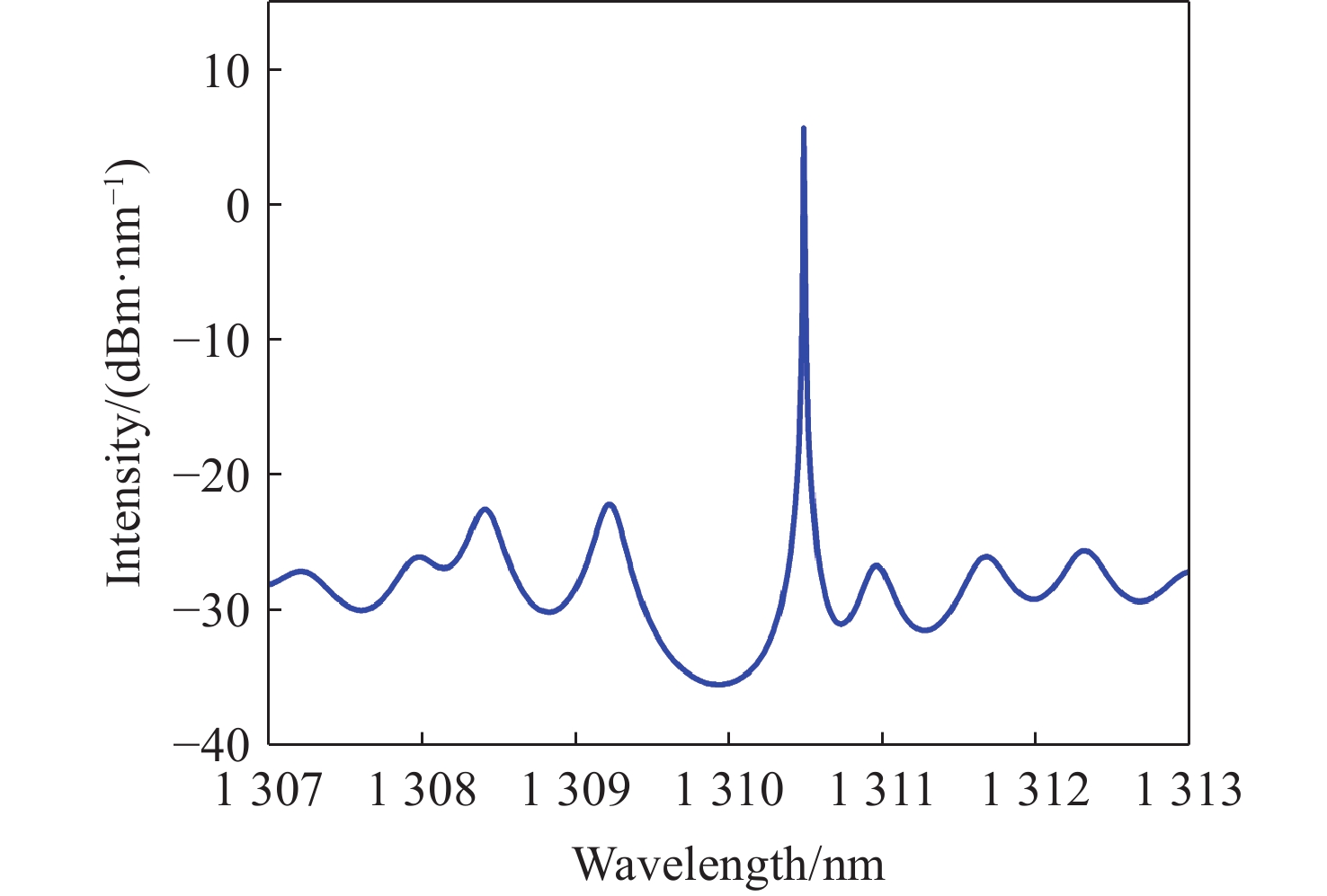
Figure 13. Round-trip gain and lasing mode of the optimized laser for push-pull modulation.
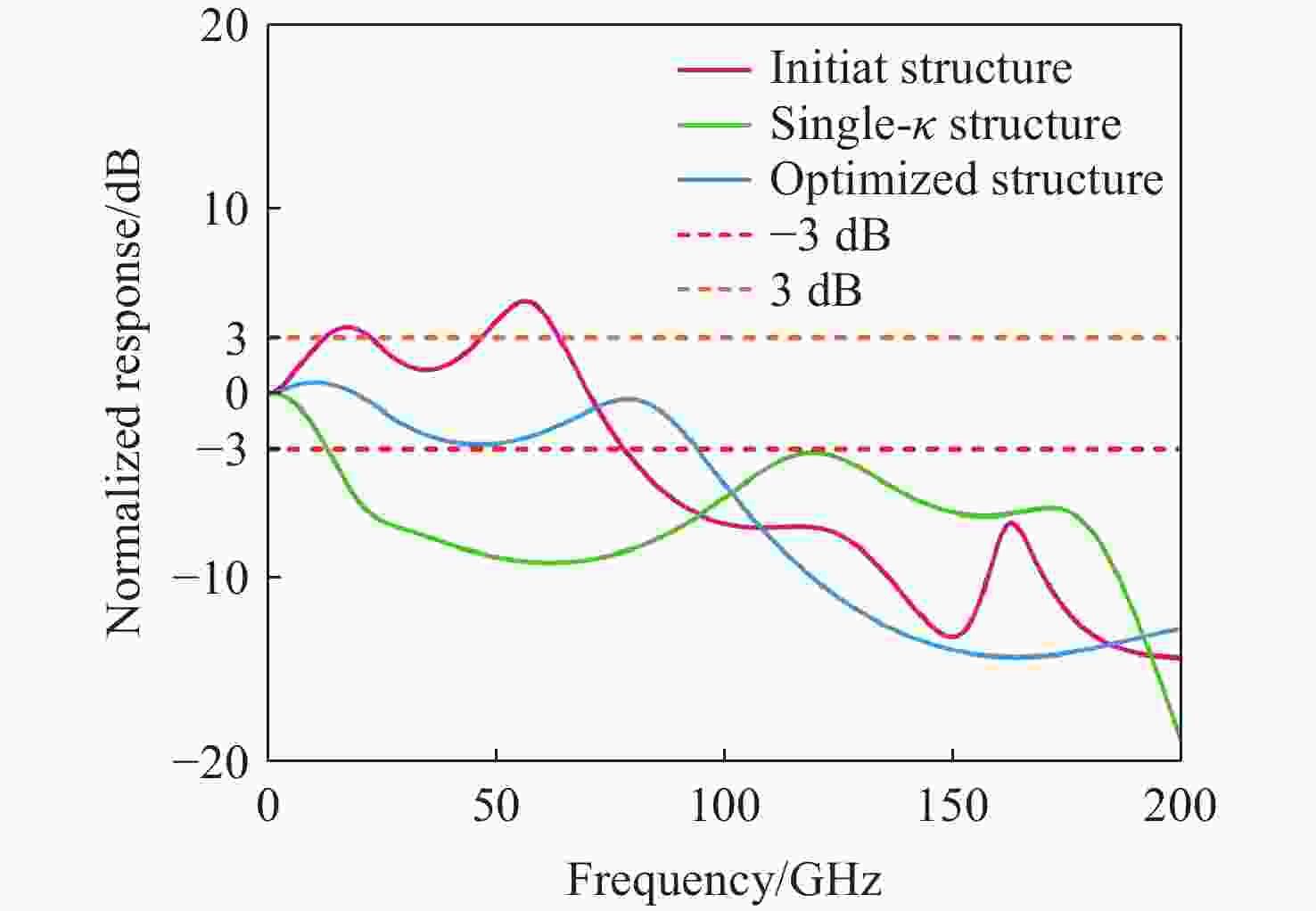
Figure 15. Normalized modulation response of three structures for push-pull modulation.
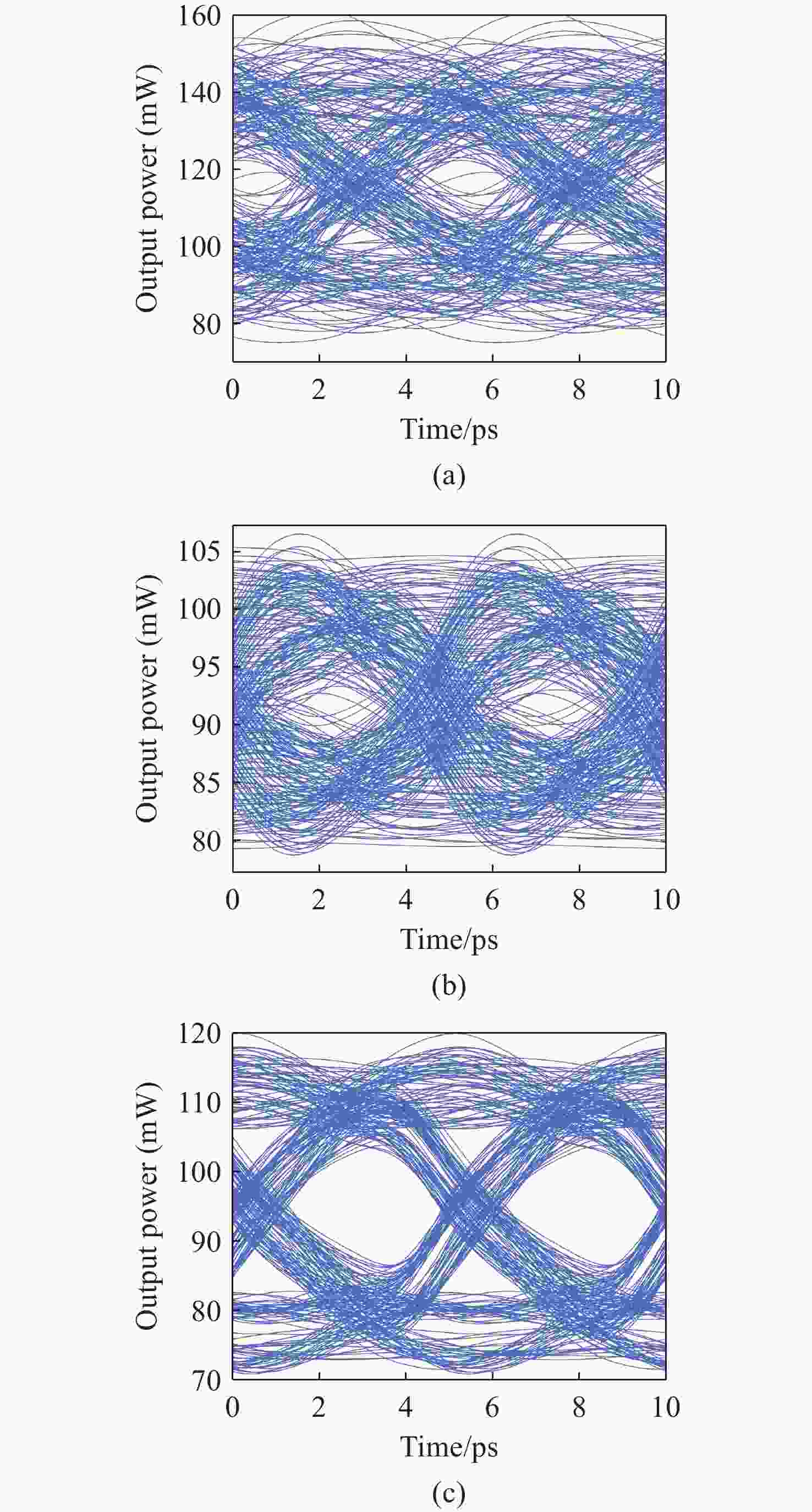
Figure 16. Eye diagrams for push-pull modulation in (a) initial laser (b) single-κ grating laser and (c) optimized laser structures.
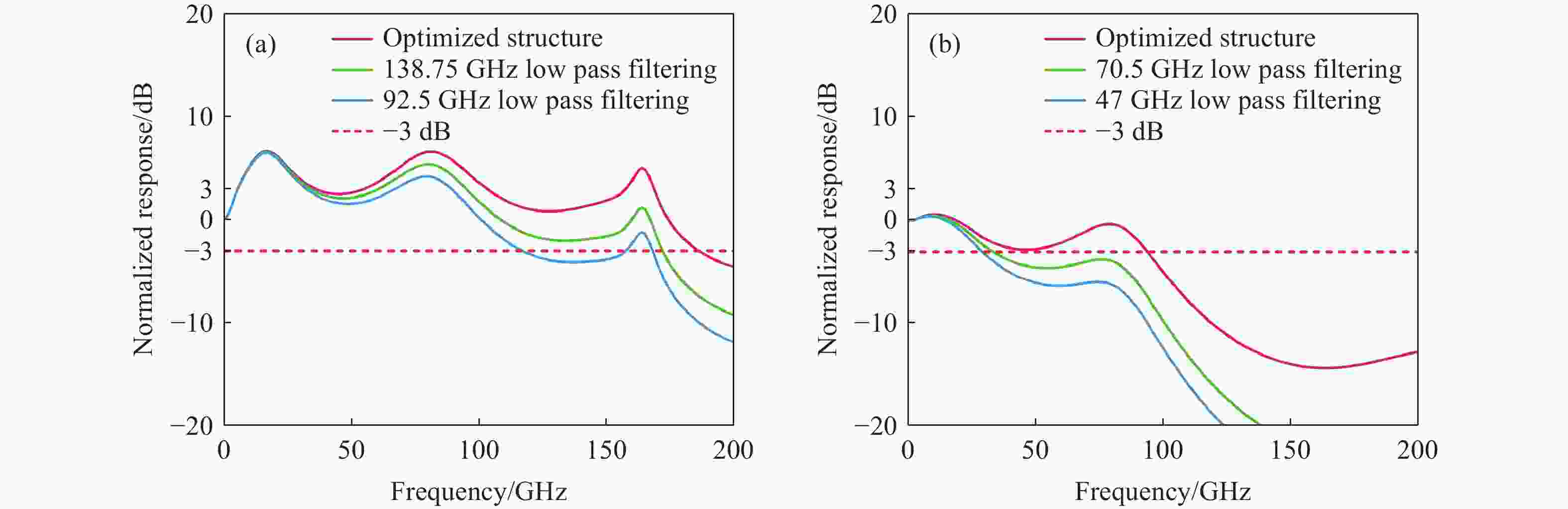
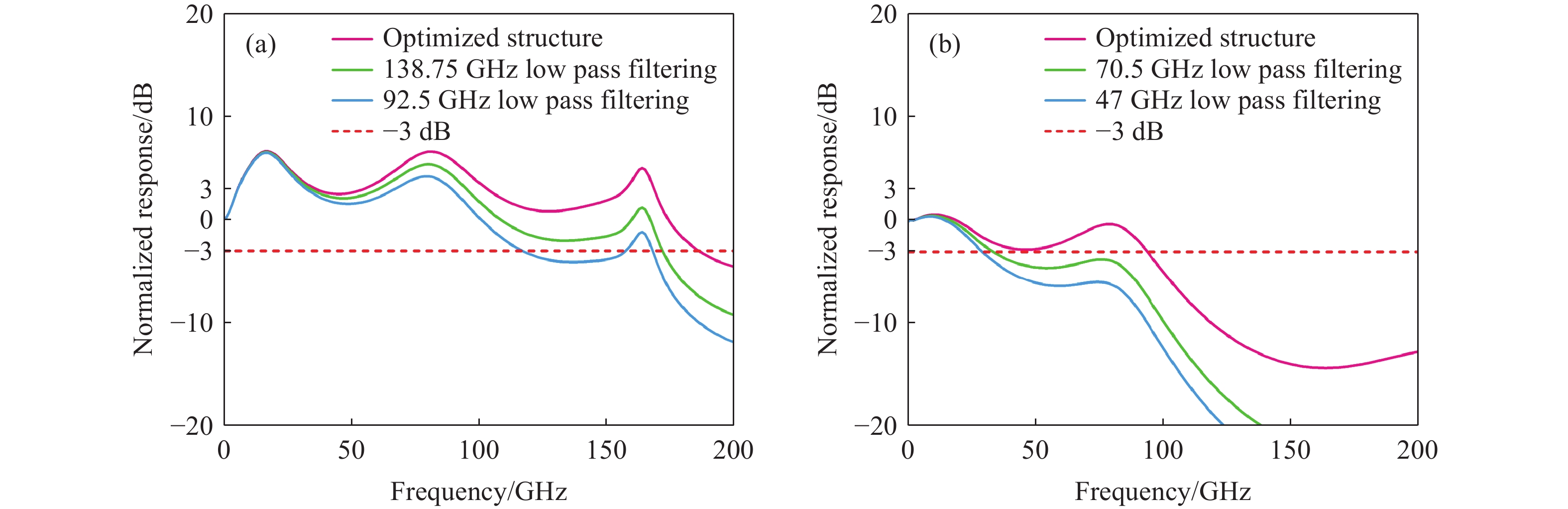
Figure 17. Effect of an equivalent first-order external electrical low-pass limitation on the optimized small-signal responses: (a) single-ended modulation and (b) push-pull modulation.
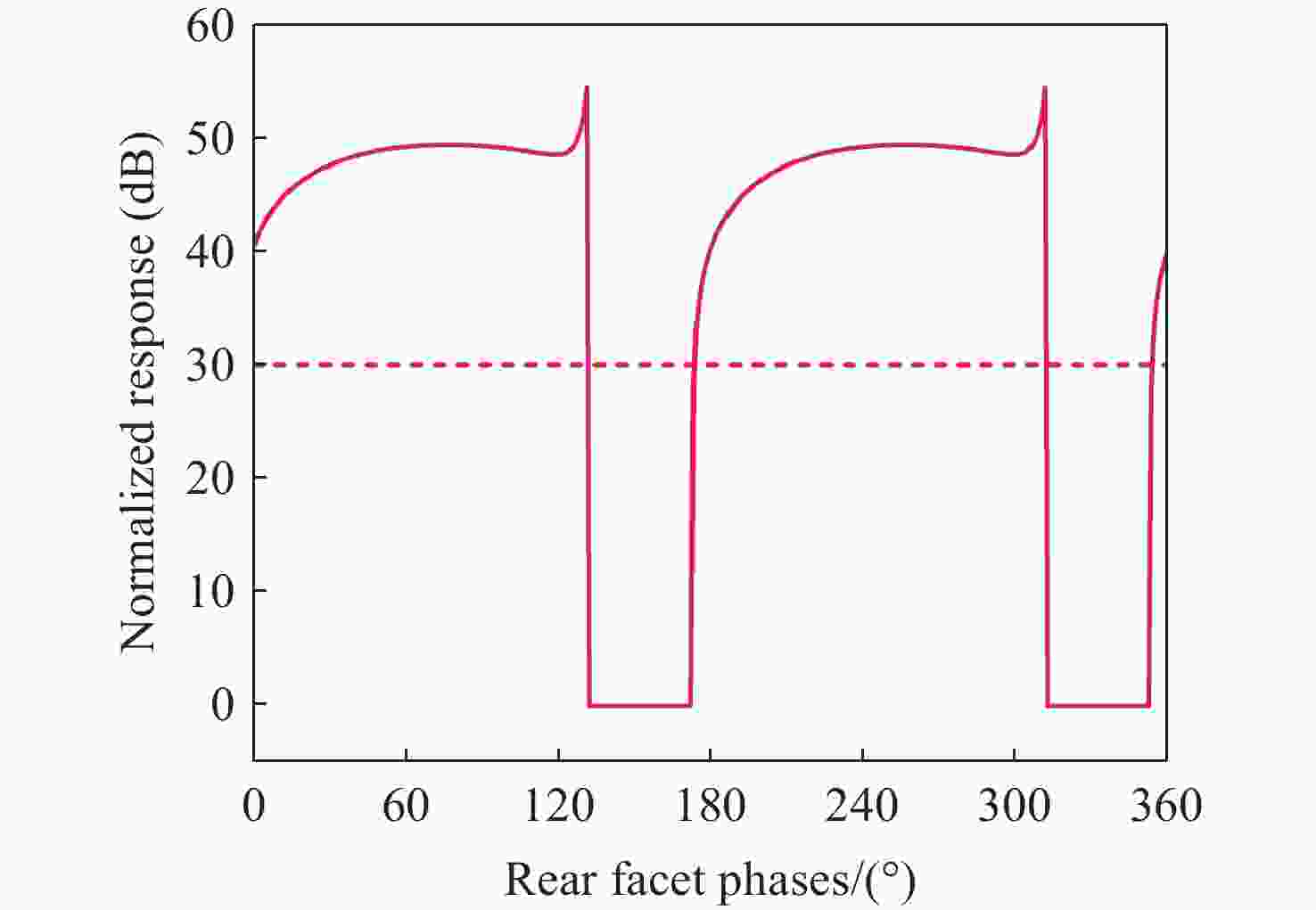
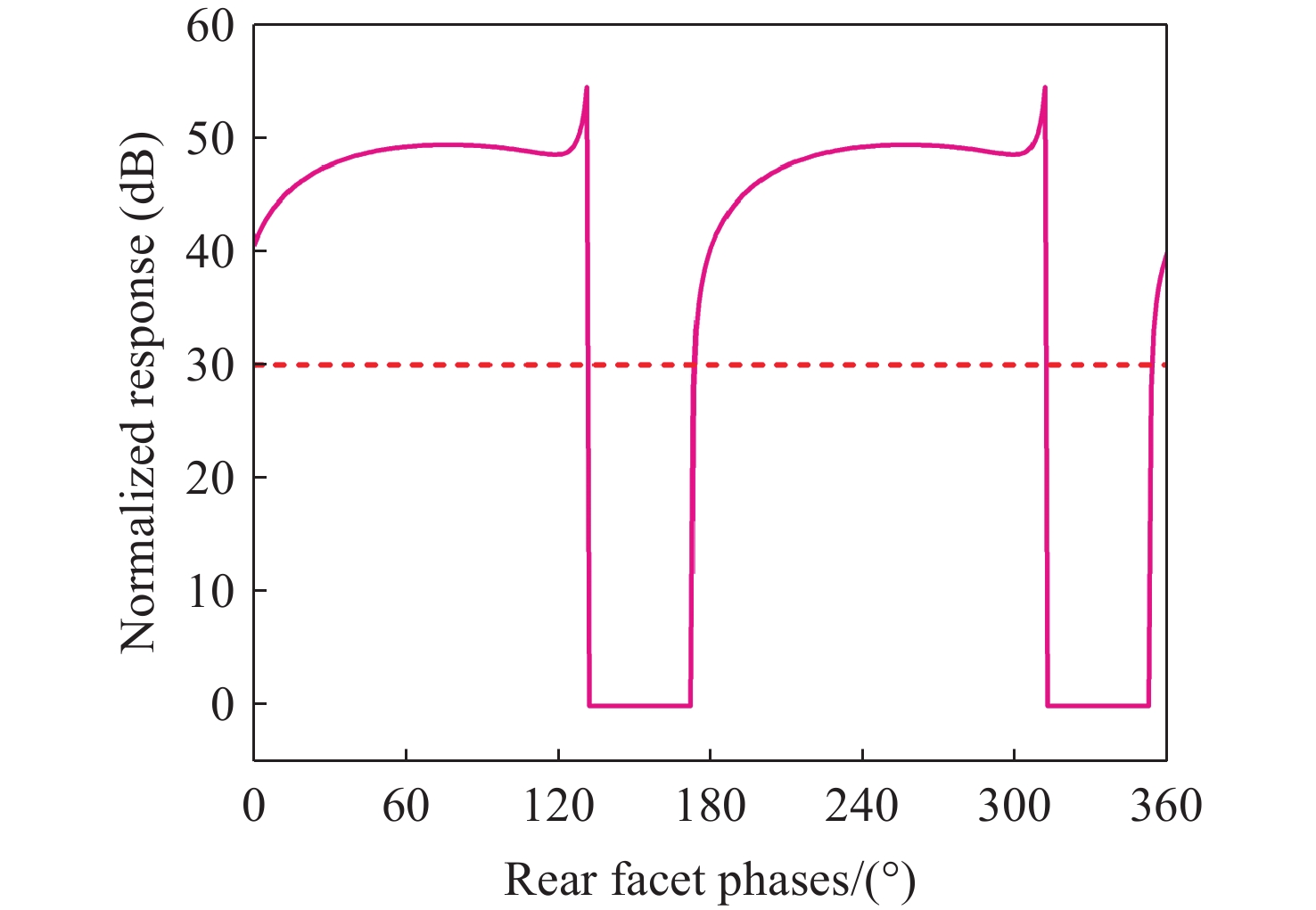
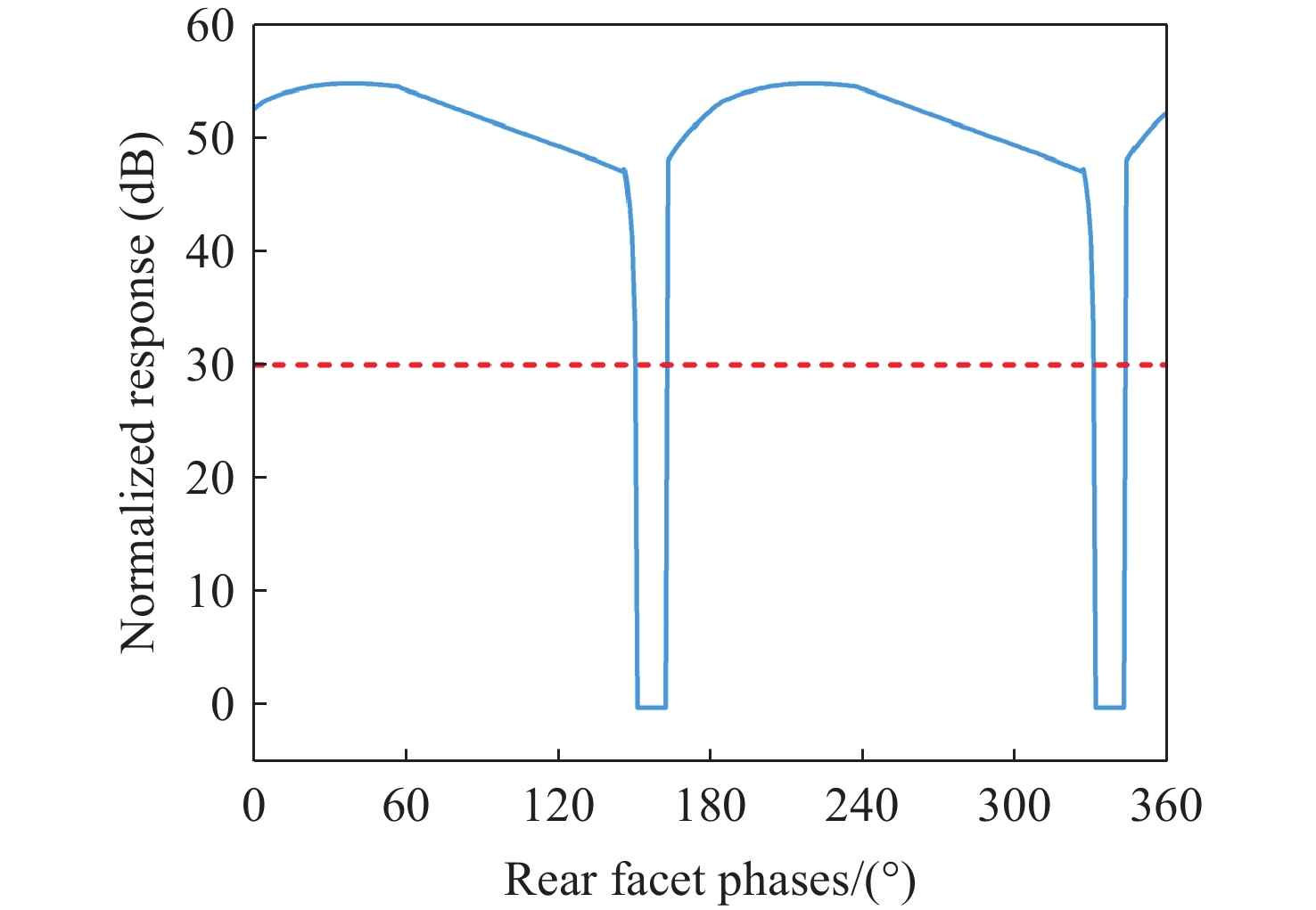
Figure 18. Effect of random back-facet phase on the single-mode yield for single-ended modulation laser.
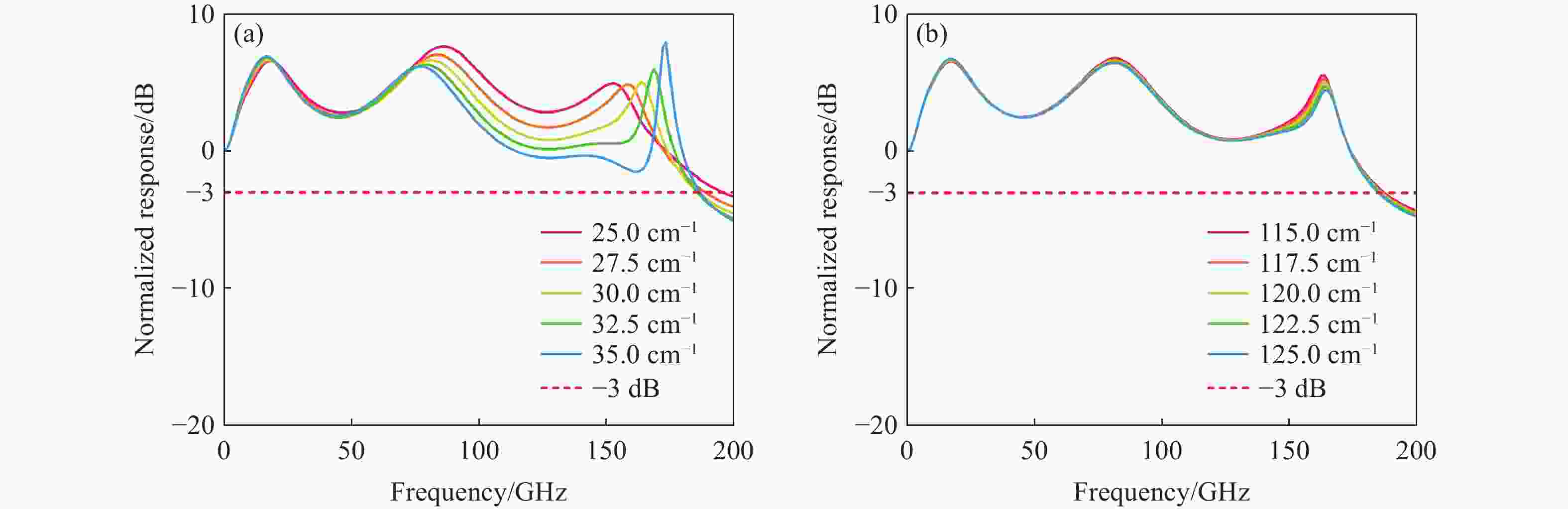
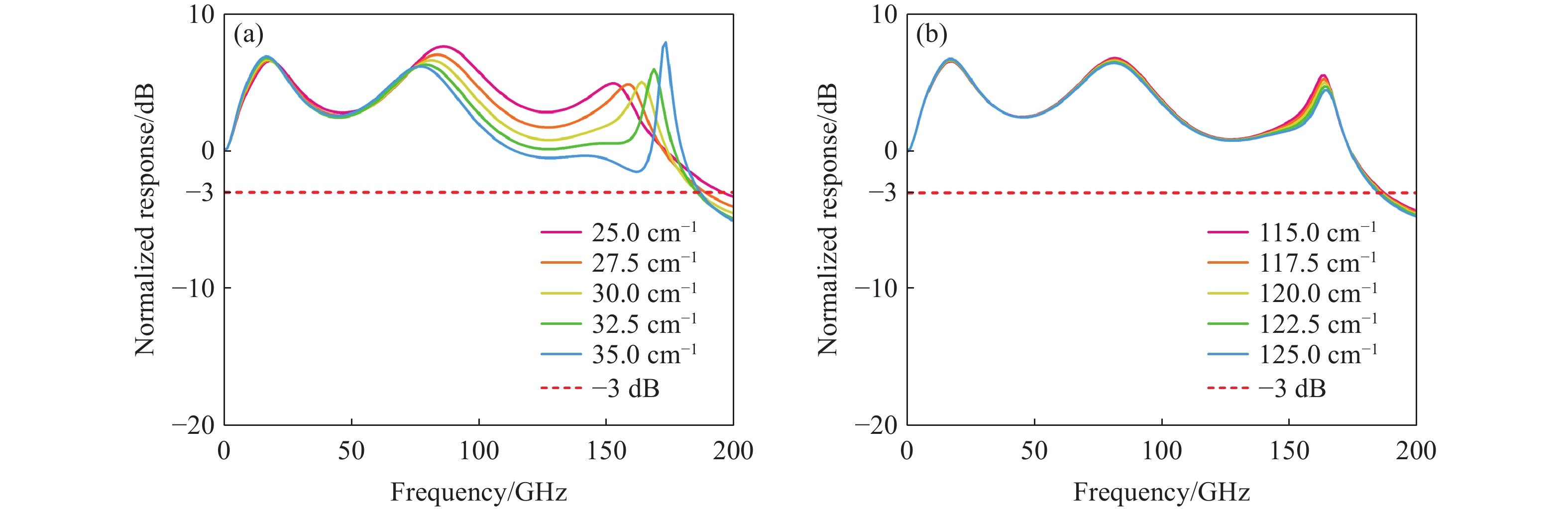
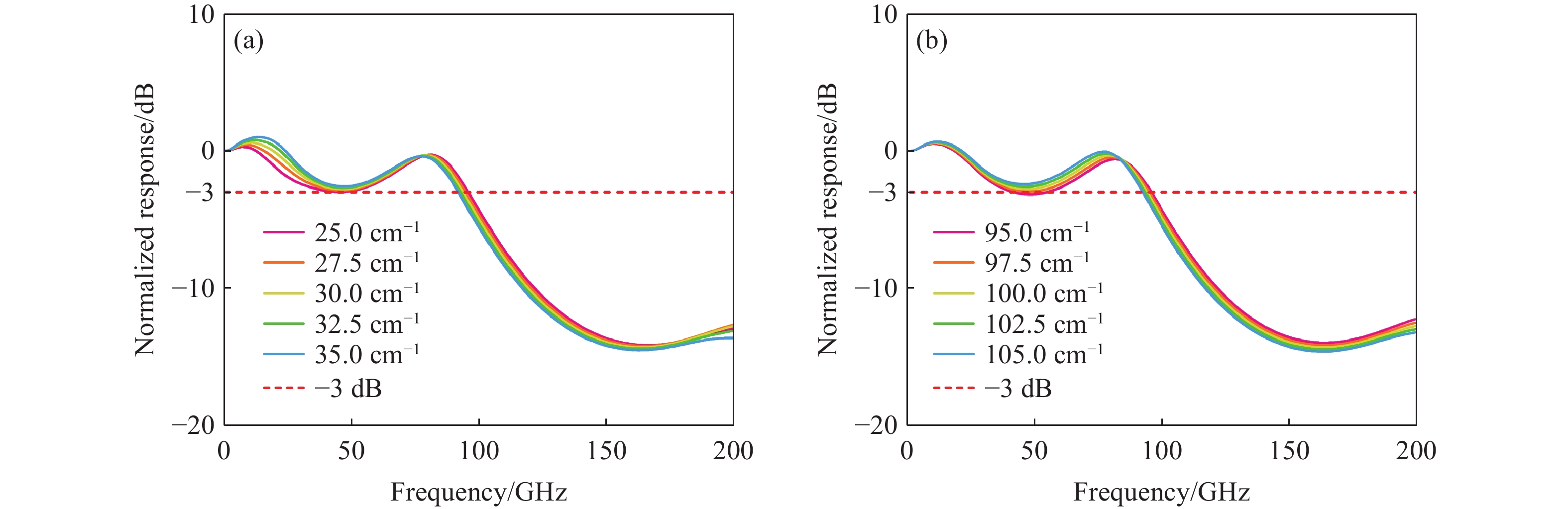
Figure 19. Effect of fabrication variations on the small-signal response of the optimized single-ended modulation laser: (a) the κ1-value of the low-κ and modulation sections and (b) the κ2-value of the high-κ section.
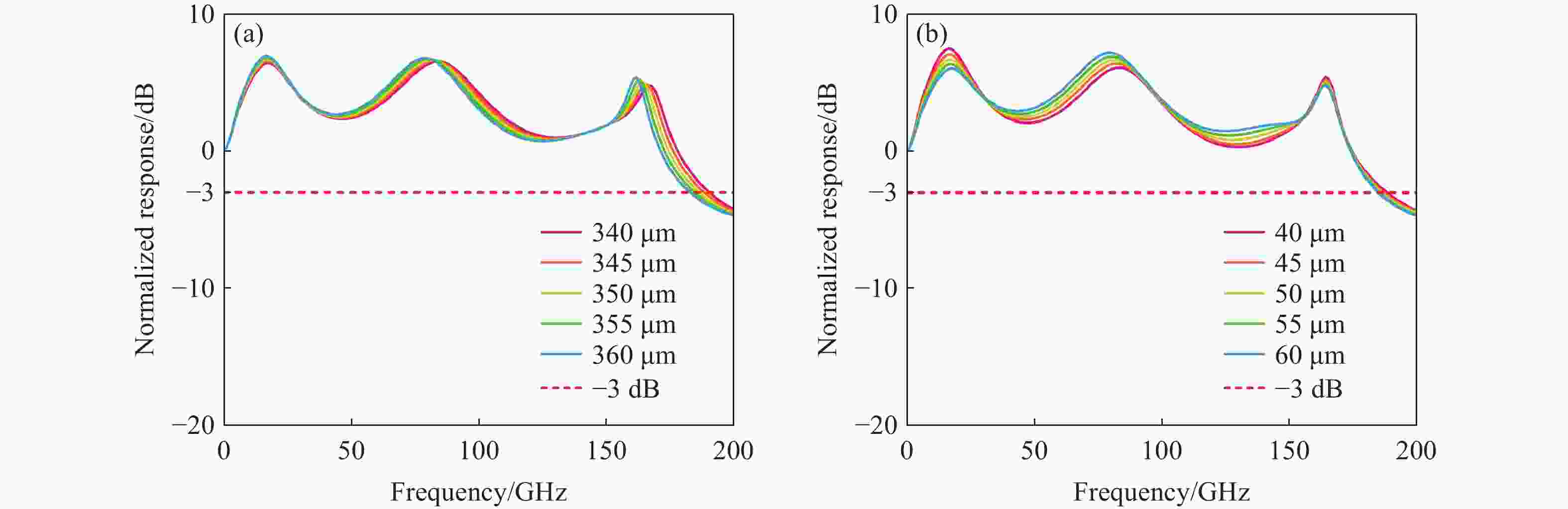
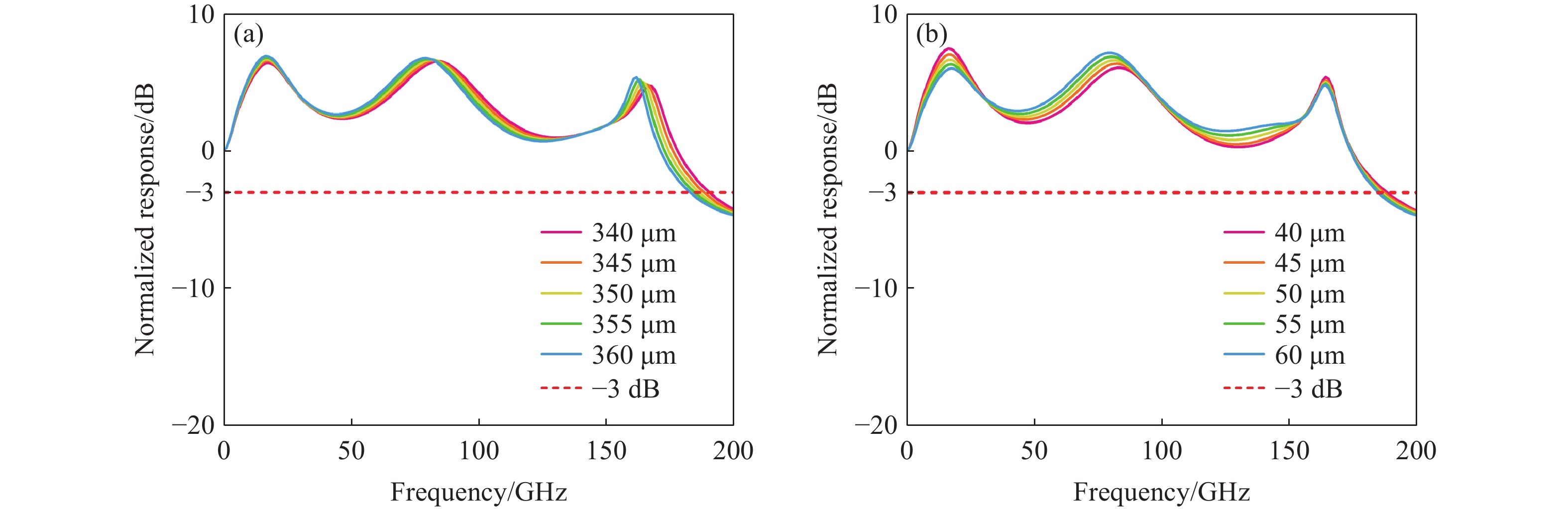
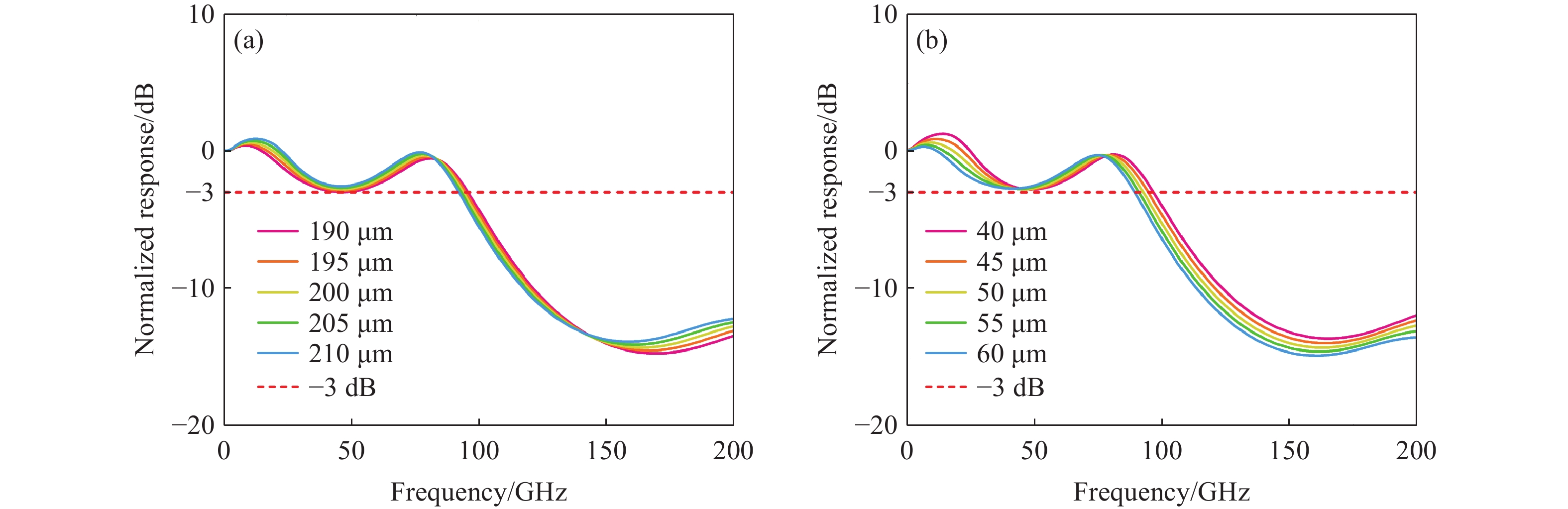
Figure 20. Effect of fabrication variations on the small-signal response of the optimized single-ended modulation laser: (a) the length of the low-κ section and (b) the length of the modulation section.
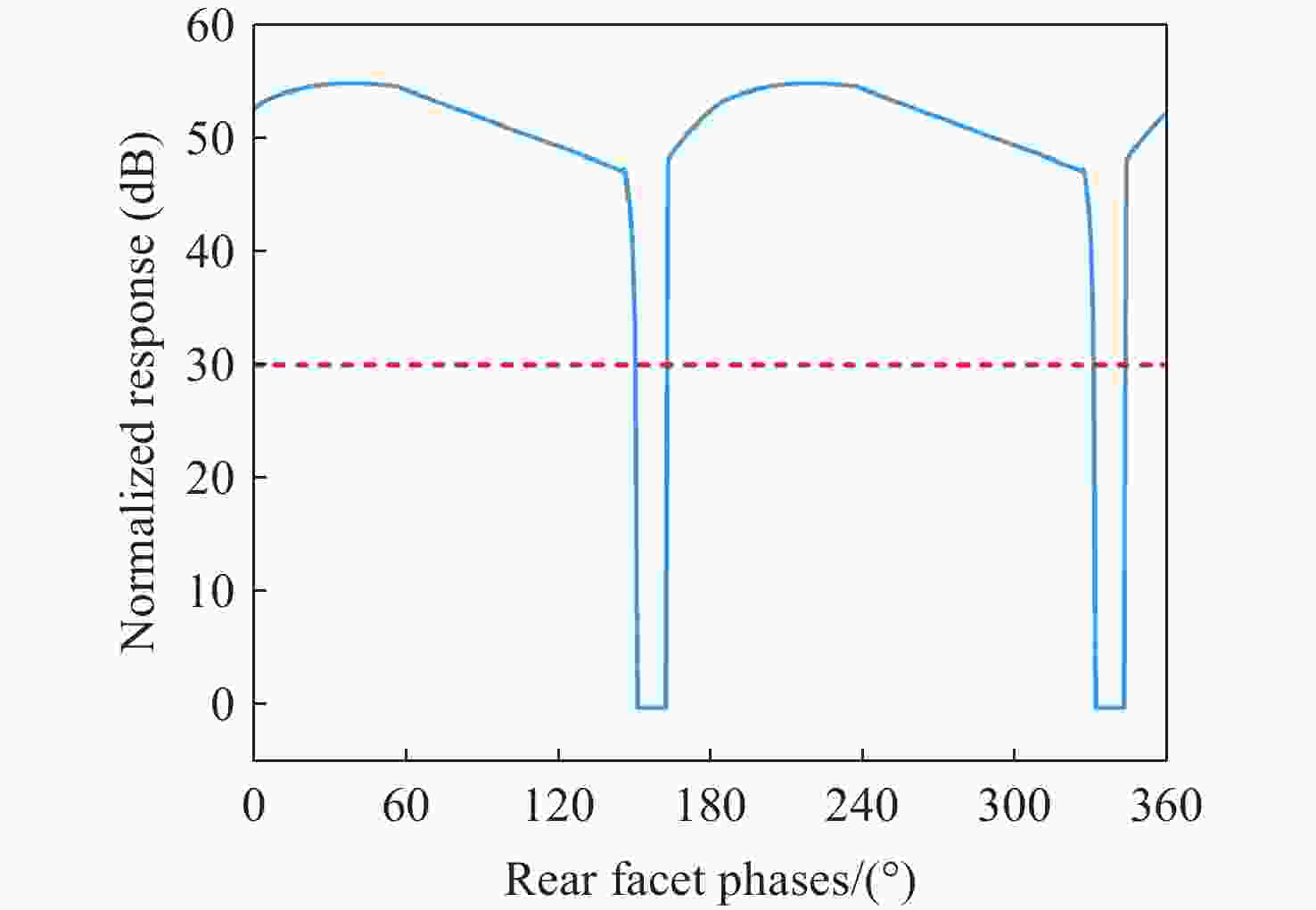
Figure 21. Effect of random back-facet phase on the single-mode yield for push-pull modulation laser.
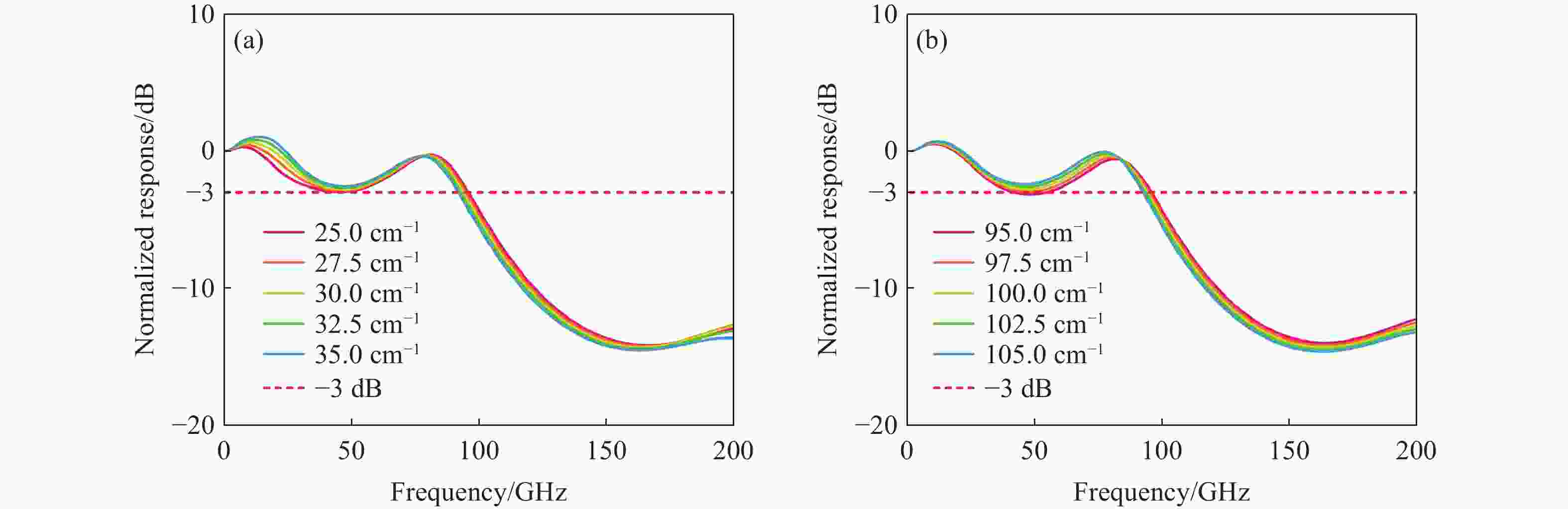
Figure 22. Effect of fabrication variations on the small-signal response of the optimized push-pull modulation laser: (a) the κ1-value of the low-κ and modulation sections and (b) the κ2-value of the high-κ section.
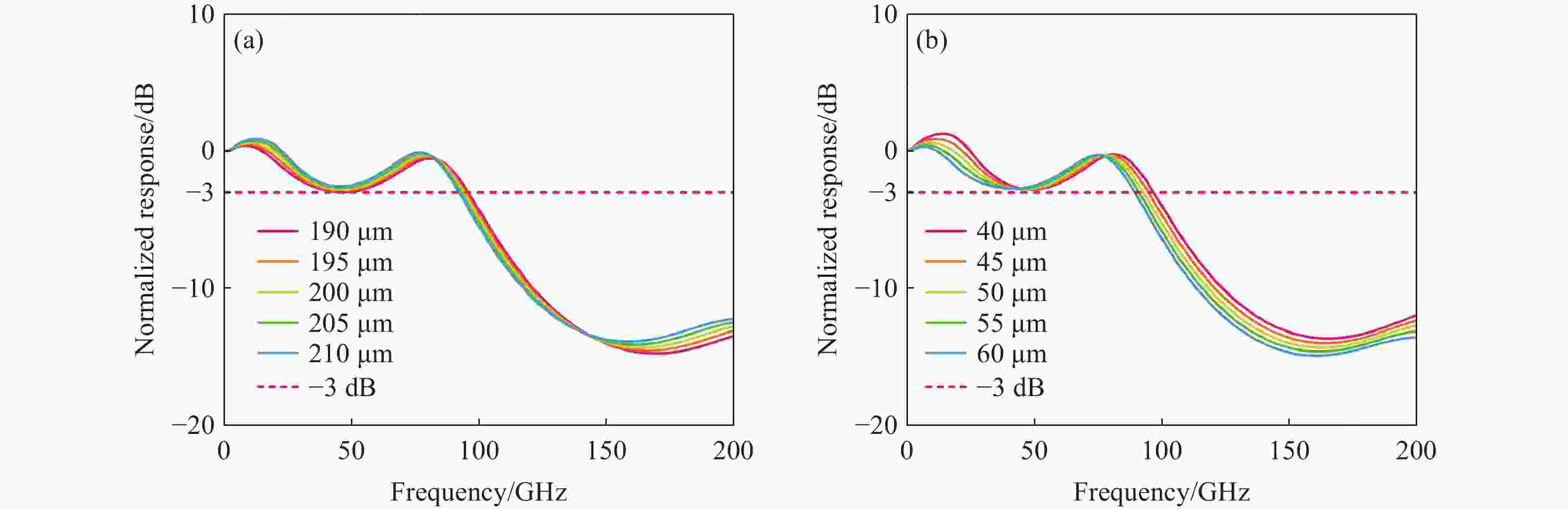
Figure 23. Effect of fabrication variations on the small-signal response of the optimized push-pull modulation laser: (a) the length of the low-κ section and (b) the length of the modulation section.
Table 1. Simulation parameters of dual-κ DFB laser.
Parameter Value Length of modulation section 50 μm Length of high-κ section 100 μm Length of low-κ section 350 μm Reflectivity of front (rear) facet 0 % (28.4%) Width of active region 1.2 μm Thickness of active layer 100 nm Value of grating κ1 30 cm−1 Value of grating κ2 100 cm−1 Internal loss 10 cm−1 Linewidth enhancement factor 4 Optical confinement factor 0.2 Effective index 3.276 Group index 3.658 Differential gain 5.0e-16 cm−1 Transparency carrier density 1.5e18 cm−3 Linear recombination 1.0e8 s−1 Bimolecular recombination coefficient 1.5e-10 cm3/s Auger recombination coefficient 3.5e-29 cm6/s  下载: 导出CSV
Table 2. Optimized parameters of single-ended modulation laser.
Parameter Value Length of high-κ section 50 μm Value of grating κ2 120 cm−1
下载: 导出CSV
Table 3. Optimized parameters of push-pull modulation laser.
Parameter Value Length of low-κ section 200 μm Current of high-κ section 80 mA Modulation regions modulation (rear) and low-κ (front) sections
下载: 导出CSV
-
[1] TUCKER R S. High-speed modulation of semiconductor lasers[J]. IEEE Transactions on Electron Devices, 1985, 32(12): 2572-2584. [2] LIU Z M, QIU CH, CHEN Y Y, et al. Breaking bandwidth limits in high-speed directly modulated laser: synergistic strategies from conventional methods to cavity enhancement effects[J]. Optics & Laser Technology, 2025, 192: 113668. doi: 10.1016/j.optlastec.2025.113668 [3] HUANG J O, LI CH, LU R G, et al. Beyond the 100 Gbaud directly modulated laser for short reach applications[J]. Journal of Semiconductors, 2021, 42(4): 041306. doi: 10.1088/1674-4926/42/4/041306 [4] ZAH C E, BHAT R, PATHAK B N, et al. High-performance uncooled 1.3-μm AlxGayIn1–x–yAs/InP strained-layer quantum-well lasers for subscriber loop applications[J]. IEEE Journal of Quantum Electronics, 1994, 30(2): 511-523. doi: 10.1109/3.283799 [5] PARILLAUD O, VAN DIJK F, VODJDANI N. Realization of 20 GHz directly modulated 1.55 μm DFB lasers using partially strain compensated quantum wells structures[C]. International Conference on Indium Phosphide and Related Materials, IEEE, 2005: 551-553. [6] RALSTON J D, WEISSER S, ESQUIVIAS I, et al. Control of differential gain, nonlinear gain and damping factor for high-speed application of GaAs-based MQW lasers[J]. IEEE Journal of Quantum Electronics, 1993, 29(6): 1648-1659. doi: 10.1109/3.234417 [7] WEISSER S, LARKINS E C, CZOTSCHER K, et al. 37 GHz direct modulation bandwidth in short-cavity InGaAs/GaAs MQW lasers with C-doped active regions[C]. 8th IEEE Lasers and Electro-Optics Society 1995 Annual Meeting, IEEE, 1995: 91-92. [8] UOMI K, AOKI M, TSUCHIYA T, et al. Dependence of high-speed properties on the number of quantum wells in 1.55 μm InGaAs-InGaAsP MQW λ/4-shifted DFB lasers[J]. IEEE Journal of Quantum Electronics, 1993, 29(2): 355-360. doi: 10.1109/3.199289 [9] WEISSER S, LARKINS E C, CZOTSCHER K, et al. Damping-limited modulation bandwidths up to 40 GHz in undoped short-cavity In0.35Ga0.65As-GaAs multiple-quantum-well lasers[J]. IEEE Photonics Technology Letters, 1996, 8(5): 608-610. doi: 10.1109/68.491554 [10] FUKAMACHI T, ADACHI K, SHINODA K, et al. Wide temperature range operation of 25-Gb/s 1.3-μm InGaAlAs directly modulated lasers[J]. IEEE Journal of Selected Topics in Quantum Electronics, 2011, 17(5): 1138-1145. doi: 10.1109/JSTQE.2011.2114644 [11] NAKAHARA K, SUGA K, OKAMOTO K, et al. 112-Gb/s PAM-4 uncooled (25°C to 85°C) directly modulation of 1.3-μm InGaAlAs-MQW DFB BH lasers with record high bandwidth[C]. 45th European Conference on Optical Communication, IEEE, 2019: 1-3. [12] SHINOHARA K, MIYAGOSHI R, SUZUKI Y, et al. 106-Gbps PAM4 operation at an extinction ratio above 3.5 dB using a conventional buried-heterostructure directly modulated laser[C]. 2023 Optical Fiber Communications Conference and Exhibition, IEEE, 2023: 1-3. [13] DUMITRESCU M, TELKKÄLÄ J, KARINEN J, et al. High-speed directly-modulated lasers with photon-photon resonance[C]. 23rd International Conference on Indium Phosphide and Related Materials, IEEE, 2011: 1-4. [14] WANG Y C, CHEN R Y, HSIEH P F, et al. Phase-shifted distributed feedback lasers with two-layer moiré gratings[J]. IEEE Photonics Technology Letters, 2020, 32(11): 631-634. doi: 10.1109/LPT.2020.2988833 [15] DOU ZH P, WANG J, SUN CH ZH, et al. L-band directly-modulated distributed feedback lasers with low chirp and high extinction ratio[C]. 2024 Asia Communications and Photonics Conference (ACP) and International Conference on Information Photonics and Optical Communications, IEEE, 2024: 1-3. [16] NAKAHARA K, WAKAYAMA Y, KITATANI T, et al. Direct modulation at 56 and 50 Gb/s of 1.3-μm InGaAlAs ridge-shaped-BH DFB lasers[J]. IEEE Photonics Technology Letters, 2015, 27(5): 534-536. doi: 10.1109/LPT.2014.2384520 [17] MATSUI Y, PHAM T, SUDO T, et al. 28-gbaud PAM4 and 56-Gb/s NRZ performance comparison using 1310-nm Al-BH DFB laser[J]. Journal of Lightwave Technology, 2016, 34(11): 2677-2683. doi: 10.1109/JLT.2016.2542579 [18] KJEBON O, SCHATZ R, LOURDUDOSS S, et al. Modulation response measurements and evaluation of MQW InGaAsP lasers of various designs[J]. Proceedings of the SPIE, 1996, 2684: 138-152. [19] MATSUI Y. Directly modulated laser technology: past, present, and future[M]//CHANG F. Datacenter Connectivity Technologies. New York: River Publishers, 2017: 87-171. [20] KJEBON O, SCHATZ R, CARLSSON C, et al. Experimental evaluation of detuned loading effects on distortion in edge emitting DBR lasers[C]. 2002 International Topical Meeting on Microwave Photonics, IEEE, 2002: 125-128. [21] MORTHIER G, SCHATZ R, KJEBON O. Extended modulation bandwidth of dbr and external cavity lasers by utilizing a cavity resonance for equalization[J]. IEEE Journal of Quantum Electronics, 2000, 36(12): 1468-1475. doi: 10.1109/3.892568 [22] MATSUI Y, SCHATZ R, PHAM T, et al. 55 GHz bandwidth distributed reflector laser[J]. Journal of Lightwave Technology, 2017, 35(3): 397-403. doi: 10.1109/JLT.2017.2650678 [23] RAJESWARI G V, MOEHRLE M, SIGMUND A, et al. Record 4 × 10⁶ gbps transmission from a directly modulated laser array using photon-photon resonance[C]. 2025 Optical Fiber Communications Conference and Exhibition, IEEE, 2025: 1-3. [24] TROPPENZ U, KREISSL J, MÖHRLE M, et al. 40 Gbit/s directly modulated lasers: physics and application[J]. Proceedings of SPIE, 2011, 7953: 79530F. [25] PANG X D, SALGALS T, LOUCHET H, et al. 200 Gb/s optical-amplifier-free IM/DD transmissions using a directly modulated O-band DFB+R laser targeting LR applications[J]. Journal of Lightwave Technology, 2023, 41(11): 3635-3641. doi: 10.1109/JLT.2023.3261421 [26] CHE D, MATSUI Y, SCHATZ R, et al. 200-Gb/s direct modulation of a 50-GHz class laser with advanced digital modulations[J]. Journal of Lightwave Technology, 2021, 39(3): 845-852. doi: 10.1109/JLT.2020.3043374 [27] MAO Y F, REN ZH L, LU G, et al. Modulation bandwidth enhancement in distributed reflector laser based on identical active layer approach[J]. IEEE Photonics Journal, 2018, 10(3): 1502308. [28] BAN D CH, CHEN J, JIN Y, et al. Demonstration of a directly modulated laser achieving bandwidth exceeding 50 GHz with an integrated active feedback waveguide[J]. Photonics Research, 2024, 12(12): 2855-2862. doi: 10.1364/PRJ.529799 [29] MA X, QI H F, DING Y D, et al. Demonstration of a three-active-section DFB laser with photon-photon resonance and detuned loading effects to obtain enhanced bandwidth and maintained high output power[J]. Optics & Laser Technology, 2025, 182: 112127. doi: 10.1016/j.optlastec.2024.112127 [30] DOU ZH P, WANG J, SUN CH ZH, et al. A compound-cavity distributed feedback laser with bandwidth over 50 GHz based on uniform gratings[J]. IEEE Photonics Technology Letters, 2024, 36(24): 1437-1440. doi: 10.1109/LPT.2024.3434623 [31] DOU ZH P, WANG J, SUN CH ZH, et al. A dual-segment distributed feedback laser with 70 GHz bandwidth[C]. 2024 Asia Communications and Photonics Conference (ACP) and International Conference on Information Photonics and Optical Communications, IEEE, 2024: 1-3. [32] REN M H, LIU Z Q, JIA SH H, et al. C-band 33-GHz high flatness photon-photon resonance directly modulated semiconductor lasers[J]. Optics Express, 2025, 33(22): 45525-45538. doi: 10.1364/OE.572886 [33] QI J Q, XI Y P, LI X. Enhanced modulation bandwidth by exploiting photon resonance in push-pull modulated DFB lasers[C]. 2015 International Conference on Numerical Simulation of Optoelectronic Devices, IEEE, 2015: 127-128. [34] MONTROSSET I, BARDELLA P. Laser dynamics providing enhanced-modulation bandwidth[C]. Proceedings of SPIE, 2014, 9134: 91340H. [35] MONTROSSET I, BARDELLA P. Design and simulation of quantum-dot-based push-pull DFB lasers[C]. Proceedings of SPIE, 2018, 10526: 1052605. [36] CHEN J Y, MACIEJKO R, MAKINO T. Dynamic properties of push-pull DFB semiconductor laser[J]. IEEE Journal of Quantum Electronics, 1996, 32(12): 2156-2165. doi: 10.1109/3.544763 [37] NOWELL M C, CARROLL J E. Push-pull modulated DFB lasers with low chirp and enhanced cut-off frequency for high speed systems[C]. IEE Colloquium on High Capacity Optical Communications, IET, 1994: 5/1-5/6. [38] MARCENAC D, NOWELL M C, CARROLL J E. Theory of enhanced AM-modulation bandwidth in Push-pull DFB lasers[C]. Proceedings of LEOS'94, IEEE, 1994: 163-164. [39] FLANIGAN B J, CARROLL J E, NOWELL M C, et al. Improved resonance and chirp mechanisms for multigigabit/s push-pull modulated DFB lasers[J]. IEE Proceedings – Optoelectronics, 1996, 143(1): 49-56. doi: 10.1049/ip-opt:19960137 [40] NOWELL M C, CARROLL J E, ZHANG L M. Push-pull multi-gigabit/s modulated DFB lasers with tow chirp and high cut-off frequency[C]. Proceedings of Conference on Lasers and Electro-Optics, Optica Publishing Group, 1994: CWJ1. [41] MARCENAC D D, NOWELL M C, CARROLL J E. Theory of enhanced amplitude modulation bandwidth in push-pull modulated DFB lasers[J]. IEEE Photonics Technology Letters, 1994, 6(11): 1309-1311. doi: 10.1109/68.334822 [42] CHI J W, LI X, NIU CH N, et al. Enhanced modulation bandwidth by delayed push-pull modulated DFB lasers[J]. Micromachines, 2023, 14(3): 633. doi: 10.3390/mi14030633 [43] CHI J W, LI X, NIU CH N, et al. Output optical power enhancement of push-pull modulated DFB laser with asymmetric structure[J]. IEEE Photonics Journal, 2023, 15(5): 1502208. doi: 10.1109/jphot.2023.3312388 [44] BAN D CH, WANG J, WANG X, et al. Improvement on stability of direct modulation laser with integrated active feedback by partial corrugated gratings[J]. Optics Express, 2023, 31(18): 28778-28791. doi: 10.1364/OE.495842 [45] BARDELLA P, MONTROSSET I. A new design procedure for dbr lasers exploiting the photon-photon resonance to achieve extended modulation bandwidth[J]. IEEE Journal of Selected Topics in Quantum Electronics, 2013, 19(4): 1502408. doi: 10.1109/JSTQE.2013.2250260 [46] MATSUI Y. Two-kappa DBR laser: US, US11233375B2[P]. 2022-01-25. [47] NOWELL M C, ZHANG L M, CARROLL J E, et al. Chirp reduction using push-pull modulation of three-contact lasers[J]. IEEE Photonics Technology Letters, 1993, 5(12): 1368-1371. doi: 10.1109/68.262543 [48] ZOZULIA A, SCHATZ R, RIHANI S, et al. C-band directly modulated lasers with tunable photon-photon resonance in InP membrane[J]. IEEE Journal of Quantum Electronics, 2024, 60(6): 2200312. doi: 10.1109/jqe.2024.3475745 [49] CHACIŃSKI M G, SCHATZ R, ISAKSSON M, et al. Effects of detuned loading on the modulation performance of widely tunable MG-Y lasers[J]. Proceedings of SPIE, 2008, 6997: 699709. [50] CHACIŃSKI M, SCHATZ R. Impact of losses in the Bragg section on the dynamics of detuned loaded DBR lasers[J]. IEEE Journal of Quantum Electronics, 2010, 46(9): 1360-1367. doi: 10.1109/JQE.2010.2048013 [51] MATSUI Y, SCHATZ R, CHE D, et al. Low-chirp isolator-free 65-GHz-bandwidth directly modulated lasers[J]. Nature Photonics, 2021, 15(1): 59-63. doi: 10.1038/s41566-020-00742-2 [52] LIU Z M, SCHATZ R, QIU C, et al. High-speed directly modulated partial corrugated grating distributed feedback laser with multiple photon-photon resonances[J]. Proceedings of SPIE, 2025, 13990: 1399009. [53] SCHATZ R. Dynamics of spatial hole burning effects in DFB lasers[J]. IEEE Journal of Quantum Electronics, 1995, 31(11): 1981-1993. doi: 10.1109/3.469279 [54] FEISTE U. Optimization of modulation bandwidth in DBR lasers with detuned Bragg reflectors[J]. IEEE Journal of Quantum Electronics, 1998, 34(12): 2371-2379. doi: 10.1109/3.736110 [55] WENZEL H, BANDELOW U, WUNSCHE H J, et al. Mechanisms of fast self pulsations in two-section DFB lasers[J]. IEEE Journal of Quantum Electronics, 1996, 32(1): 69-78. doi: 10.1109/3.481922 [56] BJORK G, NILSSON O. A new exact and efficient numerical matrix theory of complicated laser structures: properties of asymmetric phase-shifted DFB lasers[J]. Journal of Lightwave Technology, 1987, 5(1): 140-146. doi: 10.1109/JLT.1987.1075402 -

 下载:
下载:

计量
- 文章访问数: 86
- HTML全文浏览量: 51
- PDF下载量: 9
- 被引次数: 0
