


Integrated opto-mechanical-thermal optimization and analysis of an all-aluminum space imaging spectrometer
doi: 10.3724/CO.EN-2026-0008
-
摘要:
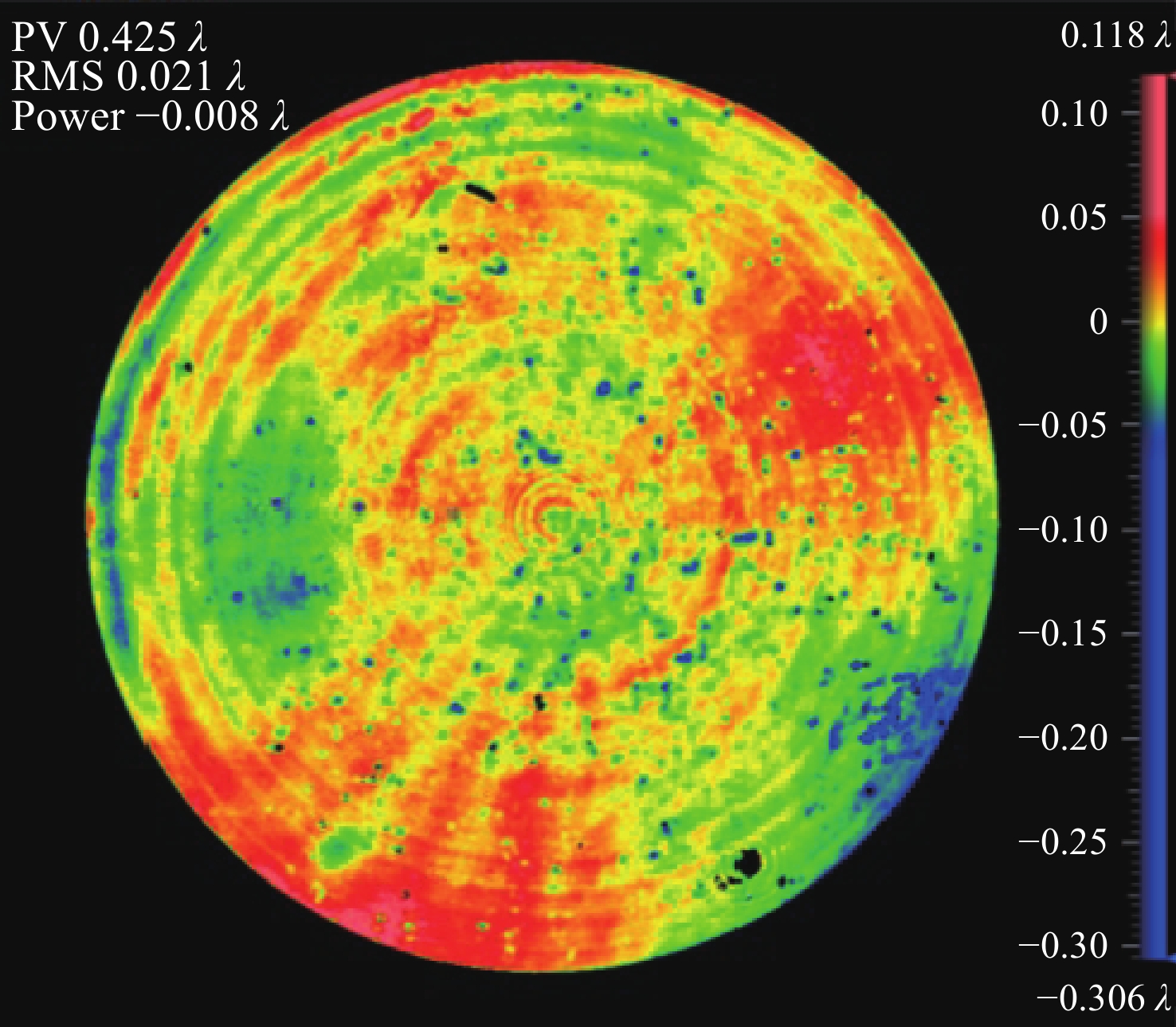
全铝合金光机系统理论上可实现无热化设计,并兼具低成本与快速响应优势,在空间遥感领域具有重要应用前景。然而在工程中,结构约束会使光机结构在力热载荷下引入寄生应力,导致系统性能失稳。针对该问题,本文提出一种针对光谱仪反射镜柔性支撑结构的光机集成优化方案。基于光机热集成分析与三向重力和5 °C温升工况下的尺寸灵敏度评估,构建了集成基频与光学响应的优化代理模型,实现了结构尺寸优化及最优结果的筛选。优化结果显示,系统基频提升14.2%至204.6 Hz,同时在重力和热载荷作用下的波前误差降低超过21%。实验结果表明,镜面面形均方根值达0.021 λ (λ = 632.8 nm),五个视场下的系统波前误差均稳定低于0.048 λ,完全满足稳定成像性能的技术要求。该方法有效提升了全铝光谱仪的热-力-光稳定性,可为精密光机系统的结构设计提供有价值的参考。
Abstract:All-aluminum opto-mechanical systems are promising for space remote sensing due to their athermal design capability, low cost, and rapid manufacturability. However, in practical engineering, structural constraints under mechanical and thermal loads often induce parasitic stresses within the opto-mechanical assemblies, which subsequently degrade optical stability. To address this, we propose an integrated opto-mechanical optimization scheme for a spectrometer's secondary mirror flexible support. Based on an opto-mechanical-thermal integrated analysis and dimensional sensitivity evaluation under gravity and a 5 °C temperature rise, a Kriging surrogate model was developed. This model integrates fundamental frequency and optical responses to optimize structural dimensions and select the most suitable optimization result. The optimization results demonstrate a 14.2% increase in the fundamental frequency to 204.6 Hz, along with reductions of over 21% in system wavefront aberration under both gravity and thermal loads. Experimental results confirms that the mirror surface root mean square is 0.021 λ (λ = 632.8 nm), and the system wavefront aberration across five fields of view remains consistently below 0.048 λ, fully meeting the technical requirements for stable imaging performance. The proposed method effectively enhances the thermo-mechanical-optical stability of all-aluminum spectrometers and offers a valuable design framework for precision opto-mechanical systems.
-
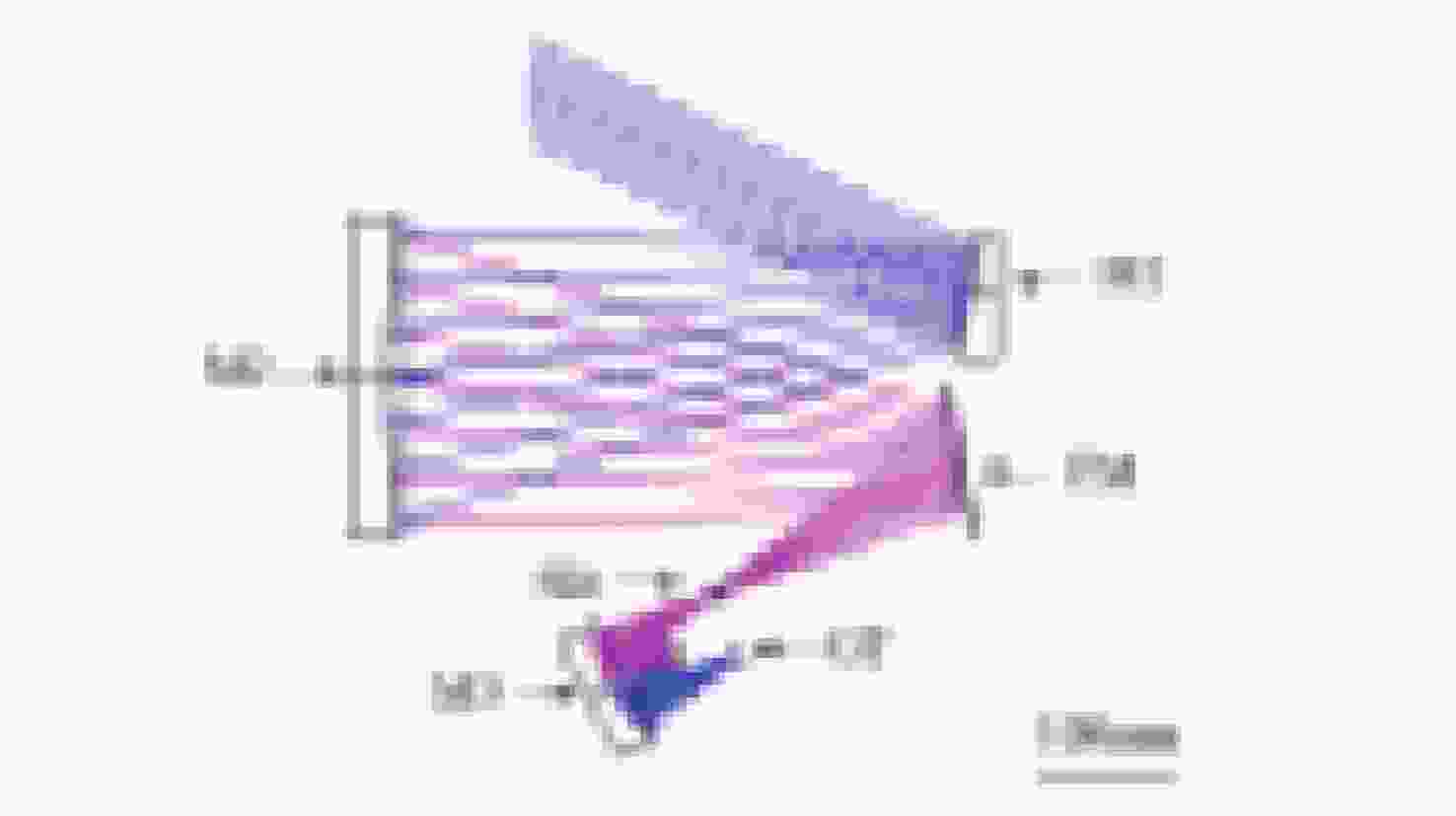
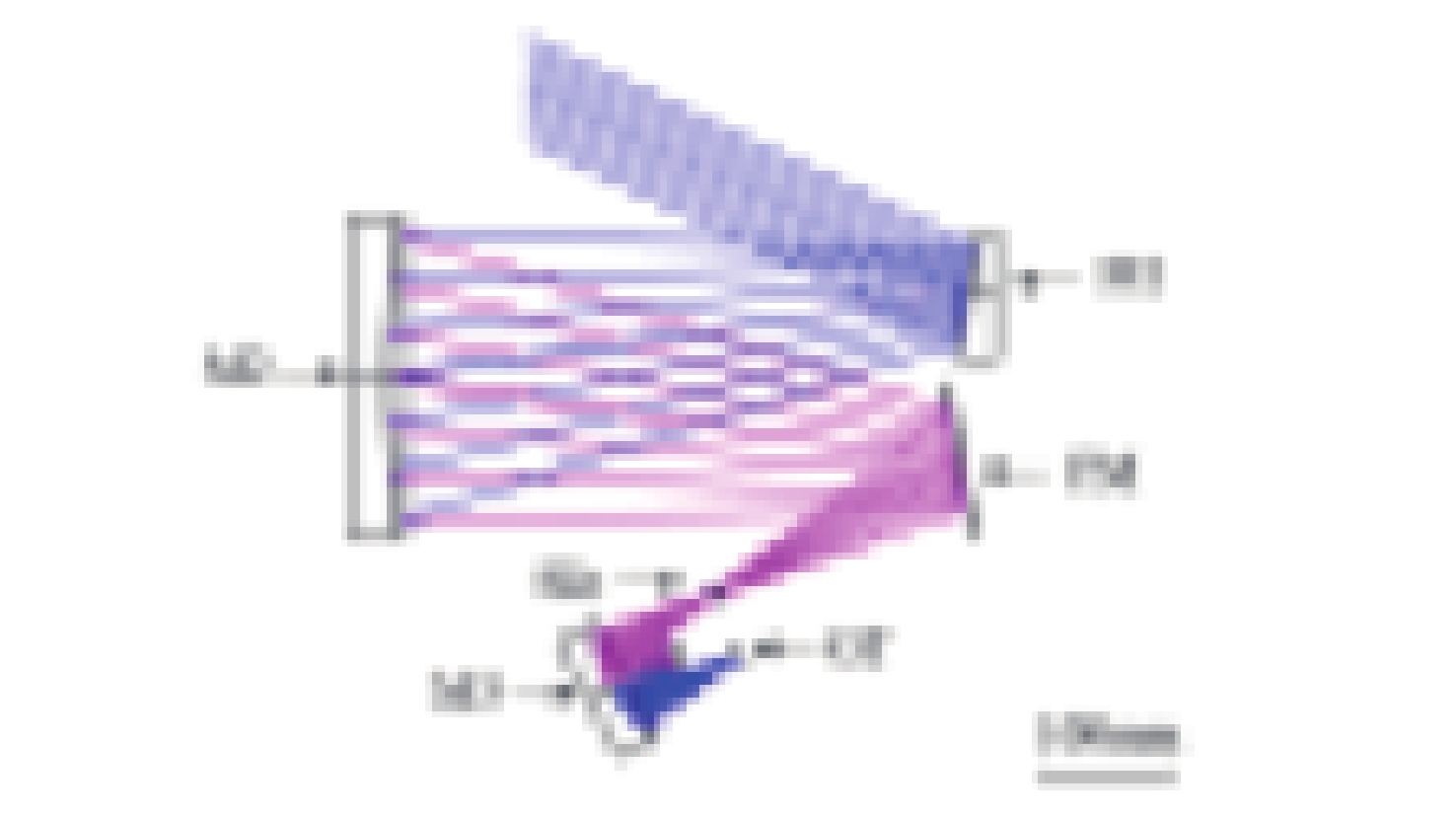
图 1 光学系统二维光路图 M1、M2:离轴非球面反射镜;FM:折叠镜;M3:球面反射镜;GT:凸面光栅
Figure 1. Two-dimensional layout diagram of the spectrum optical system. M1, M2: Off-axis aspherical mirrors; FM: Folding mirror; M3: Concave spherical mirror; GT: Convex grating.
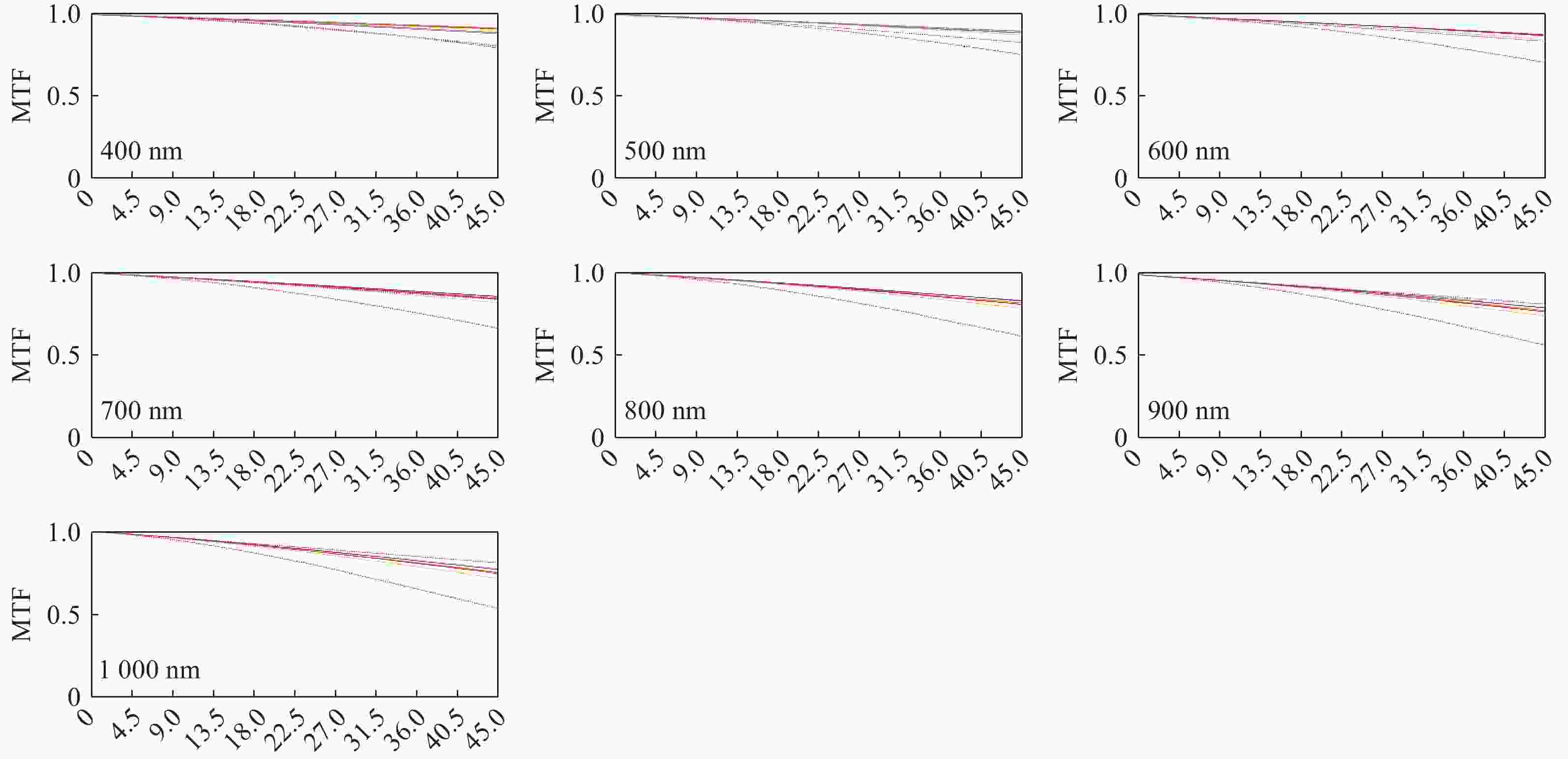
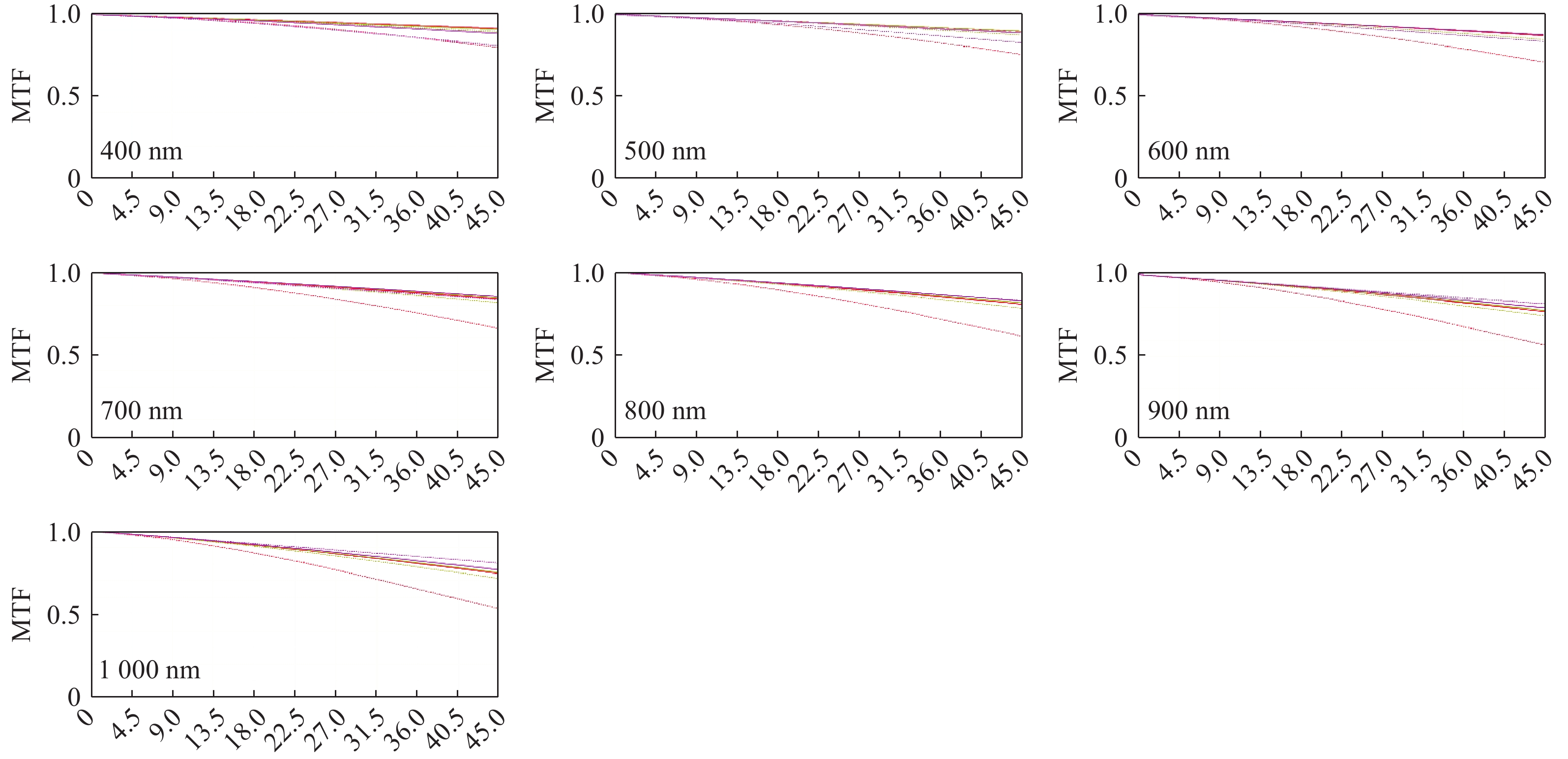
图 2 理论系统在波长λ= 400 nm、500 nm、600 nm、700 nm、800 nm、900 nm 和
1000 nm 下的调制传递函数。空间频率范围为 0 ~ 45 cycles/mmFigure 2. Modulation Transfer Function of the theoretical system at λ= 400 nm, 500nm, 600nm, 700 nm,800nm, 900nm and
1000 nm. The frequency varies between 0 cycles/mm and 45 cycles/mm.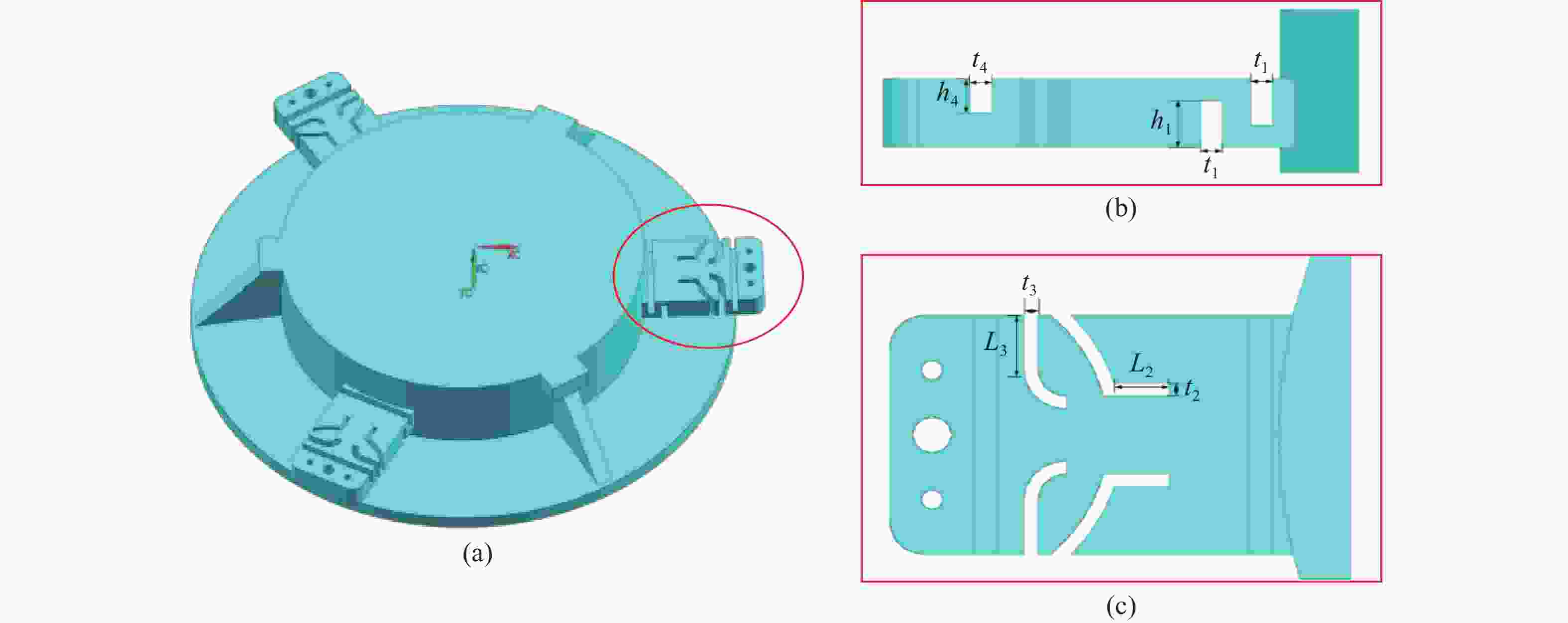
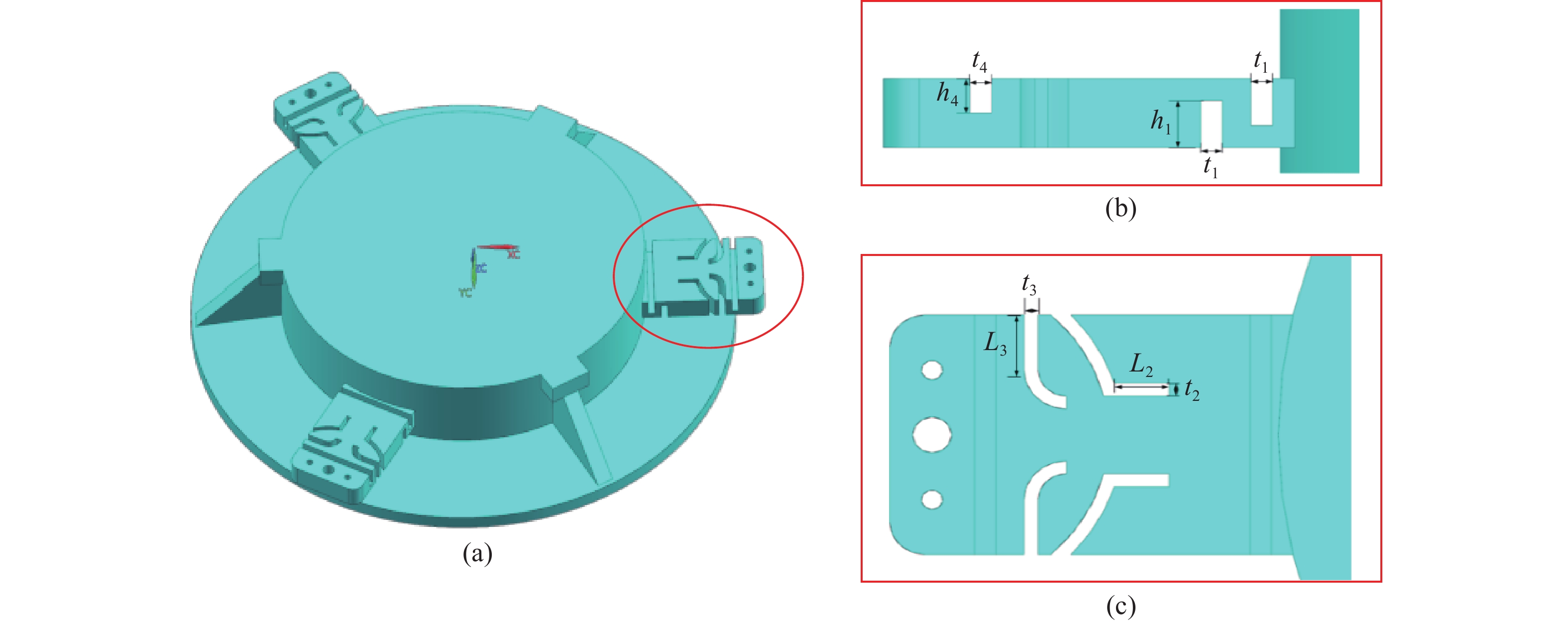
图 5 反射镜组件结构示意图。(a) 带有全局坐标系定义的整体结构;(b, c) 不同角度的柔性支撑结构局部放大图
Figure 5. Schematic diagram of the mirror assembly. (a) Overall structure with the definition of the global coordinate system. (b, c) Enlarged views of the flexible support structure from different angles.
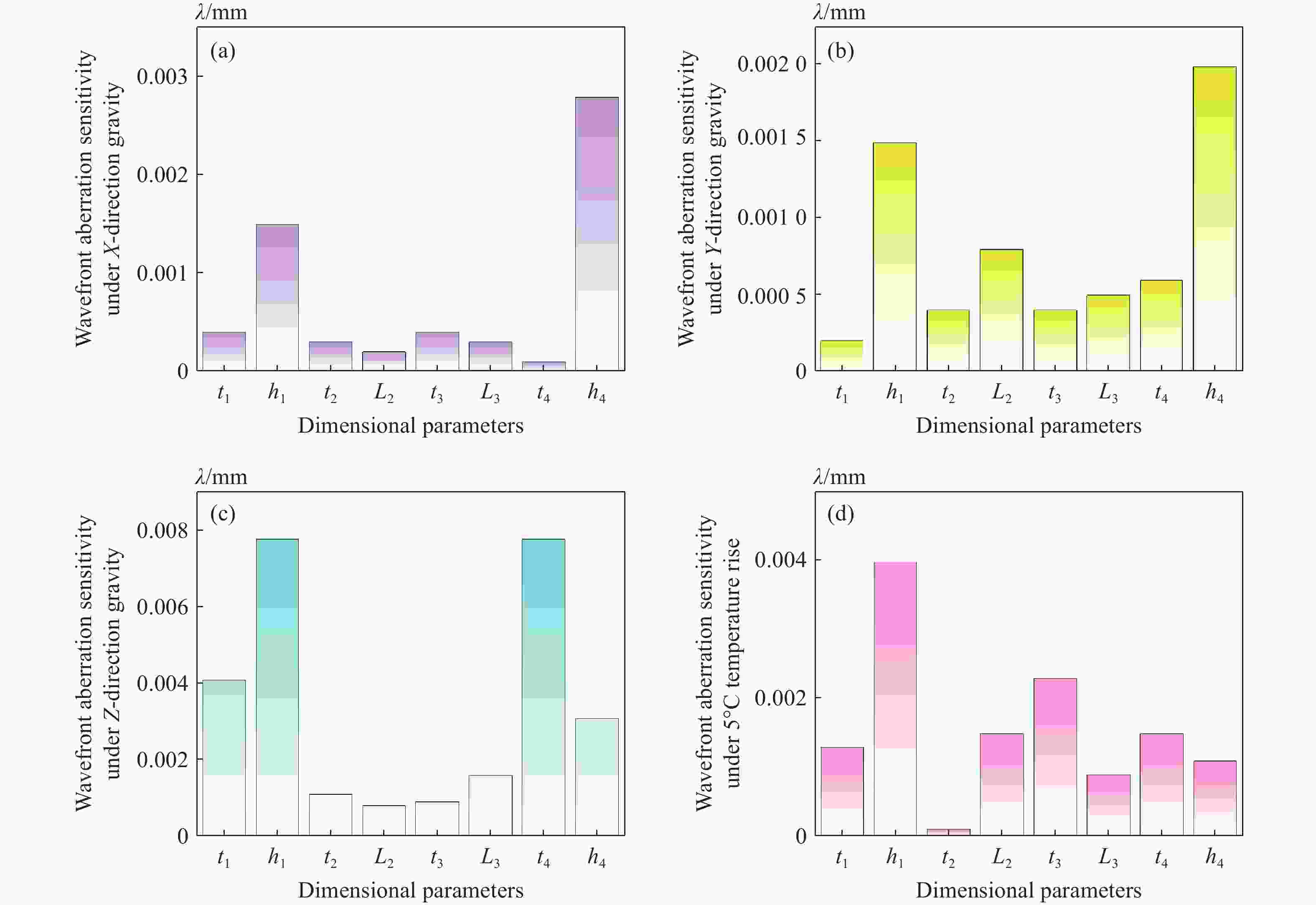
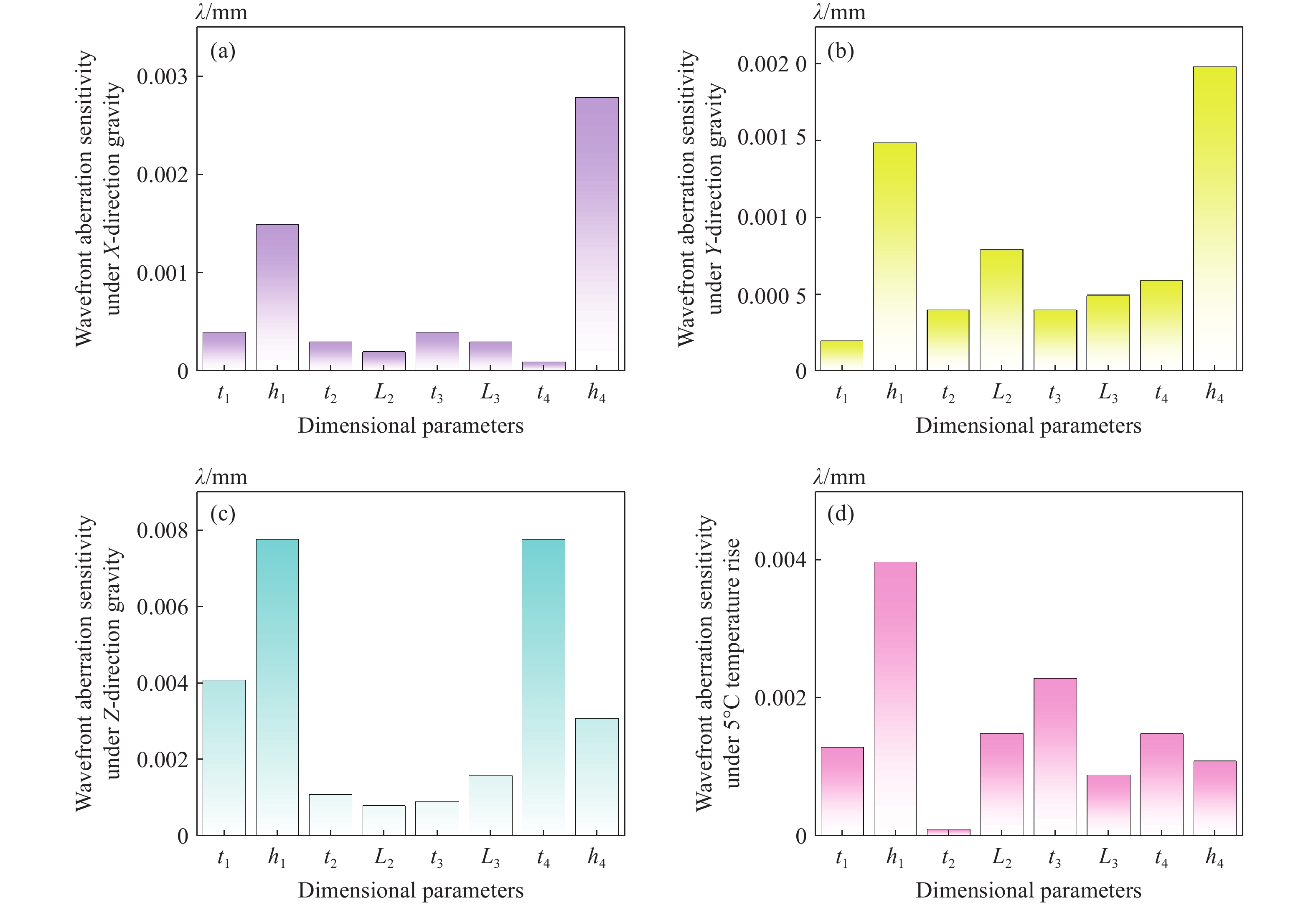
图 6 波前误差对尺寸参数的灵敏度。(a) X向重力下的波前误差灵敏度;(b) Y向重力下的波前误差灵敏度;(c) Z向重力下的波前误差灵敏度;(d) 5 °C温升下的波前误差灵敏度
Figure 6. Wavefront Aberration Sensitivity to Dimensional Parameters. (a) Wavefront Aberration Sensitivity Under X - Direction Gravity; (b) Wavefront Aberration Sensitivity Under Y - Direction Gravity;(c) Wavefront Aberration Sensitivity Under Z - Direction Gravity; (d) Wavefront Aberration Sensitivity Under 5 °C Temperature Rise.
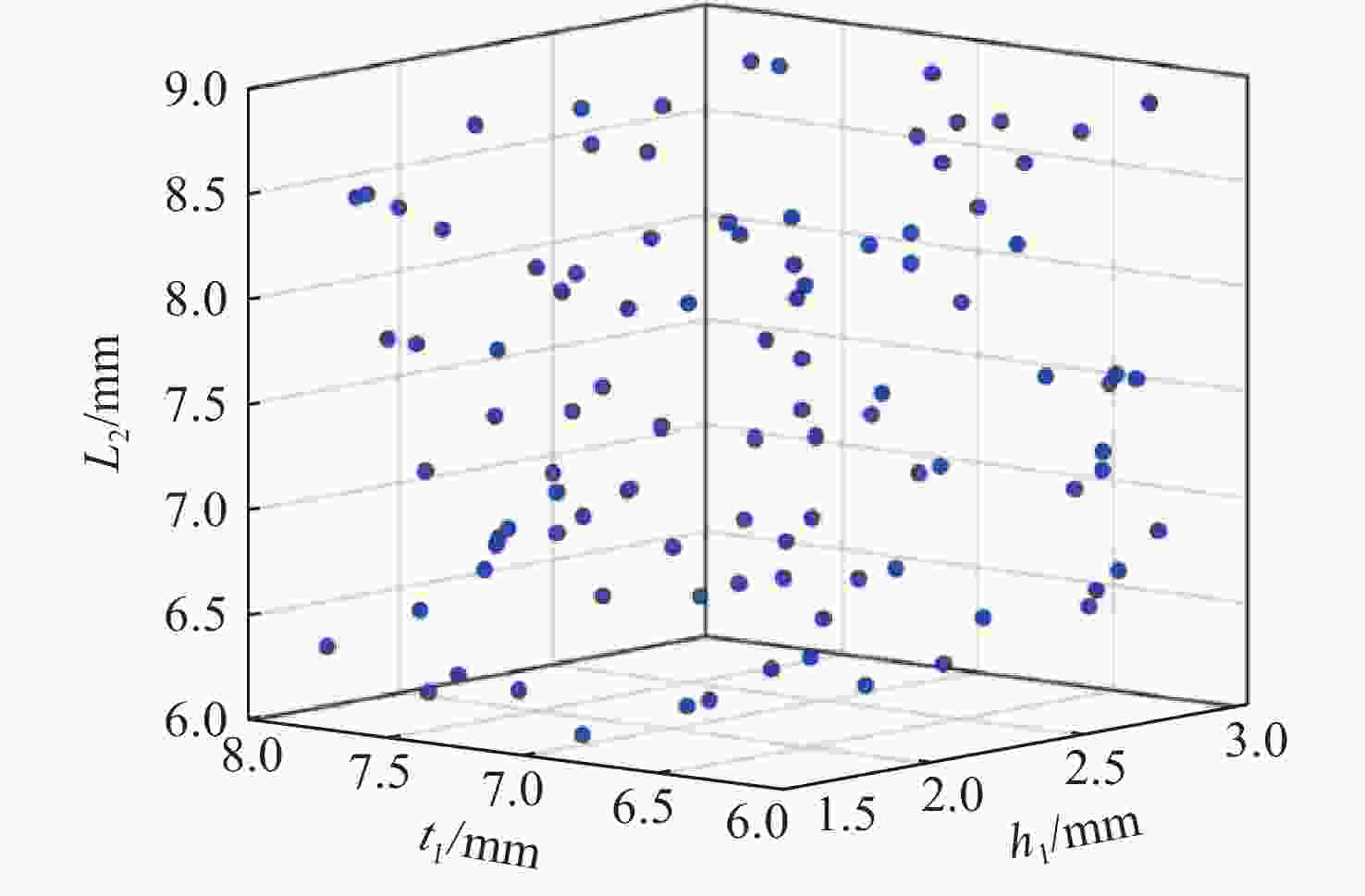
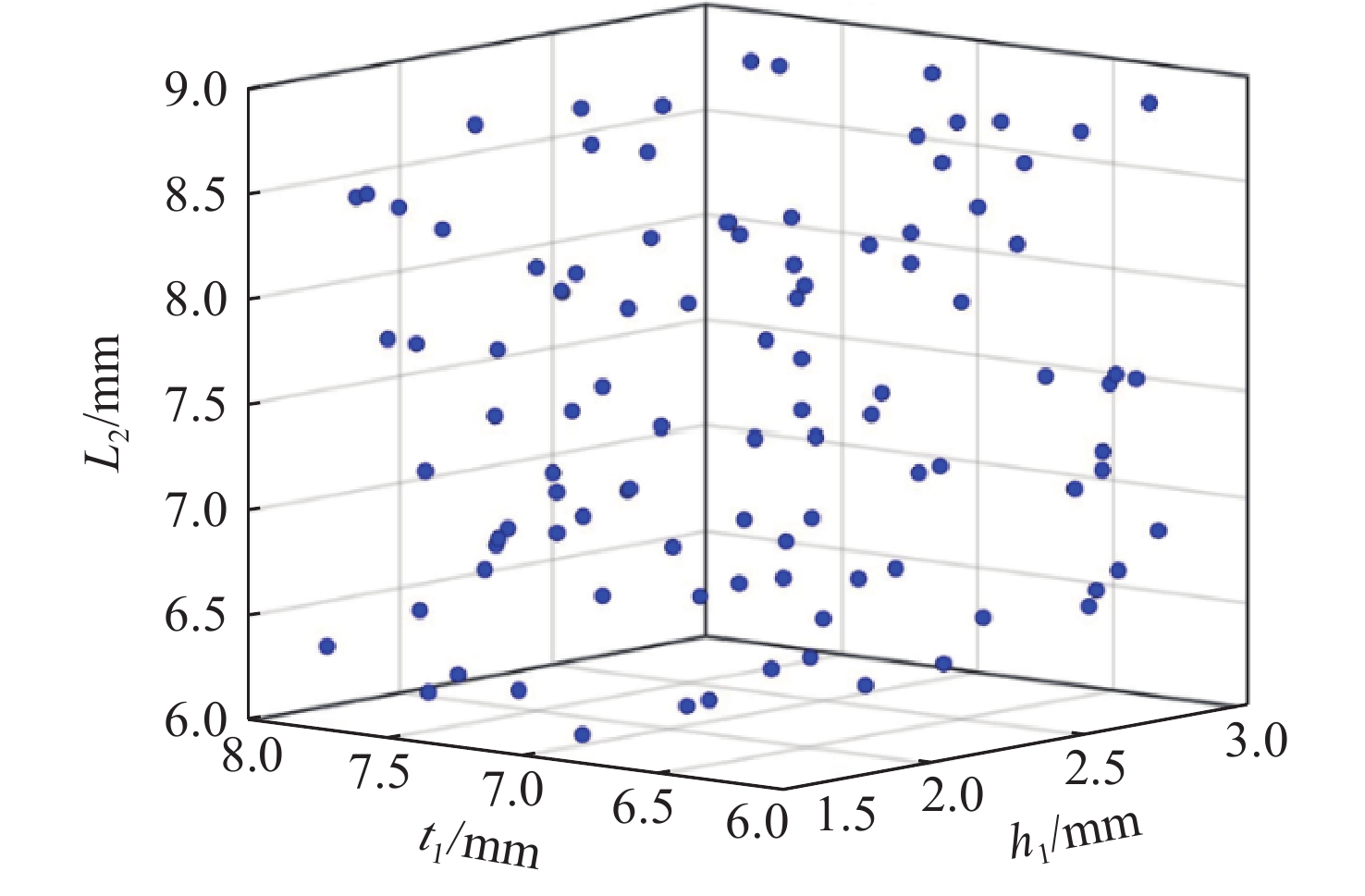
图 7 部分设计变量样本点分布图
Figure 7. Distribution Map of Sample Points for Partial Design Variables.
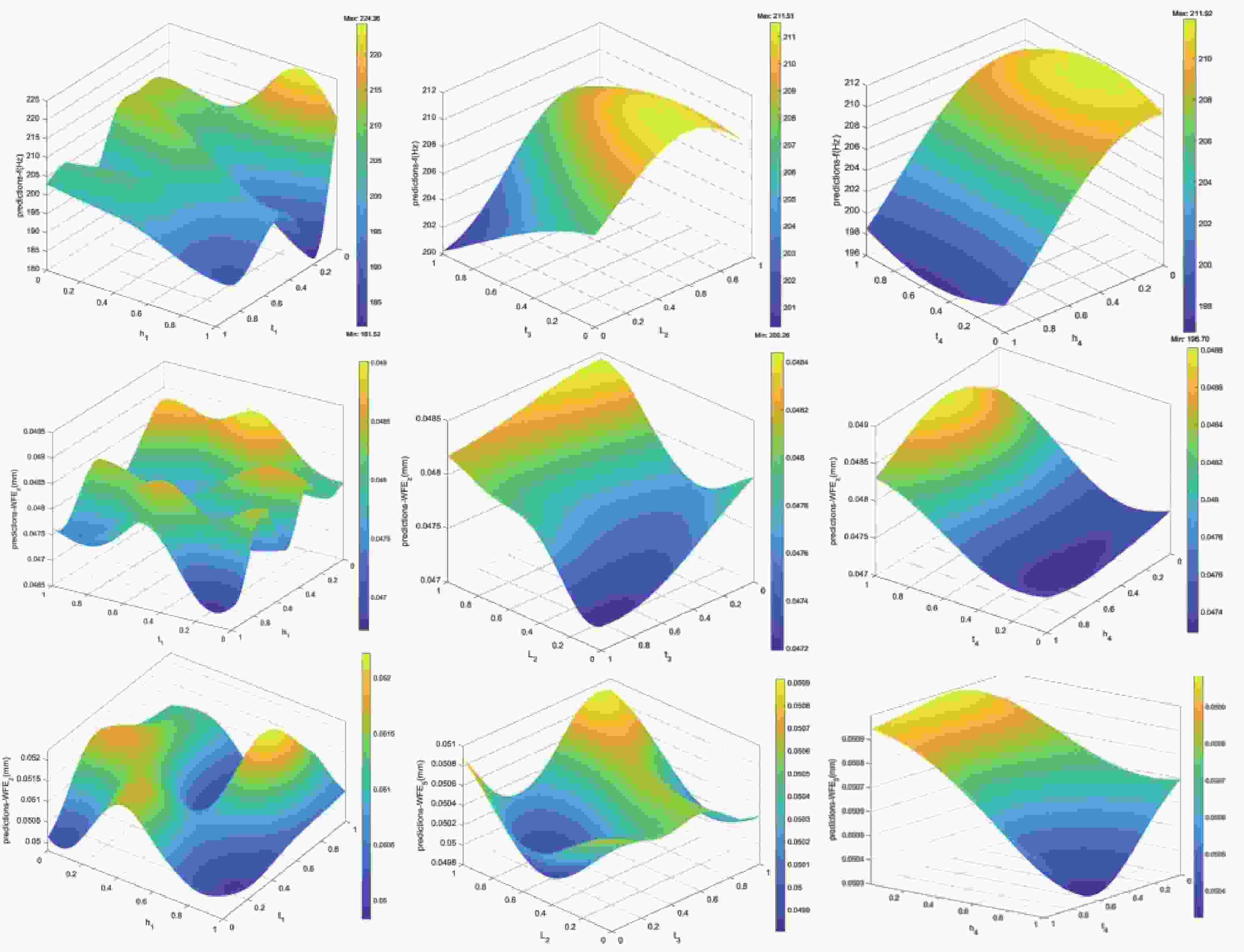
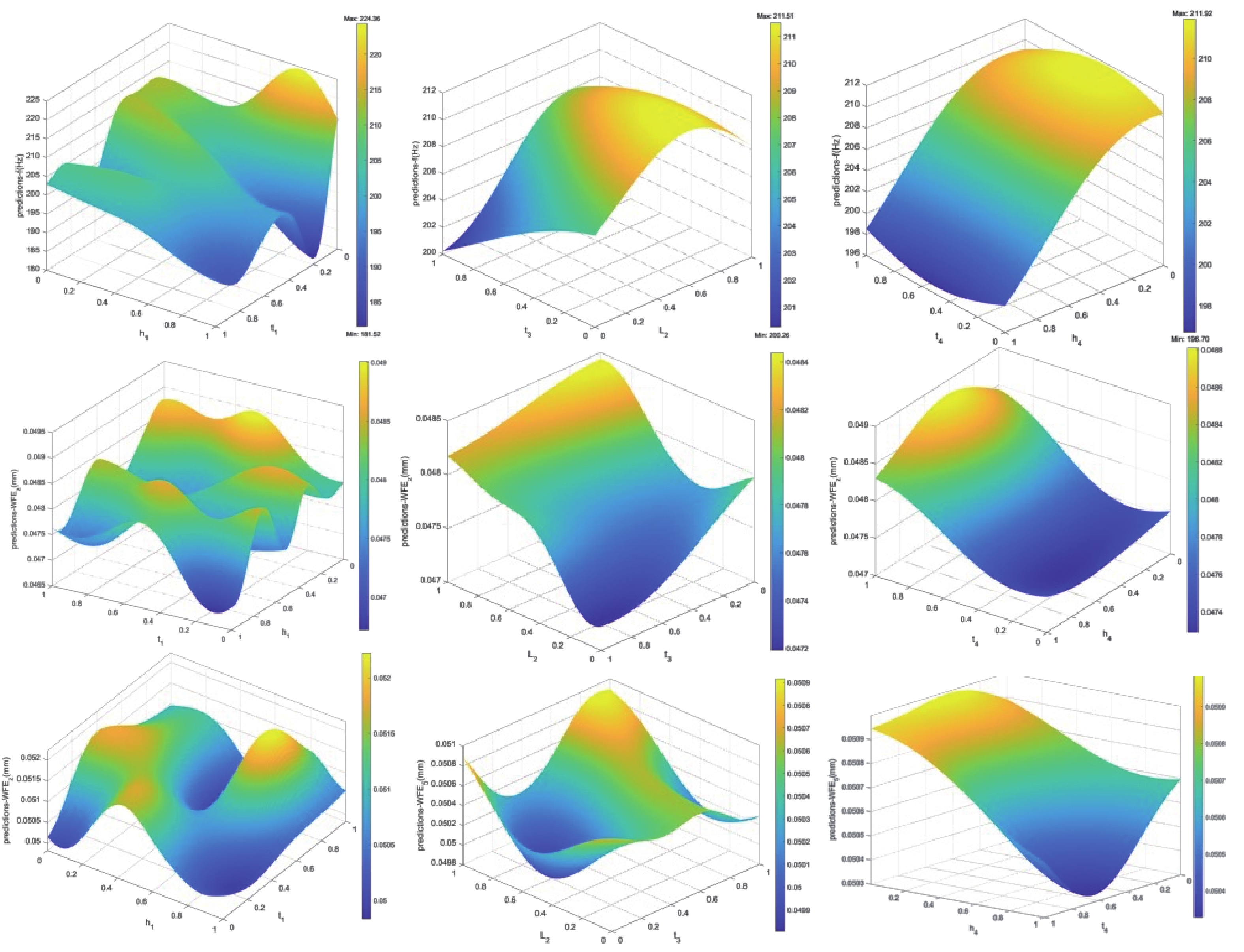
图 8 部分设计参数对响应值的拟合曲面
Figure 8. Fitted Response Surfaces of Partial Design Parameters to Responses.
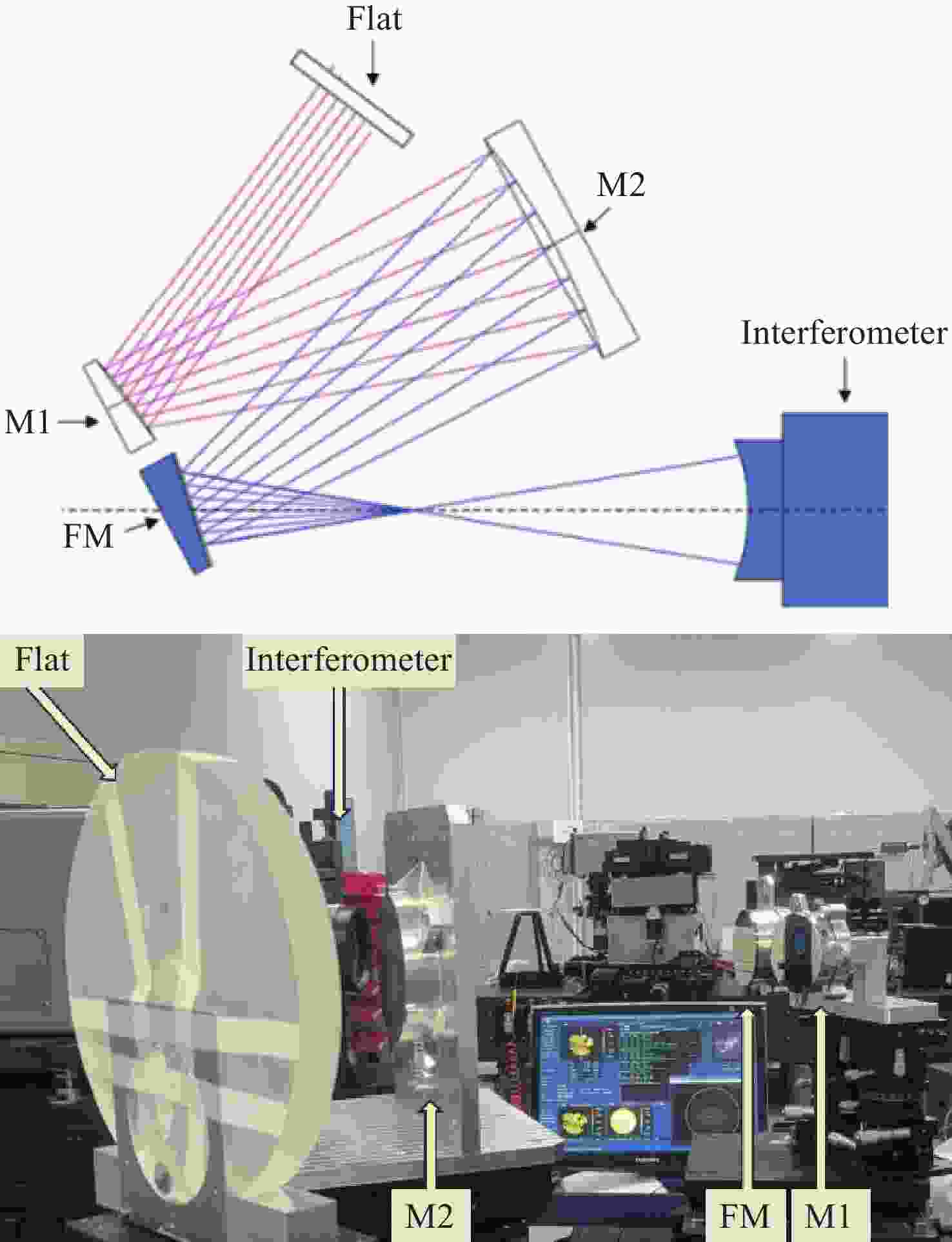
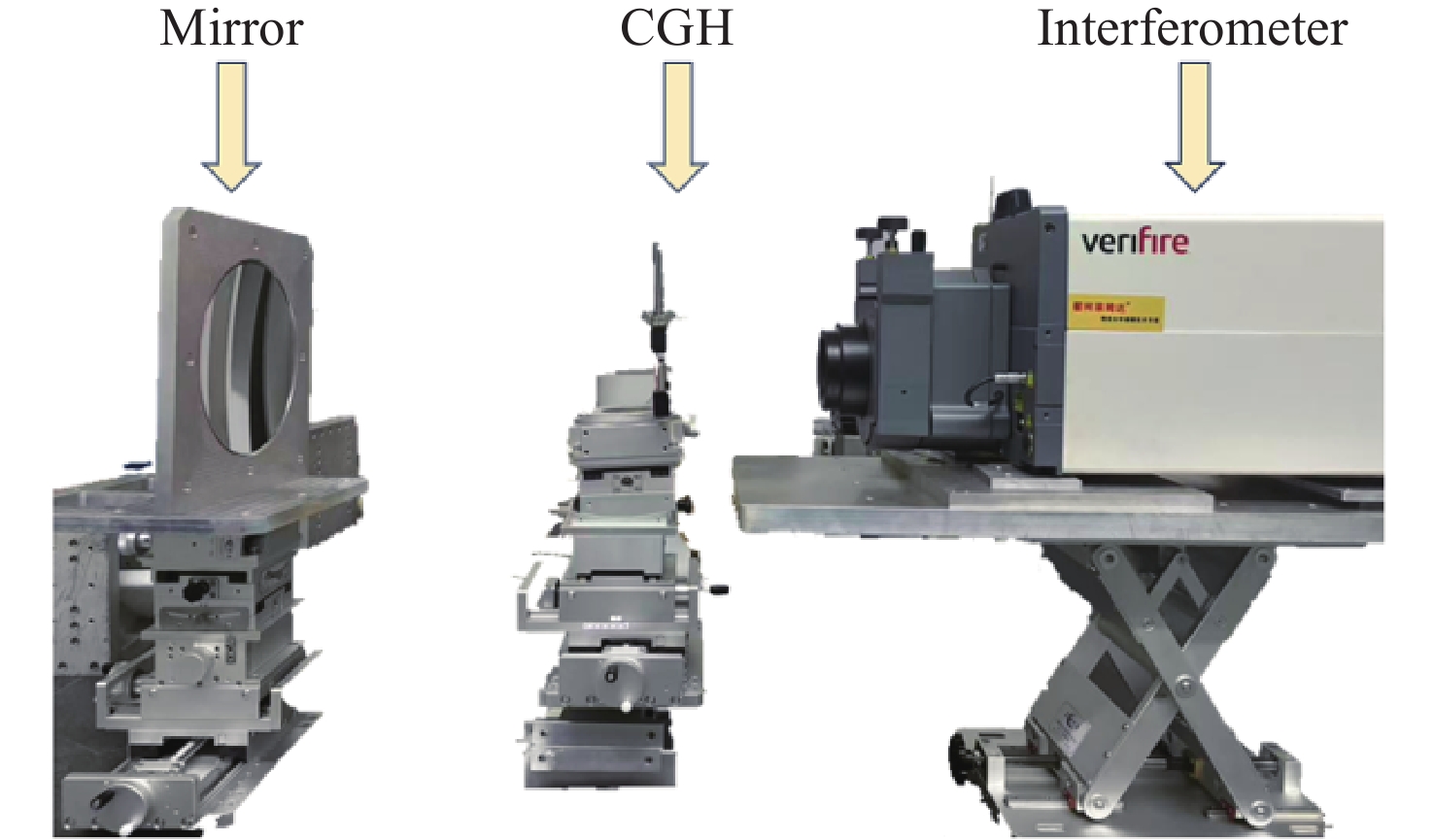
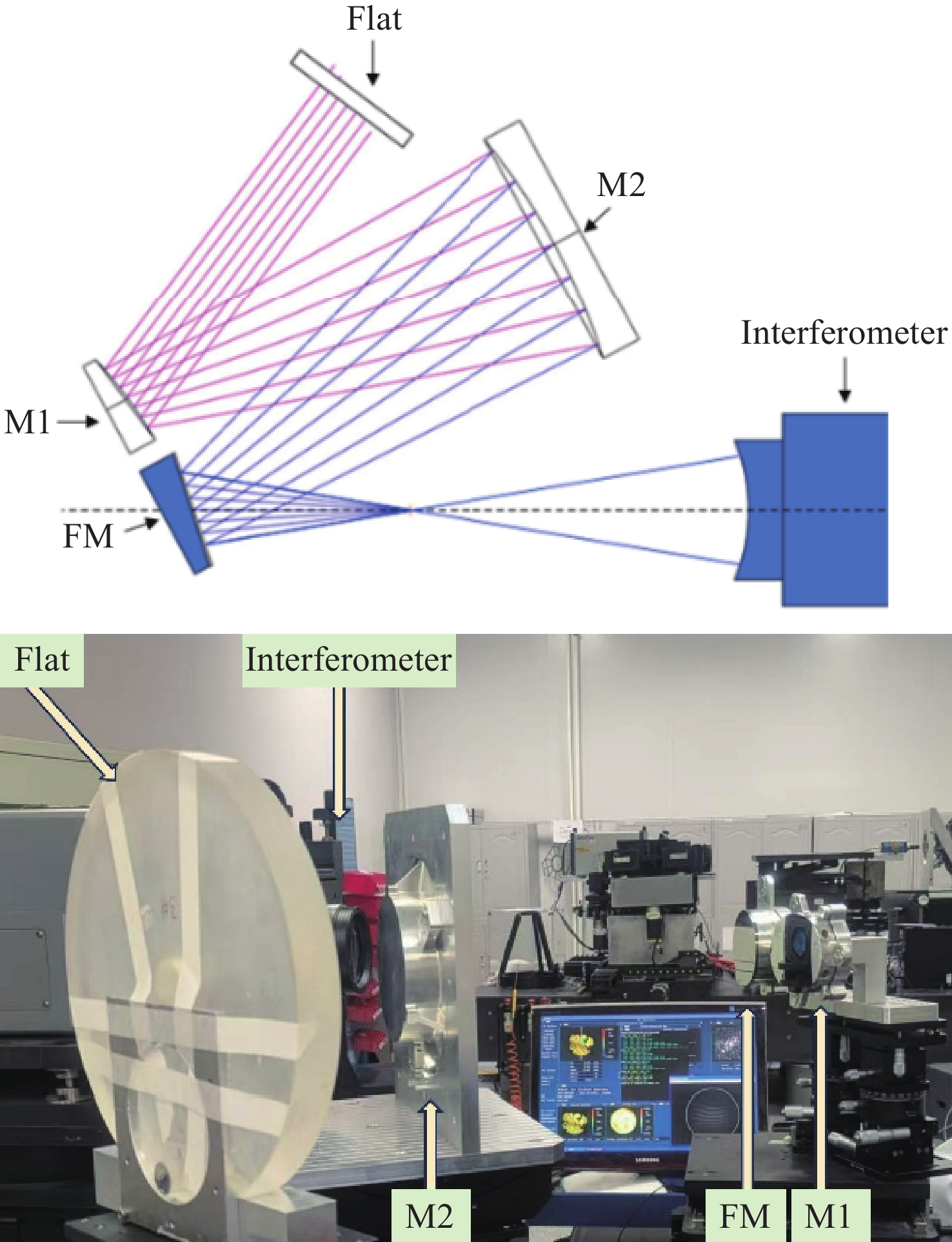
图 12 波前误差检测原理及实验现场
Figure 12. Principle of Wavefront Aberration Detection and Experimental Site Diagram.
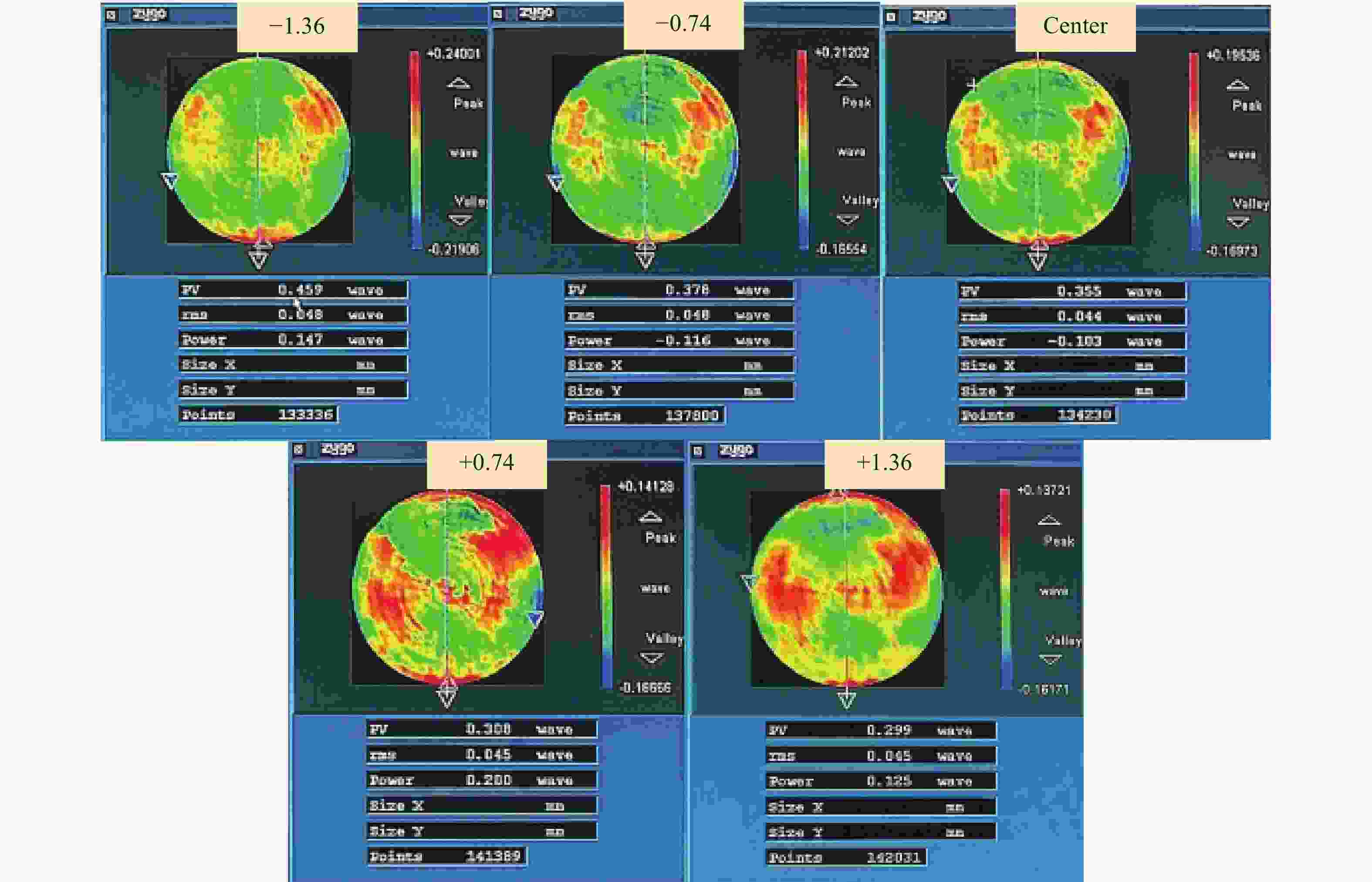
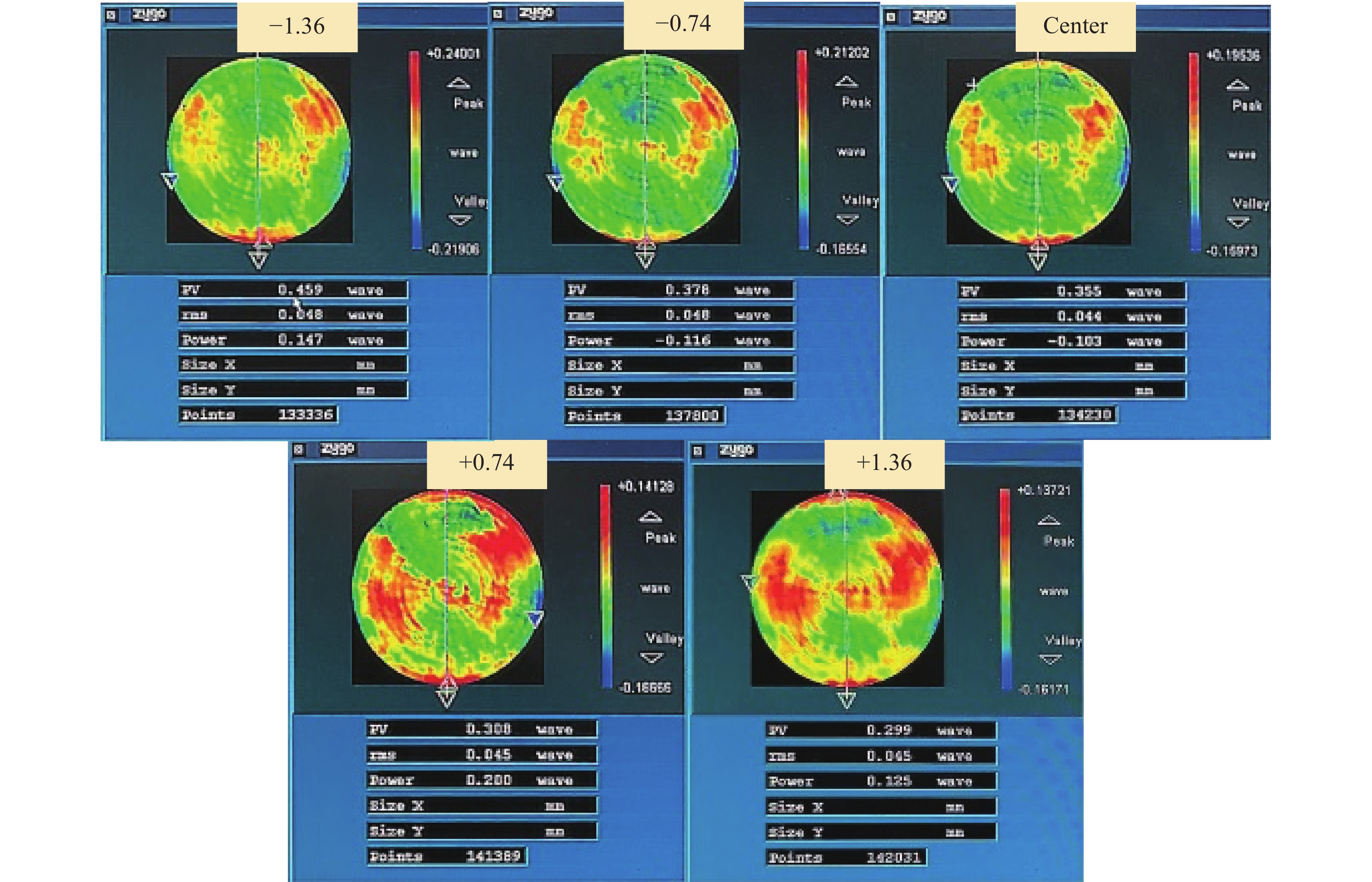
图 13 不同视场下的波前误差检测云图
Figure 13. Wavefront aberration detection cloud maps under different fields of view.
表 1 Comparison of material properties between
6061 and traditional optical materialsTable 1. Comparison of material properties between
6061 and traditional optical materialsMaterial Density (g/cm3) Elastic modulus
(GPa)Thermal expansion coefficient
(10-6 / °C)Thermal
conductivity (W/m·K)AL6061 2.70 68.9 23.6 167 SiC 3.05 330 2.6 180 Zerodur 2.53 90.3 0.1 1.6  下载: 导出CSV
表 2 Value ranges of design variables.
Table 2. Value ranges of design variables.
Design Variables Value Range /mm t1 1.5-3 h1 6-8 L2 6-9 t3 1.5-2.5 t4 1.5-3 h4 5-7
下载: 导出CSV
表 3 Coefficient of Determination of Each Response
Table 3. Coefficient of Determination of Each Response
f WFE(z) WFE(5 °C) R2 0.9811 0.9698 0.9764
下载: 导出CSV
表 4 Optimization Results
Table 4. Optimization Results
Parameter Optimization Result Final Result t1 1.98 2 h1 7.03 7 L2 7.87 7.8 t3 2.22 2.2 t4 2.63 2.6 h4 6.07 6
下载: 导出CSV
表 5 Comparison Before and After Optimization
Table 5. Comparison Before and After Optimization
Performance Indicator Initial Design Optimized Design Improvement Ratio Fundamental Frequency (Hz) 178.3 204.6 +14.2% Z-Direction Gravity- WFE (λ) 0.0601 0.0474 −21.1% 5 °C Temperature Rise- WFE (λ) 0.0635 0.0490 −22.8%
下载: 导出CSV
表 6 Wavefront aberration detection results under different fields of view
Table 6. Wavefront aberration detection results under different fields of view
FOV −1.36° −0.74° Center +0.74° +1.36° PV 0.459 λ 0.378 λ 0.355 λ 0.308 λ 0.299 λ RMS 0.048 λ 0.048 λ 0.044 λ 0.045 λ 0.045 λ
下载: 导出CSV
-
[1] WEN X. Space exploration is entering the era of spacecraft cluster[J]. Frontiers, 2017(5): 19-26. (in Chinese). doi: 10.16619/j.cnki.rmltxsqy.2017.05.003 [2] YE ZH, LI X W, WANG CH, et al. Survey of technological development of optical payload for micro-nano satellite[J]. Spacecraft Engineering, 2016, 25(6): 122-130. (in Chinese). doi: 10.3969/j.issn.1673-8748.2016.06.019 [3] SHA ZH B, YU Y, JIAO J CH. The latest development of micro-nano remote-sensing payload technology abroad[J]. Spacecraft Recovery & Remote Sensing, 2021, 42(5): 39-48. (in Chinese). [4] YODER P, VUKOBRATOVICH D. Opto-Mechanical Systems Design, Volume 1: Design and Analysis of Opto-Mechanical Assemblies[M]. 4th ed. Boca Raton: CRC Press, 2015. [5] WANG Y F, YU J, SHENG P F, et al. Research progress in lightweight metal-based optical payload technology[J]. Spacecraft Recovery & Remote Sensing, 2025, 46(1): 45-59. (in Chinese). doi: 10.3969/j.issn.1009-8518.2025.01.005 [6] SUN J X, XIE H B, LI SH X, et al. All-aluminum high-resolution camera with lightweight and compact size[J]. Chinese Optics, 2023, 16(6): 1450-1462. (in Chinese). [7] HAWARDEN T G, CASALI M M, HOLLAND W S, et al. Wide-field astronomy projects at the UKATC[C]. Proceedings of the AAS 199th Meeting, American Astronomical Society, 2002: 1464. [8] ROTMAN Y, MCGILL P, WELBANKS L, et al. NASA's Pandora SmallSat mission: simulated modeling and retrieval of near-infrared exoplanet transmission spectra[J]. The Astronomical Journal, 2026, 171(5): 263. doi: 10.3847/1538-3881/ae4d3c [9] YU J D, MAO X L, GAO R, et al. Unobscured off-axis three-mirror freeform all-aluminum imaging telescope[J]. Applied Optics, 2025, 64(7): 1677-1692. doi: 10.1364/AO.554593 [10] KIHM H, YANG H S. Design optimization of a 1-m lightweight mirror for a space telescope[J]. Optical Engineering, 2013, 52(9): 091806. doi: 10.1117/1.oe.52.9.091806 [11] WANG K J, XUAN M, DONG J H, et al. Design method of reflector component structure of space remote sensor[J]. Infrared and Laser Engineering, 2016, 45(11): 1113001. (in Chinese). [12] QIN T, GUO J L, JING Z J, et al. Hybrid IPSO-IAGA-BPNN algorithm-based rapid multi-objective optimization of a fully parameterized spaceborne primary mirror[J]. Applied Optics, 2021, 60(11): 3031-3043. doi: 10.1364/AO.419227 [13] SHAO M Q, ZHANG L, JIA X ZH. Optomechanical integrated optimization of a lightweight mirror for space cameras[J]. Applied Optics, 2021, 60(3): 539-546. doi: 10.1364/AO.409658 [14] ZHAO Y B, LI L. The application of a topology optimization algorithm based on the kriging surrogate model in the mirror design and optimization of an aerial camera[J]. Sensors, 2023, 23(16): 7236. doi: 10.3390/s23167236 [15] SIMPSON T W, MAUERY T M, KORTE J J, et al. Kriging models for global approximation in simulation-based multidisciplinary design optimization[J]. AIAA Journal, 2001, 39(12): 2233-2241. doi: 10.2514/2.1234 [16] MCKAY M D, BECKMAN R J, CONOVER W J. A comparison of three methods for selecting values of input variables in the analysis of output from a computer code[J]. Technometrics, 1979, 21(2): 239-245. doi: 10.2307/1268522 [17] DEB K, AGRAWAL S, PRATAP A, et al. A fast elitist non-dominated sorting genetic algorithm for multi-objective optimization: NSGA-II[C]. Proceedings of the 6th International Conference on Parallel Problem Solving from Nature, Springer, 2000: 849-858. [18] VERMA S, PANT M, SNASEL V. A comprehensive review on NSGA-II for multi-objective combinatorial optimization problems[J]. IEEE Access, 2021, 9: 57757-57791. doi: 10.1109/ACCESS.2021.3070634 -

 下载:
下载:

计量
- 文章访问数: 48
- HTML全文浏览量: 27
- PDF下载量: 3
- 被引次数: 0
